Sheaves of Wheat: A Study in Texture and Rural Life by Vincent van Gogh
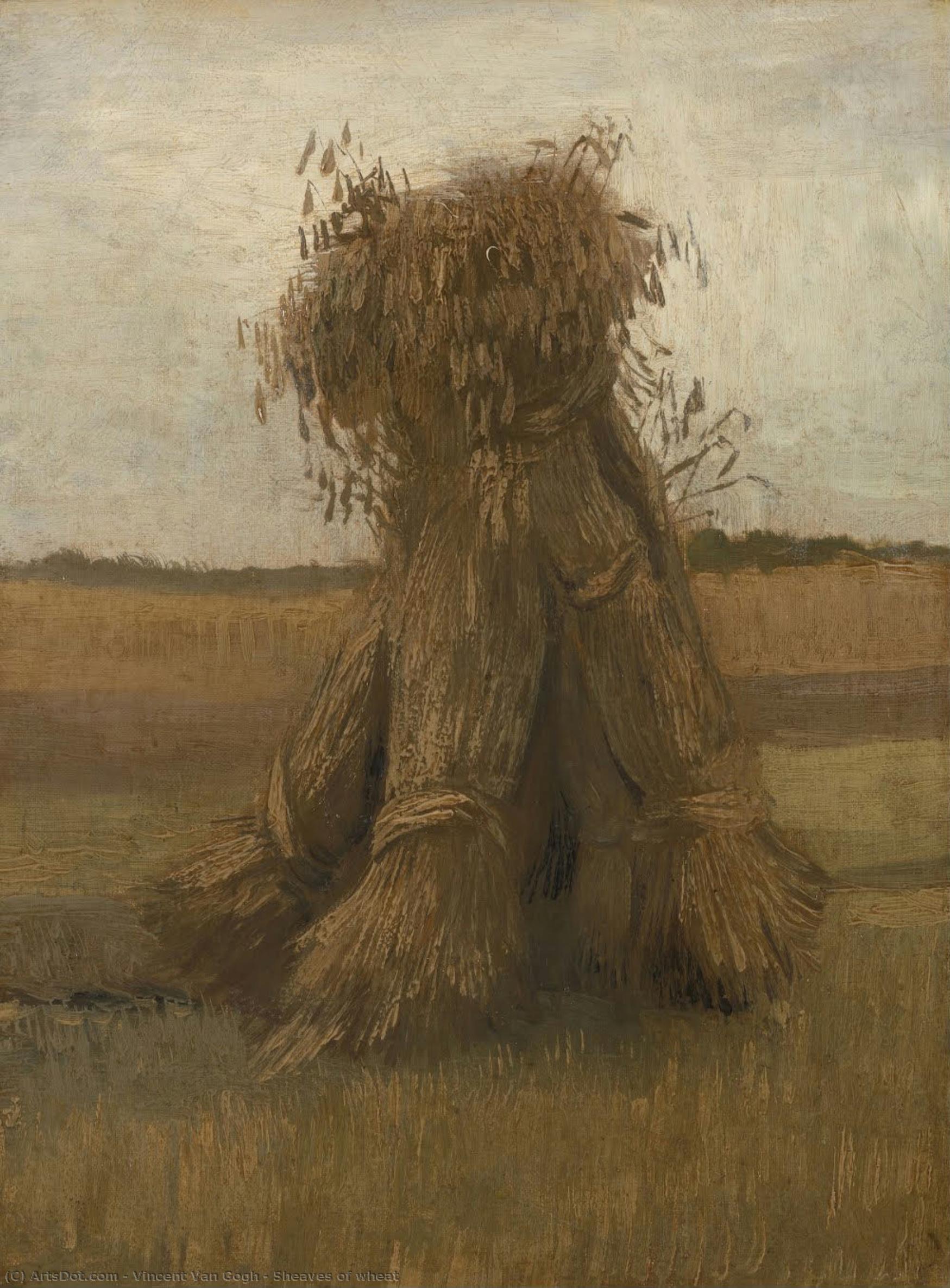
“Sheaves of wheat” offers a glimpse into Vincent van Gogh’s evolving artistic practice during his time in Nuenen, Netherlands, in 1885. This painting isn't merely a depiction of harvested grain; it represents Van Gogh's deep engagement with the rhythms of rural life and his burgeoning exploration of texture and brushwork – elements that would become hallmarks of his later, more celebrated works.
Subject and Composition: The Solitary Sheaf
The painting’s essence lies in its striking composition. Unlike many of Van Gogh's later depictions of wheat fields featuring rows of sheaves or figures at work, this study presents a single, central bundle of sheaves. This deliberate isolation creates a sense of quiet contemplation and emphasizes the individual form against the backdrop of the harvested field. The foreground is filled with mown wheat, depicted with sturdy brushstrokes, while the central sheaf is rendered with finer detail using a thin brush, highlighting Van Gogh's focus on textural contrast. The background shows remaining wheat awaiting harvest, adding depth to the scene.
Style and Technique: A Focus on Brushwork
“Sheaves of Wheat” exemplifies Van Gogh’s early Post-Impressionist style, though it predates his full embrace of the movement's vibrant color palette. The painting showcases a deliberate practice in texture and brushwork. Van Gogh utilizes varied strokes – robust for the field and delicate for the sheaf – to convey the materiality of the hay and the fragility of the stalks. This attention to surface quality foreshadows the impasto technique he would later become renowned for, where paint is applied thickly to create a tactile, three-dimensional effect. The use of oil paints on canvas allows for rich layering and subtle gradations in tone.
Historical Context: Rural Life and Artistic Development
Painted in 1885, “Sheaves of Wheat” reflects Van Gogh’s commitment to portraying the lives of ordinary people, particularly those engaged in agricultural labor. During this period, he was deeply moved by the hardships faced by peasant communities and sought to depict their dignity and resilience. This work is a precursor to his later, more expressive depictions of rural landscapes and figures. It represents a transition from his earlier, darker palette (as seen in “The Potato Eaters”) towards a greater exploration of light and texture, laying the groundwork for his signature style.
Symbolism and Emotional Impact: Harvest, Solitude, and the Cycle of Life
Beyond its aesthetic qualities, "Sheaves of Wheat" carries symbolic weight. The harvested sheaves represent the culmination of labor and the bounty of nature – a celebration of the harvest season. The solitary sheaf evokes feelings of solitude and contemplation, inviting viewers to reflect on the fleeting nature of life and the cyclical patterns of existence. While seemingly simple in subject matter, the painting resonates with a quiet melancholy and a profound appreciation for the beauty found within everyday rural scenes. The overall mood is one of peaceful observation, capturing a moment suspended in time.
About Vincent van Gogh
Vincent van Gogh (1853-1890) remains one of history’s most influential figures in Western art. His work is characterized by its beauty, emotion and color, profoundly impacting 20th-century art.
- Born on March 30, 1853, in Zundert, Netherlands, Van Gogh initially pursued various careers before dedicating himself to painting.
- He worked as an art dealer, teacher, and missionary, experiences that deeply influenced his worldview and artistic sensibilities.
- Early influences included the Dutch Masters like Rembrandt and Frans Hals, as well as Japanese woodblock prints – Ukiyo-e – which sparked his interest in bold compositions and flattened perspectives.