Introduction
Vincent Van Gogh's "The Sower, The After Millet" is a masterpiece of Post-Impressionism, a predominantly French art movement that developed roughly between 1886 and 1905. This movement emerged as a reaction against Impressionists' concern for the naturalistic depiction of light and colour, and encompasses Les Nabis, Neo-Impressionism, Symbolism, Cloisonnism, the Pont-Aven School, and Synthetism, along with some later Impressionists' work. The movement's principal artists were Paul Cézanne, Paul Gauguin, Vincent van Gogh and Georges Seurat.
The Painting
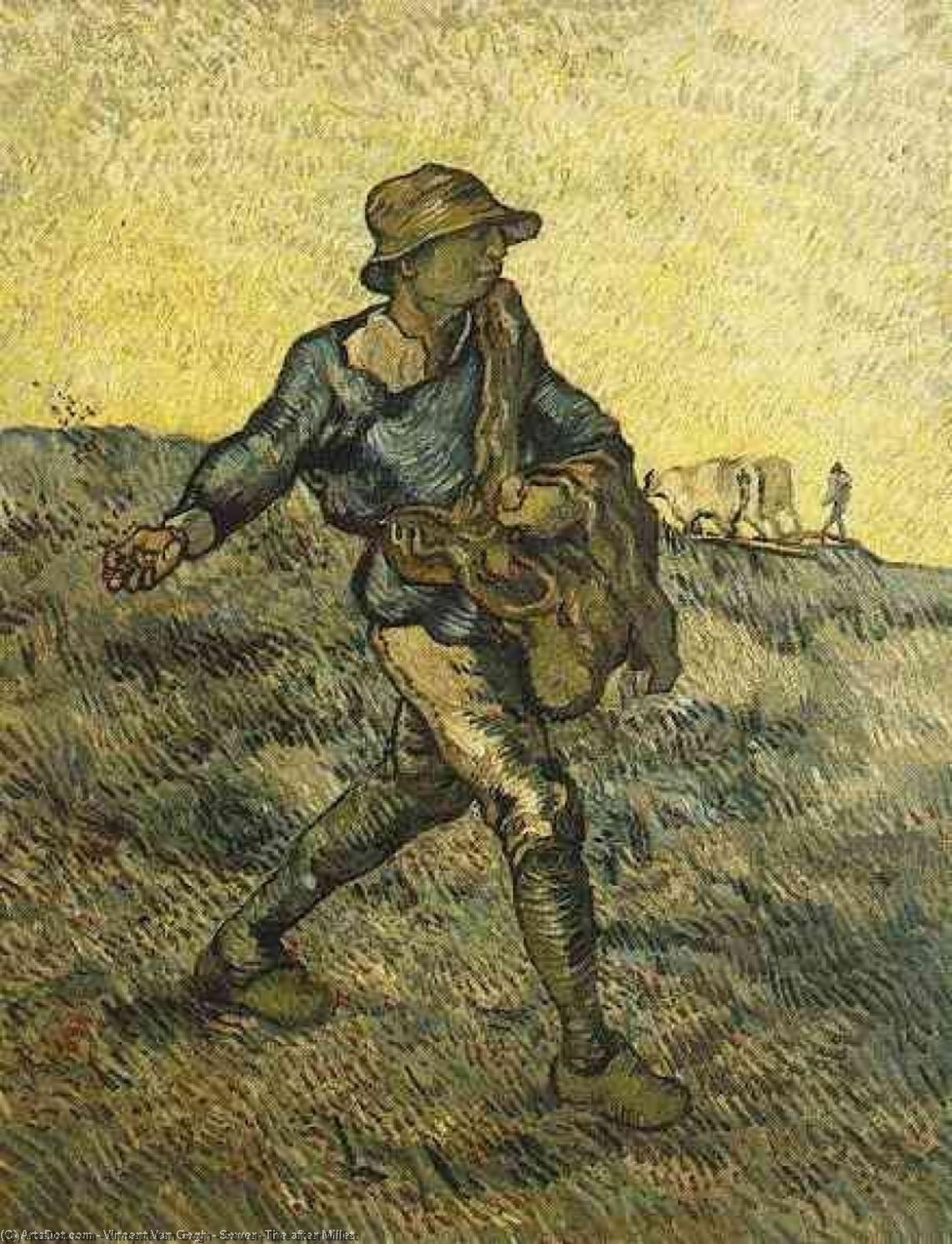
"The Sower, The After Millet" is a stunning example of Van Gogh's mastery of colour and form. Painted in 1888, this oil on canvas work measures 57 x 45 cm and showcases the artist's unique style, which extended Impressionism while rejecting its limitations. Van Gogh continued using vivid colours and painting from life, but was more inclined to emphasize geometric forms, distort form for expressive effect, and use unnatural or modified colour. The painting depicts a sower scattering seeds in a field under a dramatic sky, with swirling, undulating brushstrokes that create a sense of movement and energy. The subject matter is inspired by Jean-François Millet's "The Sower," which Van Gogh admired for its emotional intensity and connection to nature.
Vincent Van Gogh: A Brief Overview
Vincent Willem van Gogh (1853-1890) was a Dutch Post-Impressionist painter who is among the most famous and influential figures in the history of Western art. In just over a decade, he produced approximately 2,100 artworks, including around 860 oil paintings, predominantly in his final years. His oeuvre, renowned for its vibrant colors, emotive spontaneity, and forcible use of impasto, contributed to the rise of expressionism in modern art.
The Influence of Post-Impressionism
Post-Impressionism had a profound influence on the development of modern art, particularly in its emphasis on subjective expression and the exploration of new techniques and materials. It paved the way for movements such as Fauvism, Cubism, and Abstract Expressionism, which further pushed the boundaries of traditional artistic practices. The movement's focus on emotion and subjectivity also had a significant impact on the development of psychoanalysis and the understanding of the human mind.
Conclusion
"The Sower, The After Millet" is a testament to Vincent Van Gogh's mastery of Post-Impressionism and his unique style. This stunning work of art showcases the artist's bold use of colour, expressive line, and thick application of paint, which inspired avant-garde artistic groups like the Fauves and German Expressionists in the early 20th century. Today, Van Gogh's works are among the world's most expensive paintings ever sold, with "The Sower, The After Millet" being a highly sought-after masterpiece for art enthusiasts and collectors alike.
Acquiring Your Own Reproduction of "The Sower, The After Millet"
At
ArtsDot.com, we offer high-quality handmade oil painting reproductions that capture the beauty and essence of Van Gogh's masterpiece. Our skilled artists meticulously recreate every detail, using premium materials to ensure a stunning result. By acquiring one of our reproductions, you can bring a piece of art history into your home or office and enjoy the timeless beauty of "The Sower, The After Millet" for years to come.