The Painting's Significance
Vincent Van Gogh's
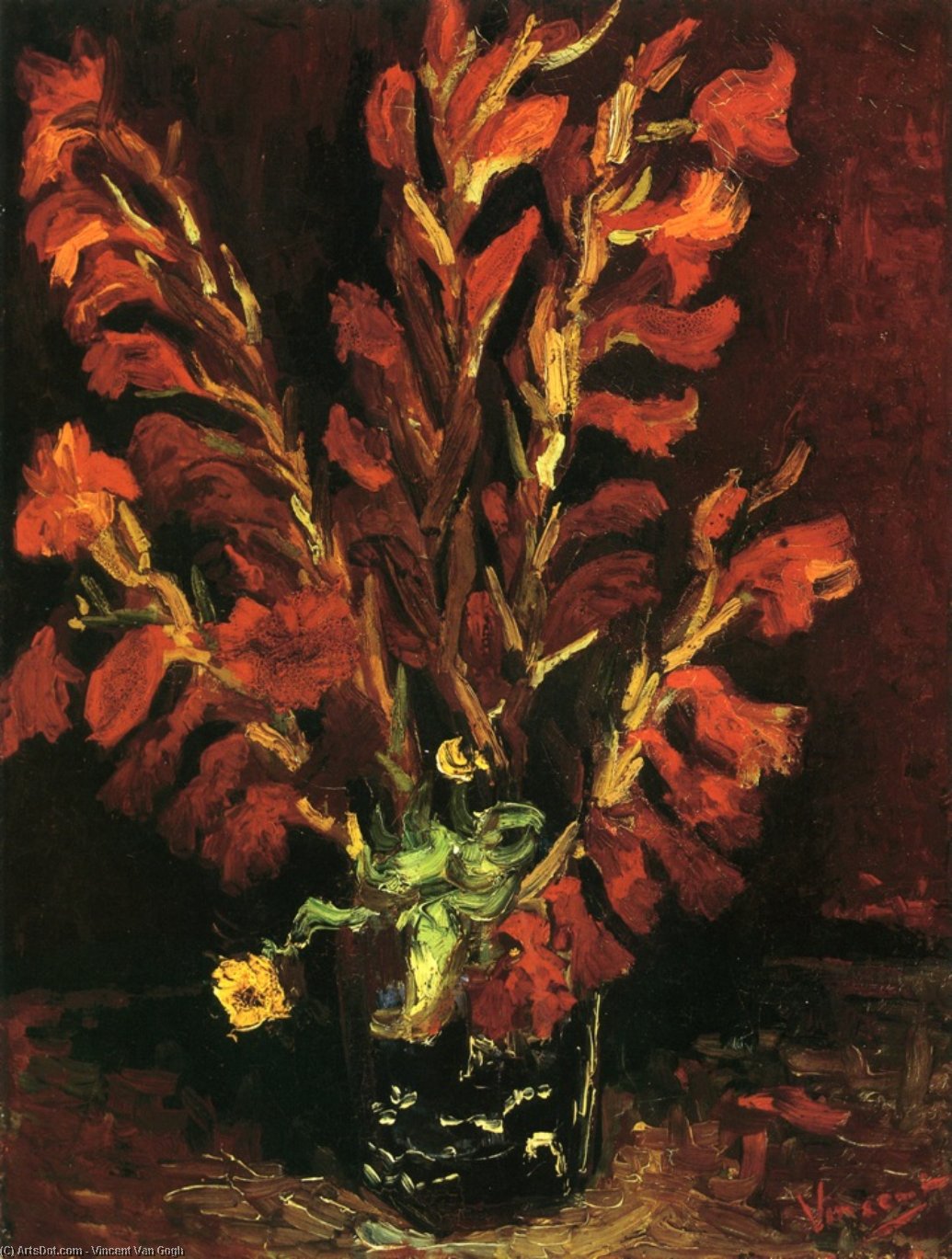
Still Life: Vase with Gladiolas, created in 1886, is a remarkable example of the artist's unique style and his ability to capture the essence of everyday objects. This painting is not only a testament to Van Gogh's skill but also reflects his deep connection with nature and his innovative approach to color.
Artistic Elements
The painting features a vase filled with gladiolas, placed on a table against a simple background. The arrangement of the flowers is dynamic, with their vibrant red and orange hues dominating the composition. The use of bold brushstrokes and thick paint adds texture and depth to the work, creating a sense of movement and energy.
Historical Context
During his time in Paris, Van Gogh was heavily influenced by the Impressionist movement, which emphasized capturing light and color. However, he soon developed his own style, characterized by expressive brushwork and vivid colors.
Still Life: Vase with Gladiolas showcases this evolution, blending traditional still-life techniques with modern artistic innovations.
Museum Collections
The painting is part of the collection at the
Stadtmuseum Bonn, a museum in Germany dedicated to preserving and showcasing the city's cultural history. The museum was established in 1886, the same year Van Gogh created this masterpiece.
Relevance Today
Today,
Vincent Van Gogh's works continue to inspire artists and art enthusiasts alike. His unique approach to color and composition has influenced generations of painters. For those interested in owning a piece of history,
handmade oil painting reproductions are available at ArtsDot.
Other Notable Works by Van Gogh
-
Nude Woman Reclining, Seen from the Back (Post-Impressionism, Oil On Canvas) -
Self-Portrait (Puskin) and
Self-Portrait (Tate) by
Paul Cezanne Conclusion
Still Life: Vase with Gladiolas is a captivating example of Van Gogh's artistic genius. Its vibrant colors and dynamic composition make it a standout piece in the world of art. For those who appreciate the beauty of Post-Impressionism, this painting is a must-see.
To learn more about Vincent Van Gogh and his works, visit
ArtsDot for detailed information and high-quality reproductions.