ズント
オランダ
フィンセント・ファン・ゴッホ
Van Gogh, Vincent van Gogh
鮮烈な色彩と感情的な筆致が特徴のポスト印象派画家、フィンセント・ファン・ゴッホ。代表作「星月夜」「ひまわり」は世界中で愛され、表現主義に大きな影響を与えました。短い生涯ながらも、その作品は芸術史に不朽の名を残しています。
ポスト印象派
表現主義
レンブラント・ファン・レイン
1853年3月30日
1890年7月29日
フィンセント・ウィレム・ファン・ゴッホ
オランダ人
農民と土器
フランス
3
フィンセント・ファン・ゴッホは、どの国で生まれましたか?
ゴッホ美術館
(Amsterdam, Netherlands)
🌻ゴッホの魂に触れる旅!アムステルダムのゴッホ美術館で、名画「ひまわり」から生涯を物語る手紙まで、感動的な芸術体験を。🎨✨
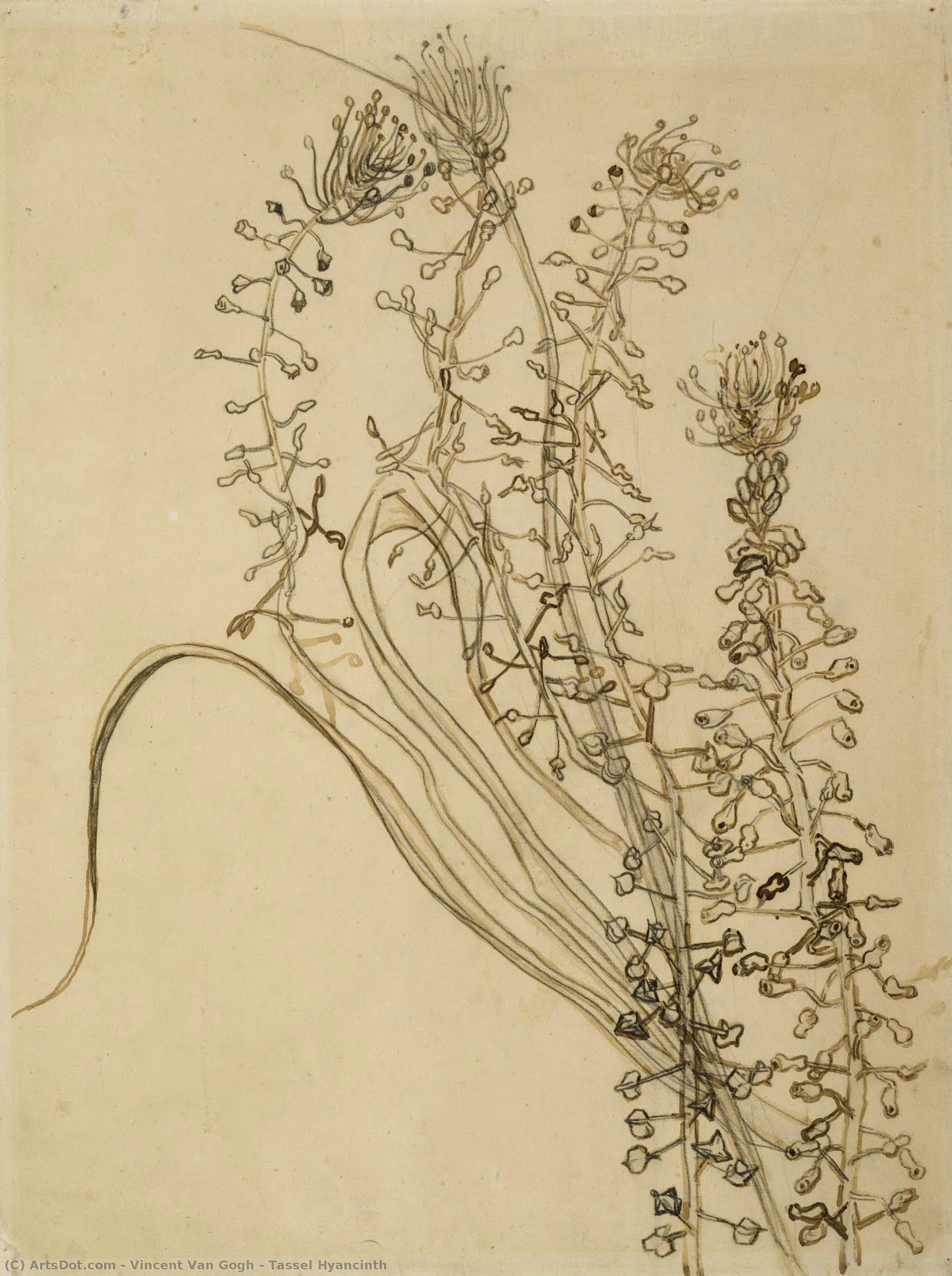
A Moment Captured in Delicate Pencil Strokes: Exploring Vincent van Gogh’s Tassel Hyacinth
Vincent van Gogh's fascination with Japanese art extended beyond mere admiration; it represented a profound philosophical shift—a deliberate effort to distill beauty from the simplest of observations. This impulse is vividly realized in “Tassel Hyacinth,” a drawing executed in 1889, a testament to his unwavering belief that true artistic insight resided not in grand landscapes or dramatic portraits but in capturing the essence of everyday life. The artwork itself—a humble depiction of a single hyacinth flower—holds within it layers of meaning and reflects Van Gogh’s distinctive approach to artistic expression.
The Artist's Method: Observation and Detail
Van Gogh’s technique was characterized by meticulous observation coupled with an expressive use of pencil and charcoal. Unlike Impressionists who sought to convey fleeting impressions of light, Van Gogh painstakingly rendered the hyacinth’s form, capturing its subtle curves and delicate petals with remarkable precision. The artist employed hatching and cross-hatching—a technique he honed during his time in Paris—to build up tonal values, creating a textured surface that conveys both realism and emotional depth. This deliberate layering of lines isn't merely about replicating what the eye sees; it’s about channeling feeling onto the canvas, transforming observation into an act of artistic interpretation.
Japanese Influence: Simplifying Complexity
The influence of Japanese prints—particularly Ukiyo-e—is palpable in “Tassel Hyacinth.” Van Gogh was captivated by the Japanese aesthetic's ability to distill complex scenes into simplified compositions, focusing on essential elements and conveying mood through subtle tonal shifts. Just as Japanese artists prioritized capturing a single blade of grass with unwavering attention, Van Gogh sought to convey the beauty inherent in this unassuming flower. This stylistic choice underscores his desire to transcend mere representation and achieve a deeper connection with nature—a connection rooted in contemplation and emotional resonance.
Symbolism Beyond Flora: Spiritual Reflection
Beyond its botanical subject matter, “Tassel Hyacinth” speaks to Van Gogh’s broader spiritual concerns. The hyacinth itself has long been associated with purity and remembrance, qualities that align perfectly with the artist's preoccupation with themes of faith and mortality. Its fragile beauty serves as a poignant reminder of the ephemeral nature of existence—a contemplation that finds expression in the drawing’s subdued palette and careful rendering of form. Van Gogh wasn’t simply depicting a flower; he was attempting to distill its essence into a symbol of inner peace and spiritual truth.
Emotional Resonance: A Window Into Van Gogh's Soul
Ultimately, “Tassel Hyacinth” offers an intimate glimpse into Vincent van Gogh’s artistic soul. The drawing exudes a quiet melancholy—a palpable sense of solitude and contemplation that reflects the artist’s internal struggles during his time in France. Yet, amidst this sadness lies a profound appreciation for beauty—a conviction that even the smallest details can hold immense significance. This emotional honesty is what distinguishes “Tassel Hyacinth” from many other artworks of its era; it's a testament to Van Gogh’s ability to transform personal experience into universal expression—a legacy that continues to inspire artists and viewers alike.