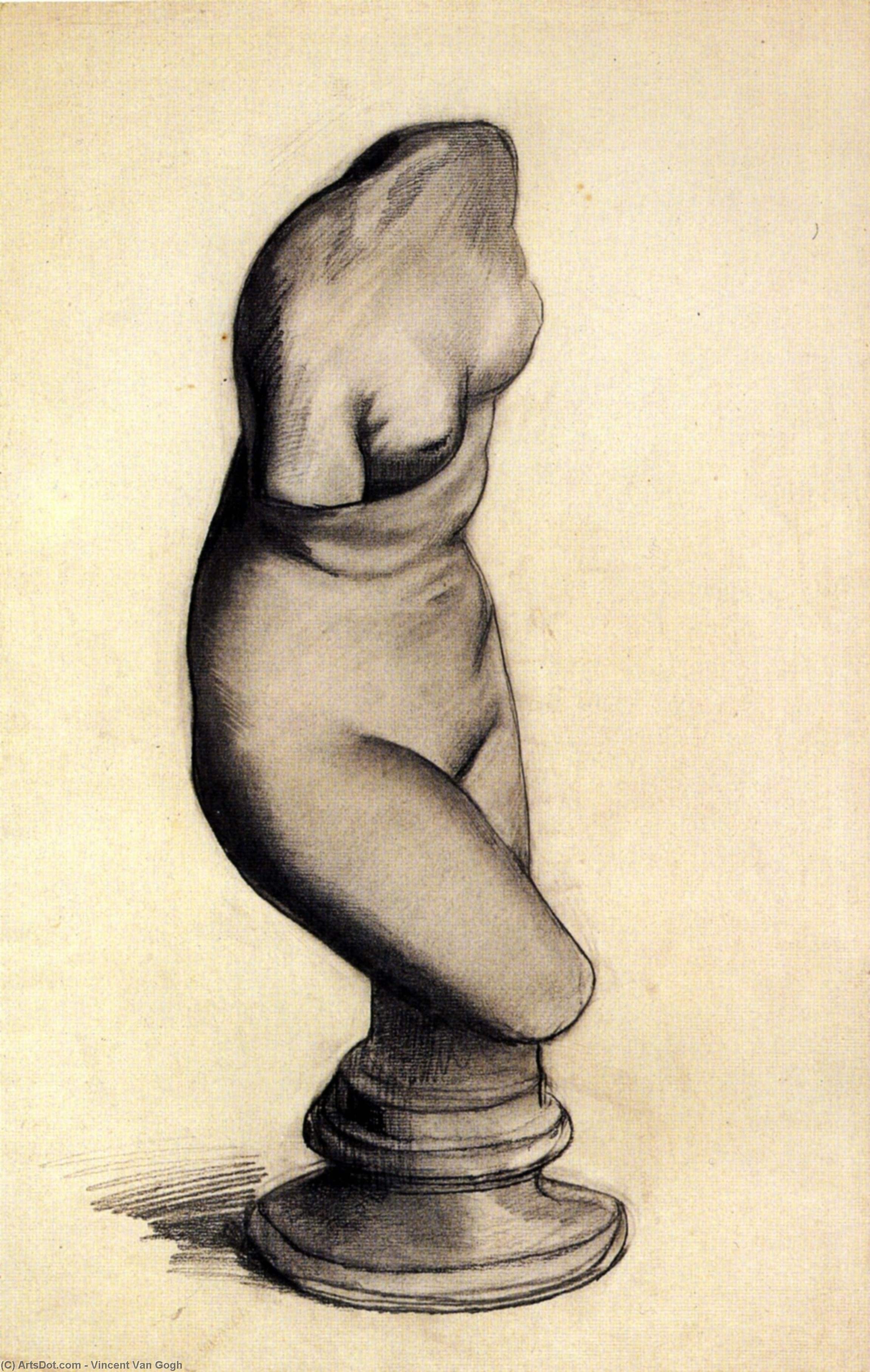
Vincent van Gogh's "Torso of Venus," created in 1886 during his time at Saint-Rémy Hospital, stands as a testament to the artist’s unwavering dedication to capturing beauty—even within confinement. More than just a depiction of the human form, it embodies Van Gogh’s profound exploration of texture and light, cementing its place among his most celebrated works.
A Study in Form and Emotion: Vincent van Gogh’s Torso of Venus
Vincent van Gogh's "Torso of Venus," created in 1886 during his time at Saint-Rémy Hospital, stands as a testament to the artist’s unwavering dedication to capturing beauty—even within confinement. More than just a depiction of the human form, it embodies Van Gogh’s profound exploration of texture and light, cementing its place among his most celebrated works. This charcoal drawing isn't merely an anatomical study; it’s a meditation on stillness and grace, reflecting the artist’s inner landscape as he wrestled with mental illness.
The Anatomy of Beauty: Technique and Style
Van Gogh’s masterful technique is immediately apparent upon viewing “Torso of Venus.” He employs thick, expressive charcoal strokes—a hallmark of his Post-Impressionist style—to build up layers of tonal variation. These bold marks aren't intended to achieve photographic realism; rather, they prioritize conveying feeling and capturing the essence of the subject matter. The artist meticulously renders the musculature of the torso with remarkable precision, yet simultaneously imbues it with a palpable sense of vulnerability and quiet dignity. Notice how Van Gogh utilizes hatching and cross-hatching to sculpt form, creating subtle shadows that enhance the sculptural quality of the drawing.
Historical Context: Seeking Inspiration Amidst Turmoil
Painted during Van Gogh’s stay at Saint Rémy Hospital following his mental breakdown, “Torso of Venus” represents a pivotal moment in his artistic journey. Diagnosed with psychosis and voluntarily committed to an asylum after mutilating his ear, Van Gogh sought solace and inspiration in the natural world—specifically, in botanical specimens brought into the hospital. The torso itself is believed to be based on a plaster statuette of Venus – a symbol of feminine beauty and fertility – reflecting Van Gogh’s fascination with classical art and mythology as he attempted to reconcile himself with his own emotional struggles.
Symbolism: Grace Under Pressure
The stillness of the pose—the woman's torso turned slightly away from the viewer—suggests introspection and contemplation. It speaks to a desire for serenity amidst internal turmoil, mirroring Van Gogh’s own yearning for peace during his illness. The muted tonal palette contributes to this mood of quiet solemnity, emphasizing the delicate contours of the figure and highlighting the subtle interplay of light and shadow. The drawing isn't simply about representing Venus; it’s about embodying the ideal of beauty—a beauty rooted in resilience and grace—a concept that resonated deeply with Van Gogh as he confronted his demons.
Emotional Resonance: A Window into the Artist’s Soul
“Torso of Venus” transcends mere visual representation, offering a glimpse into Vincent van Gogh's inner world. It captures not only the physical form but also the emotional state of an artist grappling with profound psychological challenges. The drawing serves as a poignant reminder that beauty can emerge from darkness—that even amidst suffering and instability, artistic vision persists. Like all of Van Gogh’s work, it invites contemplation and encourages viewers to consider the complexities of human experience.
- Explore high-quality reproductions at ArtsDot: ArtsDot
- Learn more about Van Gogh’s life and legacy at the Van Gogh Museum: Van Gogh Museum
Discover the captivating beauty of “Torso of Venus” – a masterpiece that embodies Vincent van Gogh's unwavering spirit.