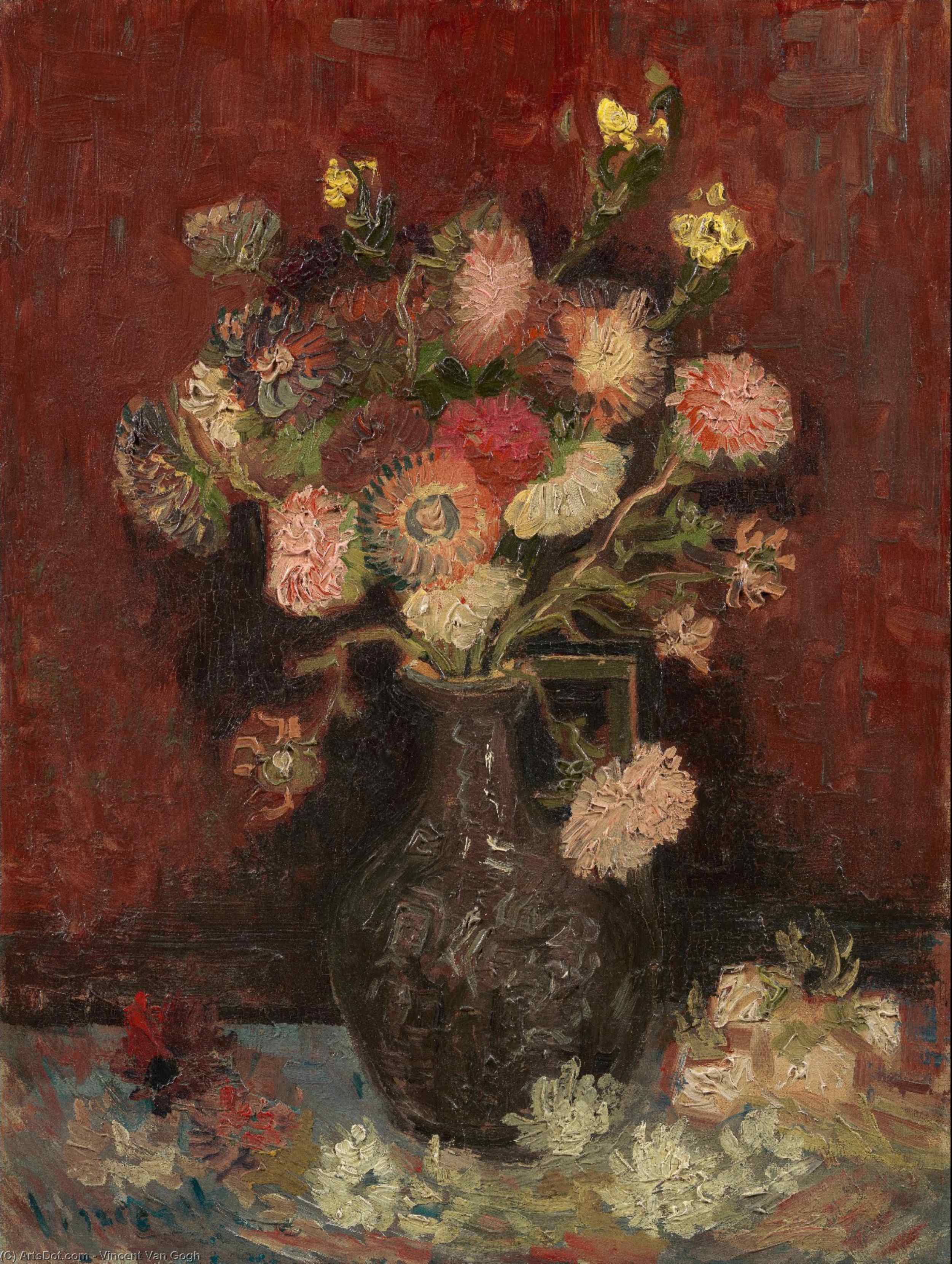
A Window into Impressionism’s Soul: Exploring Van Gogh's Vase with Chinese Asters and Gladioli
Vincent van Gogh’s “Vase with Chinese Asters and Gladioli,” painted in August 1886 during his Parisian sojourn, stands as a cornerstone of Post-Impressionist art—a testament to the artist’s burgeoning exploration of color and form. Currently residing within the hallowed halls of the Van Gogh Museum in Amsterdam, this deceptively simple composition belies a profound depth of artistic intention and offers a captivating glimpse into Van Gogh's evolving worldview.
- Style & Movement: The painting firmly establishes itself within Post-Impressionism, rejecting Impressionists’ preoccupation with fleeting light effects in favor of a bolder approach. Influenced by Japanese woodblock prints—particularly their masterful use of flattened perspective and vibrant hues—and fueled by the enduring legacy of Impressionist color palettes, Van Gogh sought to convey emotion rather than mere visual representation.
- Composition & Color Palette: At its core lies an arrangement of flowers within a vase against a striking crimson backdrop. This deliberate choice amplifies the vibrancy of the blossoms – pink Chinese asters and gladioli – creating a dynamic interplay of complementary colors that draws the eye upward, fostering a sense of warmth and visual excitement.
- Technique & Influences: Van Gogh’s technique exemplifies his experimentation with pigment layering and impasto—thickly applied paint—a hallmark of Post-Impressionism. He skillfully incorporates elements reminiscent of Pointillism and Impressionism, demonstrating an astute awareness of artistic precedents while forging his own distinctive visual language.
- Historical Context: Created during a pivotal period in Van Gogh’s artistic development, “Vase with Chinese Asters and Gladioli” represents a significant departure from his earlier darker tonal paintings. It signifies a conscious embrace of brighter colors—a deliberate reaction against the melancholic mood prevalent in his formative years—and embodies his newfound optimism.
- Symbolism & Emotional Impact: Beyond its aesthetic beauty, the vase serves as a conduit for exploring themes of fragility and resilience. The flowers themselves symbolize beauty and fleeting life, mirroring Van Gogh’s own struggles with mental health during this transformative phase. Ultimately, “Vase with Chinese Asters and Gladioli” resonates with viewers through its expressive brushstrokes and emotive color scheme—a poignant reminder of the artist's unwavering pursuit of artistic truth.
For those seeking to experience the grandeur of Van Gogh’s vision firsthand, ArtsDot.com presents meticulously crafted oil painting reproductions that capture the essence of this iconic masterpiece. Explore their curated collection and bring a piece of art history into your home.