A Symphony of Color and Light
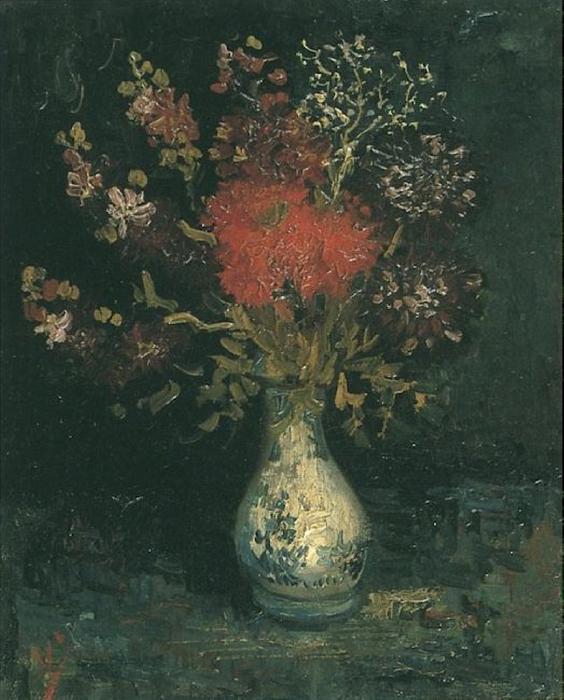
In the quiet moments of his Parisian sojourn in 1886, Vincent van Gogh captured a scene that transcends the simple boundaries of a still life. Vase with Flowers is not merely an arrangement of flora; it is a vibrant testament to an artist discovering his true voice amidst the shifting currents of Impressionism and Symbolism. The painting presents a captivating arrangement of red and yellow blossoms, nestled within a blue and white patterned vase that rests upon a table. Against a somber, dark backdrop, these luminous petals seem to pulse with a life of their own, creating a dramatic chiaroscuro effect that draws the viewer into an intimate dialogue with nature.
The brilliance of this work lies in Van Gogh’s masterful manipulation of complementary colors. By placing the fiery reds and sun-drenched yellows against deep, shadowy tones, he achieves a visual harmony that is both energetic and serene. This deliberate use of contrast does more than just highlight the subject; it establishes a rhythmic movement across the canvas, guiding the eye from the delicate edges of a petal to the sturdy, decorative curves of the vase. For the discerning collector or interior designer, this piece offers a profound sense of depth and vitality, making it an ideal focal point for spaces that crave both elegance and emotional warmth.
The Tactile Language of Impressionism
To look closely at Vase with Flowers is to witness the physical manifestation of Van Gogh’s passion. The artist employed a technique known as impasto, applying thick, deliberate layers of oil paint that rise from the canvas in sculptural ridges. These textured surfaces do not merely represent the flowers; they mimic the organic complexity and rugged beauty of the natural world. Each brushstroke carries a sense of urgency and movement, reflecting the artist's transition from the somber Realism of his earlier Dutch period toward the expressive, emotive power that would eventually define Post-Impressionism.
This tactile quality invites a sensory engagement that is rare in traditional portraiture. The way light catches the raised edges of the paint creates a shifting landscape of highlights and shadows, ensuring that the painting feels alive even as the viewer moves around it. This dynamic interplay between texture and light makes a high-quality reproduction particularly rewarding; when rendered with precision, the impasto effect preserves the soul of Van Gogh’s hand, allowing the energy of his 1886 Parisian period to breathe within a modern home.
A Legacy of Emotional Resonance
Beyond its technical brilliance, this artwork serves as a window into the evolving psyche of one of history's most influential figures. During this period, Van Gogh was absorbing the bold compositions of Japanese woodblock prints and the light-filled palettes of his French contemporaries. In Vase with Flowers, we see the seeds of his later, more famous works—the same underlying current of vulnerability and intense passion that would eventually permeate his landscapes and self-portraits.
The painting offers a sanctuary of beauty, a moment of stillness captured amidst a life of profound struggle. It speaks to the universal human desire to find light within the darkness and to celebrate the fleeting splendor of life. Whether gracing a curated gallery or serving as the centerpiece of a sophisticated living space, this masterpiece continues to inspire awe, offering anyone who views it a piece of the enduring, incandescent spirit of Vincent van Gogh.