Introduction to the Painting
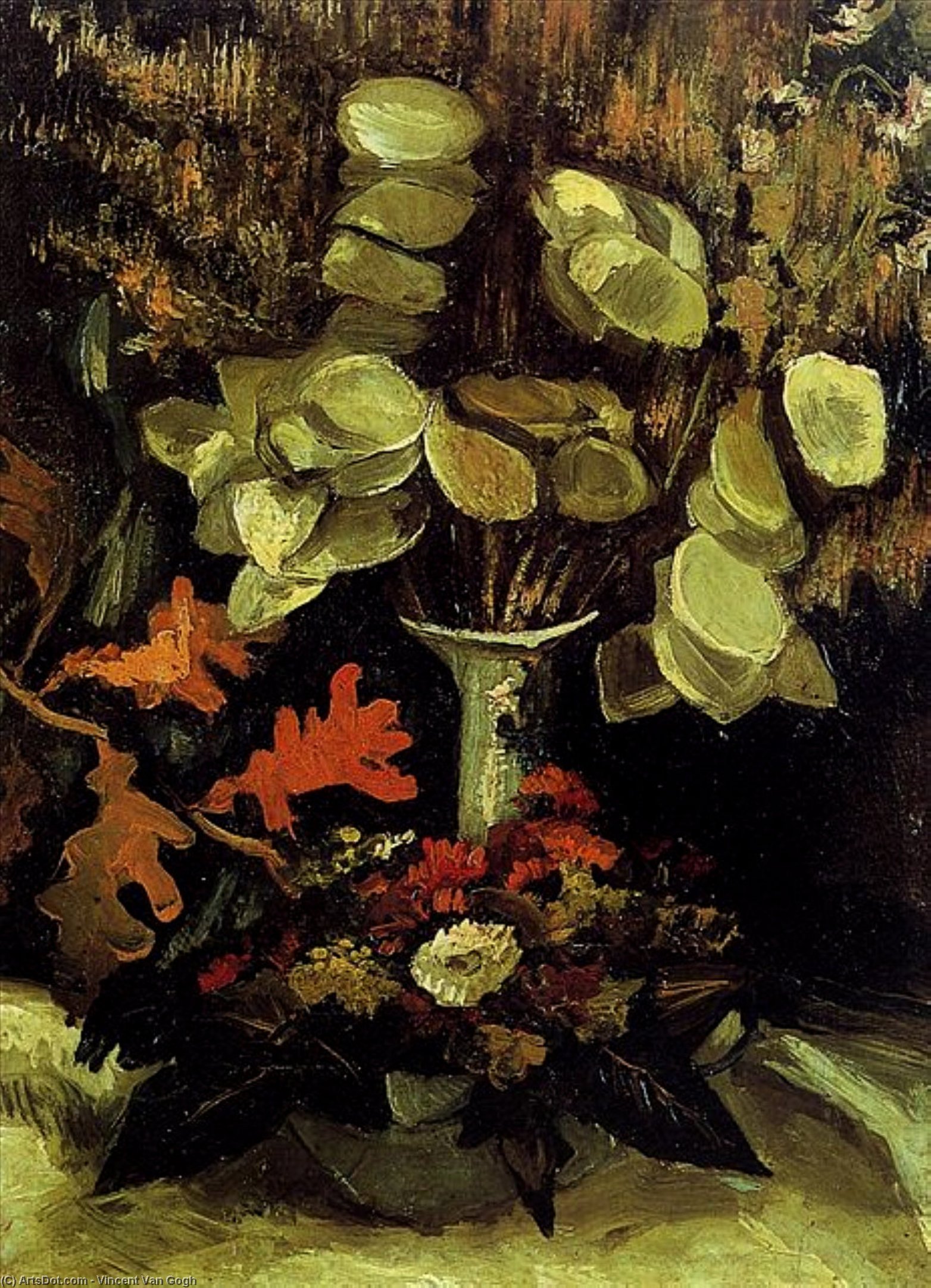
Vase with Honesty, a captivating still life painting created in 1884, is one of the notable works by the renowned Dutch artist
Vincent Van Gogh. This oil on canvas masterpiece is currently housed at the
Van Gogh Museum in the Netherlands. The painting showcases Van Gogh's unique style and his ability to create harmonious compositions using everyday objects.
Composition and Elements
The painting features a vase filled with various types of flowers, including daisies, roses, and leaves, placed on a table surrounded by additional flowers. Several potted plants are also depicted in the scene, some located near the top left corner of the image. A bowl is visible at the bottom right side of the painting, adding depth to the composition. Two apples are strategically positioned within the scene, one on the left side and another towards the center-right area.
Artistic Style and Technique
Van Gogh's use of realism in
Vase with Honesty is evident through his meticulous attention to detail and the vibrant colors he employed. The painting exemplifies his ability to create a sense of balance and harmony, even when combining diverse elements. This style is characteristic of Van Gogh's work during this period, as seen in other paintings such as
Bobbin Winder and
Dying Slave and Figures at a Table.
Historical Context and Significance
The Groninger Museum in Groningen, Netherlands, is another notable institution that houses an impressive collection of fine arts. Established in 1874, it is one of the oldest fine arts museums in the country and features over 6,000 works spanning different periods and styles.
Conclusion
Vase with Honesty by
Vincent Van Gogh is a testament to his skill in creating captivating still life paintings. The harmonious display of flowers, plants, and other objects showcases his unique artistic vision. For art enthusiasts interested in exploring more of Van Gogh's works, the
Vase with Honesty painting is a must-see at the
Van Gogh Museum.