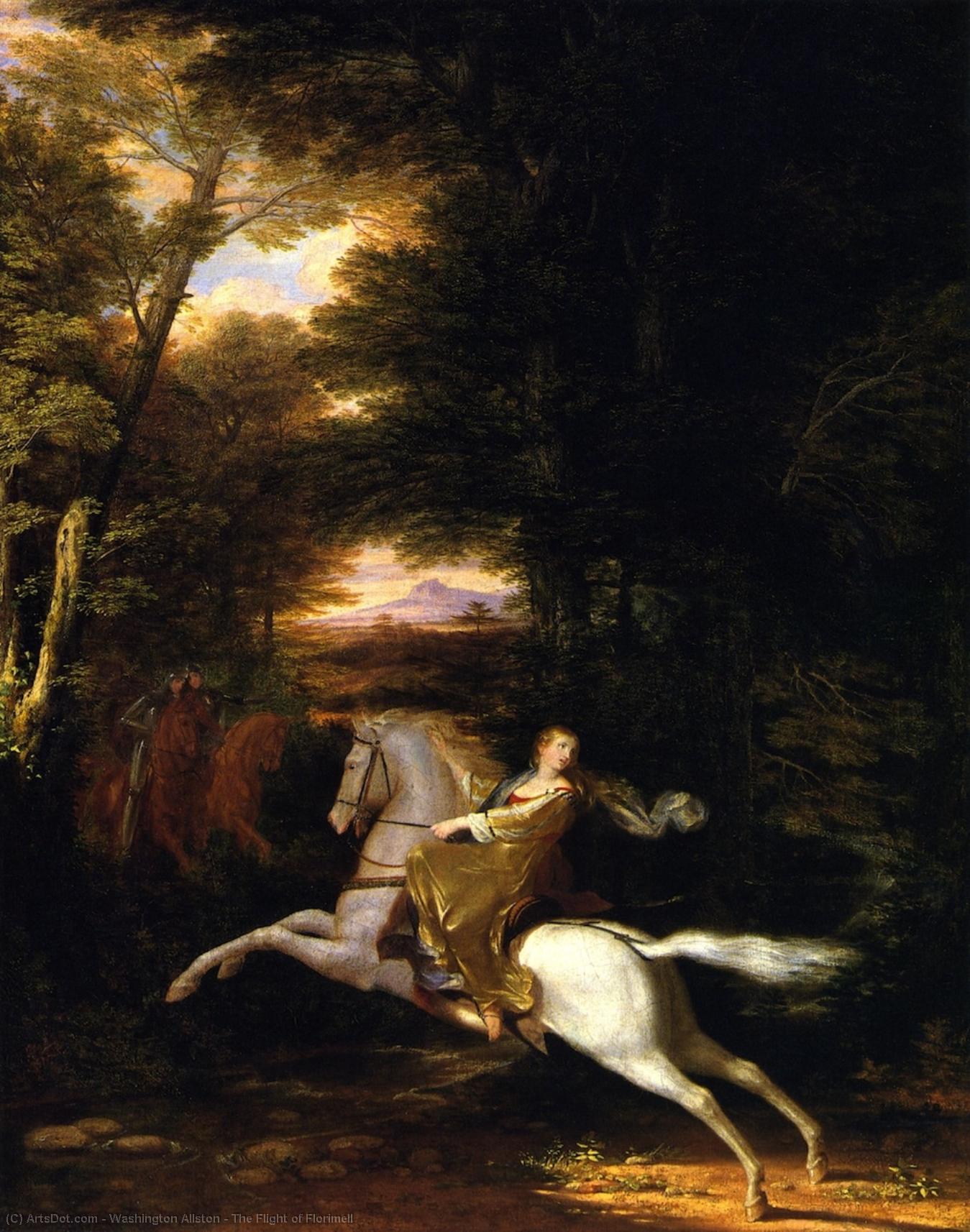
The Flight of Florimell: A Gothic Vision of Romantic Idealism
Washington Allston’s “The Flight of Florimell,” completed in 1819, stands as a cornerstone of American Romantic art—a hauntingly beautiful depiction that transcends mere landscape painting to embody profound psychological and spiritual themes. Currently residing at the Detroit Institute of Arts, this monumental oil on canvas captures not just a picturesque vista but also the anxieties inherent within achieving sublime beauty.
Composition and Technique: Embracing Dramatic Light
The scene unfolds against a backdrop of brooding cypress trees silhouetted against an overcast sky—a deliberate choice by Allston that reflects the Romantic preoccupation with atmospheric perspective. Dominating the canvas is a solitary knight, astride a horse, pursuing a woman fleeing into the darkness beneath the trees. The composition is meticulously crafted to draw the viewer’s eye upwards, emphasizing the grandeur of nature and simultaneously conveying a sense of urgency and peril. Allston employed a technique characterized by thick impasto—heavy application of paint—creating palpable texture and capturing the dynamism of movement. His masterful use of tonal modulation – shifting hues from deep blues and greens to flashes of pale luminescence – generates an emotional resonance that is both unsettling and sublime.
Symbolism: Fear, Faith, and Transcendence
"The Flight of Florimell" isn’t simply a depiction of a chase; it's laden with symbolic significance rooted in Edmund Spenser’s “The Faerie Queene,” Allston’s primary inspiration. The knight represents Christian virtue striving to overcome earthly obstacles—a motif prevalent throughout Romantic literature and art. Conversely, Florimell embodies innocence threatened by darkness, symbolizing the vulnerability of faith amidst worldly temptations. The cypress trees, traditionally associated with mourning and immortality, underscore the painting's contemplation of mortality and the pursuit of spiritual enlightenment. Allston’s deliberate use of chiaroscuro—the interplay between light and shadow—further amplifies these themes, creating a visual representation of internal struggle and divine grace.
Historical Context: Romanticism's Embrace of Emotion
Painted during the height of the Romantic movement in Britain and America, “The Flight of Florimell” reflects the era’s fascination with emotion, imagination, and the sublime—concepts championed by thinkers like Coleridge and Wordsworth. Rejecting Enlightenment rationalism, Romantic artists sought to express subjective experience and grapple with existential questions. Allston's work aligns perfectly with this artistic impulse, capturing a mood of melancholy beauty that anticipates later developments in Impressionism and Expressionism. It stands as a testament to the enduring power of art to convey profound psychological truths and inspire contemplation about the human condition.
Emotional Impact: A Landscape of Inner Turmoil
Viewing “The Flight of Florimell” evokes a visceral response—a feeling of unease mingled with awe. The painting’s unsettling palette, combined with its dramatic composition, compels the viewer to confront anxieties about loss and vulnerability. Yet, amidst the darkness, Allston introduces slivers of ethereal light, suggesting that even in moments of despair, beauty and transcendence remain attainable. This duality—the tension between fear and faith—is precisely what distinguishes “The Flight of Florimell” as a masterpiece of Romantic art and continues to captivate audiences today.