A Symphony of Color and Form: Exploring Kandinsky’s “Mountain”
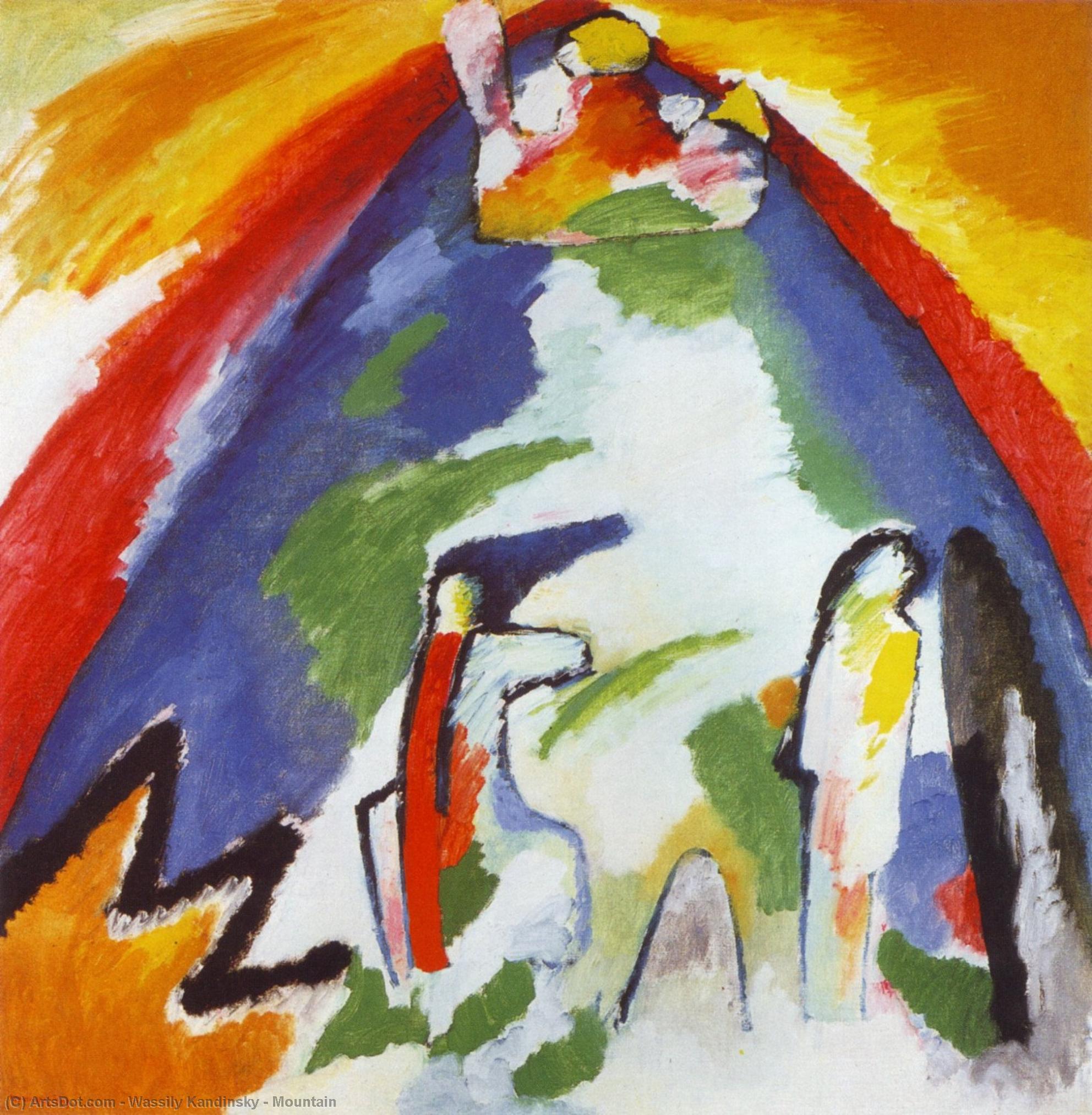
Wassily Kandinsky's "Mountain" is a captivating example of early Expressionism, a pivotal moment where the artist began to liberate color and form from representational constraints. This vibrant painting, readily available for viewing and reproduction through
ArtsDot.com, presents a stylized landscape featuring three figures seemingly dwarfed by the majestic presence of mountains under a dramatically colorful sky. It’s not merely *a* mountain; it's an evocation of mountainousness – a feeling, an energy, rendered in pure visual sensation.
Decoding the Composition and Palette
The painting immediately strikes the viewer with its bold and unrestrained use of color. Kandinsky employs a rich palette—fiery reds, vibrant blues, sunny yellows, and lush greens—not to mimic nature’s hues but to express inner emotional states. The oil medium is expertly handled, creating both smooth blended areas and thick impasto strokes that add texture and dynamism. These brushstrokes aren't simply applying paint; they *are* the energy of the scene, swirling around the figures and defining the mountainous forms. The three individuals, each holding an umbrella (perhaps against rain or sun, adding a touch of ambiguity), act as anchors within this energetic landscape, offering a human scale to the overwhelming power of nature.
Kandinsky’s Artistic Journey & Influences
“Mountain” occupies a fascinating space in Kandinsky's oeuvre. While not fully abstract, it demonstrates his crucial transition *towards* abstraction. He was deeply influenced by Theosophy and believed that art should express the “inner necessity” of the artist – a spiritual truth revealed through form and color. This belief is palpable here; the painting isn’t about depicting a specific place but about conveying a feeling of awe, wonder, and perhaps even spiritual connection to nature. His earlier works, like
The Blue Mountain and “Fugue” (
ArtsDot.com), share this exploration of color and form to evoke emotional responses, demonstrating a consistent artistic vision. The influence of Russian folk art, with its bold colors and simplified forms, is also subtly present.
Symbolism & Emotional Resonance
The symbolism within “Mountain” remains open to interpretation, which is characteristic of Kandinsky’s work. Mountains themselves often represent challenges, aspirations, or spiritual transcendence. The figures could symbolize humanity's relationship with the natural world – small and vulnerable yet seeking connection. The vibrant sky might suggest hope, inspiration, or a sense of the sublime.
Ultimately, the painting invites viewers to project their own emotions and experiences onto its canvas. It’s not about *what* you see but *how* it makes you feel.
Collecting Kandinsky: Reproductions & Legacy
Kandinsky's influence on 20th-century art is immeasurable, paving the way for abstract expressionism and countless other movements. Owning a piece of his world doesn’t require acquiring an original; high-quality
handmade oil painting reproductions are available through
ArtsDot.com, allowing art enthusiasts to experience the vibrancy and emotional depth of “Mountain” firsthand. His work continues to inspire artists today, and museums worldwide—including the
Rugby Art Gallery and Museum in the UK—celebrate his enduring legacy. “Mountain” is more than just a painting; it’s a window into the soul of a visionary artist and a testament to the power of art to transcend representation and connect us to something deeper.
- Explore further works by Kandinsky on ArtsDot.com.
- Delve deeper into the artist’s life and theories on Wikipedia.