A Symphony of Light and Motion
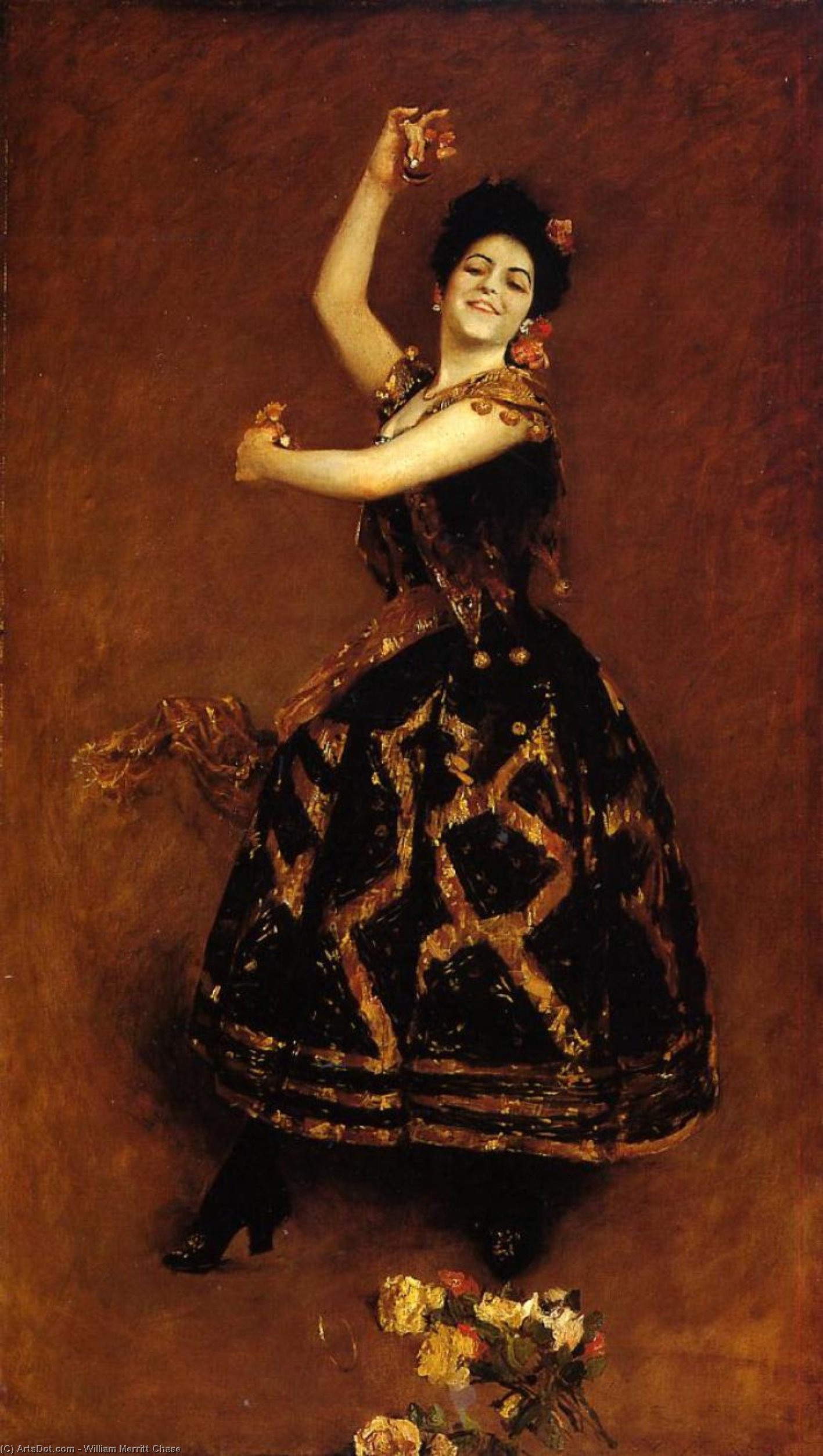
In the luminous realm of American Impressionism, few works capture the ephemeral magic of a single moment as vibrantly as William Merritt Chase’s Carmencita. Painted in 1888, this masterpiece is far more than a mere portrait of a performer; it is a breathtaking study of light, movement, and the intoxicating energy of the stage. As the viewer's eye meets the canvas, they are immediately swept into a world where the boundaries between reality and impression dissolve, leaving behind only the pure, shimmering essence of a dance in progress. The subject, the celebrated Spanish-style dancer Carmencita, is frozen in a state of graceful poise, her presence commanding the space with an effortless elegance that transcends the era from which she emerged.
Chase, a pivotal figure in shaping the American artistic identity, utilizes a technique that breathes life into every brushstroke. Eschewing the rigid, meticulous lines of academic tradition, he embraces the Impressionist ethos of broken color. By applying thin, rhythmic layers of pigment side by side rather than blending them into smooth gradients, Chase allows light to dance across the surface of the painting. This creates a scintillating effect, particularly visible in the way the sunlight seems to filter through the atmosphere, catching the edges of the dancer's flowing gown and the lush greenery of the potted plant. The interplay of deep reds and vibrant greens provides a rich, chromatic depth that makes the composition feel as though it is pulsing with its own internal heartbeat.
Symbolism and the Art of the Moment
Beyond the technical brilliance lies a profound narrative of celebration and fleeting beauty. The painting serves as a window into the vibrant culture of pre-vaudeville variety and music hall ballet, capturing a time when performance was an intimate, visceral experience. Every element within the frame contributes to this sense of theatrical splendor. The floral motifs adorning Carmencita's dress are not merely decorative; they symbolize a blossoming femininity and a connection to the natural world, even within the artificial setting of the stage. Her fan, held aloft with practiced grace, acts as an extension of her movement, guiding the viewer’s gaze through the swirling energy of her performance.
There is a poignant emotional resonance found in the subtle details—the way Chase depicts the audience's enthusiasm through the inclusion of flowers and jewelry tossed at the dancer's feet. These small tokens of affection ground the painting in a sense of shared human joy, making the scene feel remarkably intimate. For the collector or the interior designer, Carmencita offers more than just visual splendor; it brings an atmosphere of sophisticated vitality into a space. It is a piece that invites contemplation on the ephemeral nature of experience, reminding us to find beauty in the fleeting, the luminous, and the profoundly alive.