A Glimpse Through the Lens of Early American Impressionism
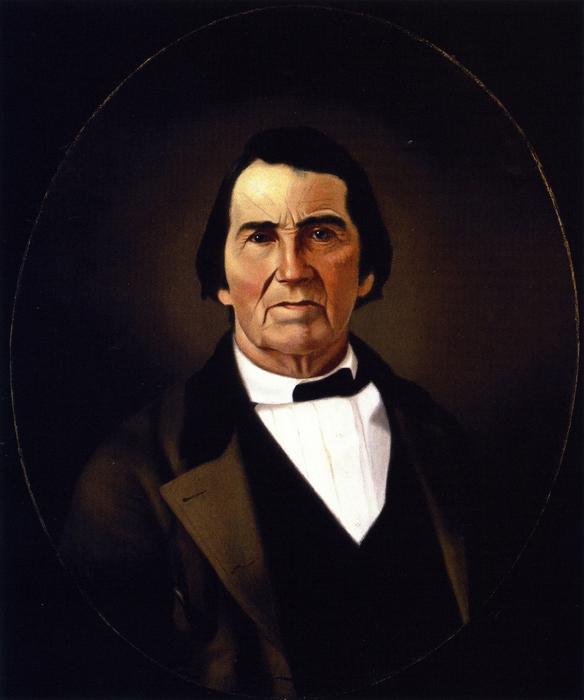
In the quiet, commanding presence of William Merritt Chase’s “Moses Swaim,” painted in 1866, we encounter more than a mere portrait; we find a profound window into the burgeoning spirit of American Impressionism. Long before the movement reached its full, vibrant crescendo, this early work by Chase hints at a revolutionary shift in how light and character could be captured on canvas. The painting presents us with Moses Swaim, a man whose historical footprint as a prominent Indiana businessman and philanthropist is etched into his very expression. As we gaze upon him, there is an immediate, almost startling connection established through his direct gaze—a look that balances the weight of civic responsibility with a subtle, underlying vulnerability. It is a piece that does not merely document a face, but invites the viewer into a silent dialogue with the past.
The composition is masterfully anchored by Chase’s early experimentation with chiaroscuro, using dramatic contrasts between light and shadow to sculpt the contours of Swaim’s features. While the subject matter leans toward the dignified realism of the mid-19th century, one can sense the seeds of Impressionism beginning to sprout in the way Chase handles texture and atmosphere. The artist moves away from the rigid, sterile perfection of academic tradition, opting instead for a technique that prioritizes the emotional truth of the moment. Through the careful application of paint, he captures the soft sheen of spectacles—symbolizing intellect and wisdom—and the heavy, formal textures of a dark suit and tie, which ground the subject in the societal expectations of his era.
Symbolism and the Soul of the Subject
Beyond the biographical significance of the sitter, “Moses Swaim” is rich with symbolic resonance that continues to captivate collectors and historians alike. The inclusion of spectacles serves as a poignant metaphor for the clarity of thought and the depth of knowledge associated with Swaim’s reputation. Every element of his attire speaks to a life of structure and duty, yet Chase imbues the portrait with a sense of quiet introspection. This tension between outward formality and inward contemplation is what gives the painting its enduring emotional impact. For the discerning decorator or art enthusiast, this work offers a sophisticated focal point that brings a sense of historical gravity and intellectual depth to any curated space.
To possess a reproduction of such a masterpiece is to bring a piece of American art history into the modern home. The painting’s ability to evoke dignity, wisdom, and a timeless sense of peace makes it an ideal selection for interior designers seeking to create environments of prestige and reflection. Whether placed in a private library, a formal study, or a contemporary gallery setting, Chase’s work serves as a testament to the power of light and the enduring strength of the human spirit. It remains a cornerstone of American heritage, reminding us that even within the structured bounds of portraiture, there is infinite room for the exploration of the soul.