William Merritt Chase’s Still Life: A Study in Light and Atmosphere
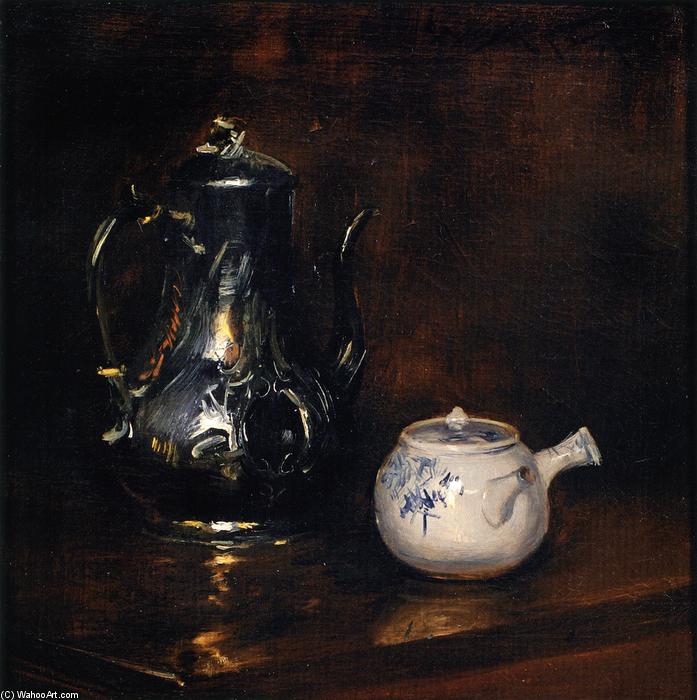
William Merritt Chase's "Still Life" offers a captivating glimpse into the heart of American Impressionism, a movement that sought to capture not just the appearance of objects but their very essence – the fleeting effects of light and atmosphere. Painted around 1900, this work exemplifies Chase’s mastery of color and his ability to imbue everyday scenes with an almost ethereal quality. The composition itself is deceptively simple: two vases, a teapot, and cups arranged on a table, yet within this arrangement lies a profound exploration of form, light, and the quiet beauty of domesticity.
A Masterclass in Impressionistic Technique
Executed in oil paints on canvas, "Still Life" showcases Chase’s signature technique – loose, visible brushstrokes that build up layers of color to create a shimmering surface. The artist meticulously observed the way light played across the ceramic surfaces, rendering reflections with delicate precision. Note the soft blurring of lines, characteristic of Impressionism's desire to capture momentary impressions rather than precise details. This deliberate lack of sharp definition contributes significantly to the painting’s dreamlike quality, inviting the viewer to lose themselves in its luminous depths. The visible texture of the paint itself becomes a key element of the artwork, adding to its tactile and immersive experience.
Symbolism and the Language of Still Life
Still life paintings have long been imbued with symbolic meaning, and Chase’s work is no exception. The arrangement of objects – vases, often associated with beauty and grace, a teapot representing hospitality and warmth, and cups symbolizing conviviality – suggests a scene of quiet contemplation or perhaps an invitation to shared moments. The muted color palette, dominated by browns, blacks, and earth tones, evokes a sense of nostalgia and timelessness. The subtle introduction of white and blue within the smaller vase provides a vital counterpoint, adding visual interest and hinting at a connection to nature – a recurring theme in Chase’s work.
Historical Context: The Rise of American Impressionism
“Still Life” was created during a pivotal moment in art history. William Merritt Chase was a leading figure in the burgeoning American Impressionist movement, which sought to break away from the academic traditions of the time and embrace a more subjective approach to painting. Influenced by artists like Claude Monet and Pierre-Auguste Renoir, Chase captured the vibrant light and atmosphere of the American landscape and urban scenes with remarkable sensitivity. His work helped establish Impressionism as a distinct artistic style in America, paving the way for future generations of American painters.
Emotional Impact and Artistic Legacy
Beyond its technical brilliance, “Still Life” possesses a profound emotional resonance. The painting’s quiet stillness and luminous quality evoke a sense of peace and tranquility. It is a work that invites the viewer to slow down, observe the beauty in everyday objects, and appreciate the fleeting nature of light and time. William Merritt Chase's "Still Life" remains a testament to his artistic vision and a powerful example of Impressionism’s enduring appeal – a timeless masterpiece that continues to captivate audiences today.