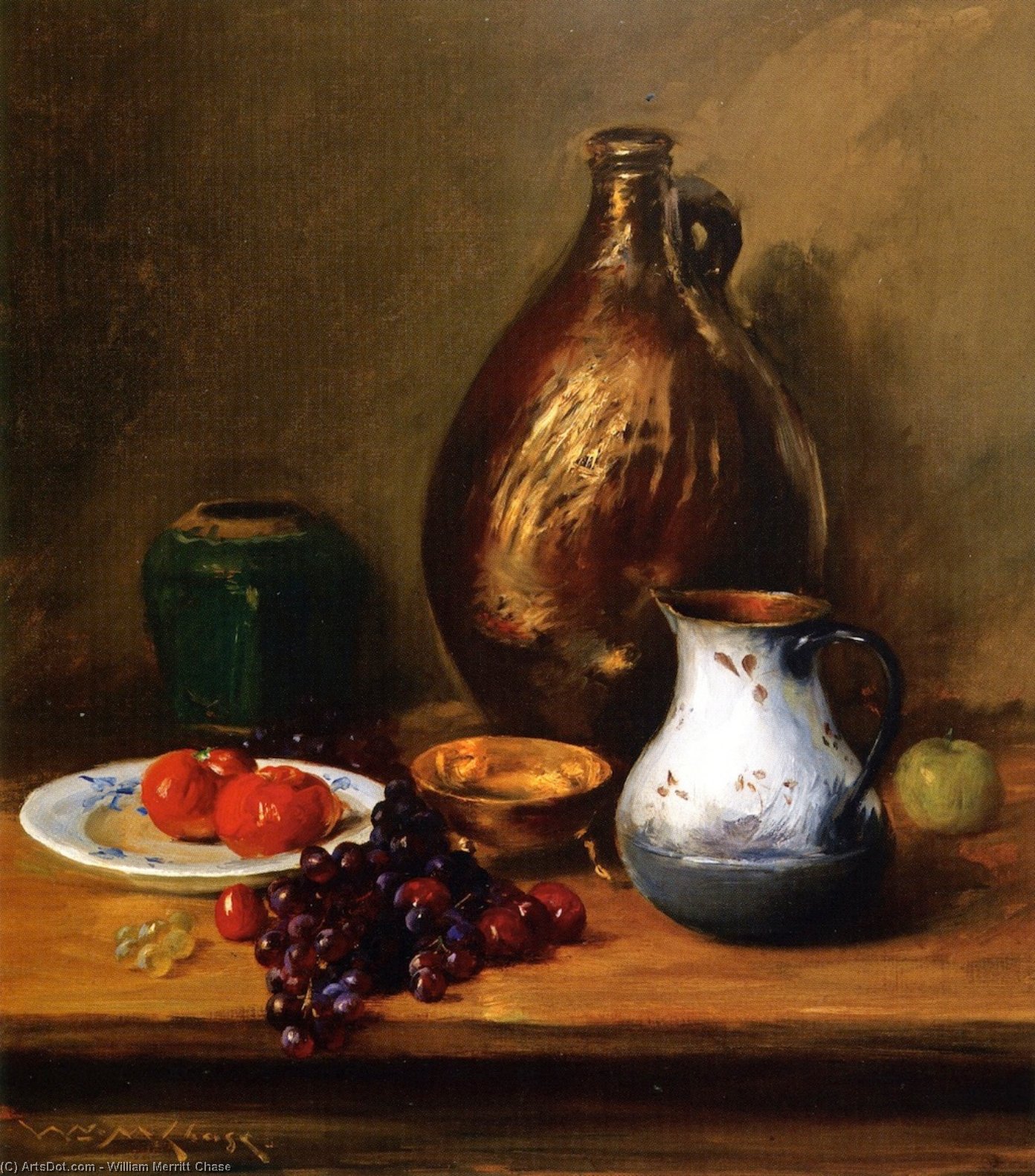
Experience the luminous Impressionist style of William Merritt Chase’s Still Life with Fruit and Pottery – a captivating depiction of everyday beauty bathed in soft light, perfect for enriching any home.
ナインベブ
アメリカ合衆国
ウィリアム・メリット・チェイス
W M チェイス
19世紀後半のアメリカを代表する印象派画家、ウィリアム・メリット・チェイス。鮮やかな色彩と大胆な筆致で都市の風景や人物を描き、アメリカ絵画に新たな風を吹き込みました。ポートレート、静物画、風景画など幅広い作品群は、今日でも多くの人々を魅了しています。
印象派
ウェイマン・エルブリッジ・アダムス
ジャン=レオン・ジェローム
1849年11月1日
1916年10月25日
ウィリアム・メリット・チェイス
アメリカ人
キーイング・アップ – コート・ジェスター
インディアナ州ナインベブ
立方体主義
1
ウィリアム・メリット・チェイスは、どの芸術運動の主要な人物として知られていますか?
Still LIfe with Fruit and Pottery: An Ode to Light and Color
The painting “Still LIfe with Fruit and Pottery,” attributed to William Merritt Chase, stands as a quintessential embodiment of Impressionism—a movement that irrevocably altered the course of art history. Created sometime around 1880-1882, this deceptively simple composition pulsates with an energy born from careful observation and masterful manipulation of light and color. Currently residing in the Cincinnati Art Museum, it offers a glimpse into the artistic sensibilities of its era and continues to resonate powerfully with viewers today.
A Symphony of Impressionistic Technique
Chase’s approach to painting was fundamentally rooted in capturing fleeting moments of perception rather than striving for photographic realism. He achieved this remarkable feat through a technique characterized by loose brushstrokes—bold, visible marks that convey texture and movement—and an emphasis on layering colors to create luminous effects. The artist skillfully blended hues directly onto the canvas, eschewing meticulous blending techniques favored by academic painters. This method allowed Chase to capture the subtle nuances of light as it refracted across surfaces, resulting in a shimmering quality that imbues the scene with warmth and vitality. Notice particularly how the warm yellows and oranges illuminate the fruit—creating an illusion of radiance that transcends mere representation.
Historical Context: The Dawn of Modern Art
“Still LIfe with Fruit and Pottery” emerged during a period of profound artistic transformation in Europe, spearheaded by Impressionists like Claude Monet and Pierre-Auguste Renoir. These artists rejected the conventions of traditional art academies, prioritizing subjective experience and capturing the atmosphere of everyday life. Chase’s work aligns seamlessly with this broader movement, reflecting the burgeoning interest in plein air painting—working outdoors directly from nature—and a fascination with exploring the expressive potential of color. The Cincinnati Art Museum's acquisition underscores the enduring significance of Impressionism as a cornerstone of Western art tradition.
Symbolic Resonance: Beyond Mere Decoration
While aesthetically pleasing, “Still LIfe with Fruit and Pottery” transcends mere decorative considerations. The arrangement of objects—apples, grapes, pears, vases, and bottles—holds symbolic weight within the context of Impressionist thought. Fruits represent abundance and fertility, while pottery symbolizes domesticity and craftsmanship. These elements collectively convey a sense of tranquility and contemplation, inviting viewers to savor the beauty of the natural world and appreciate the artistry of its depiction. The careful positioning of these items contributes to the overall harmony of the composition—a testament to Chase’s artistic vision.
Emotional Impact: A Moment Frozen in Time
Ultimately, “Still LIfe with Fruit and Pottery” succeeds in evoking a profound emotional response. Its soft lighting and harmonious color palette instill a feeling of serenity and warmth, transporting the viewer back to a bygone era. The painting captures not just what is seen but also how it feels—a subtle reminder that art possesses the power to transcend time and communicate universal human experiences. It’s a piece that speaks volumes about beauty, observation, and the enduring legacy of Impressionism.