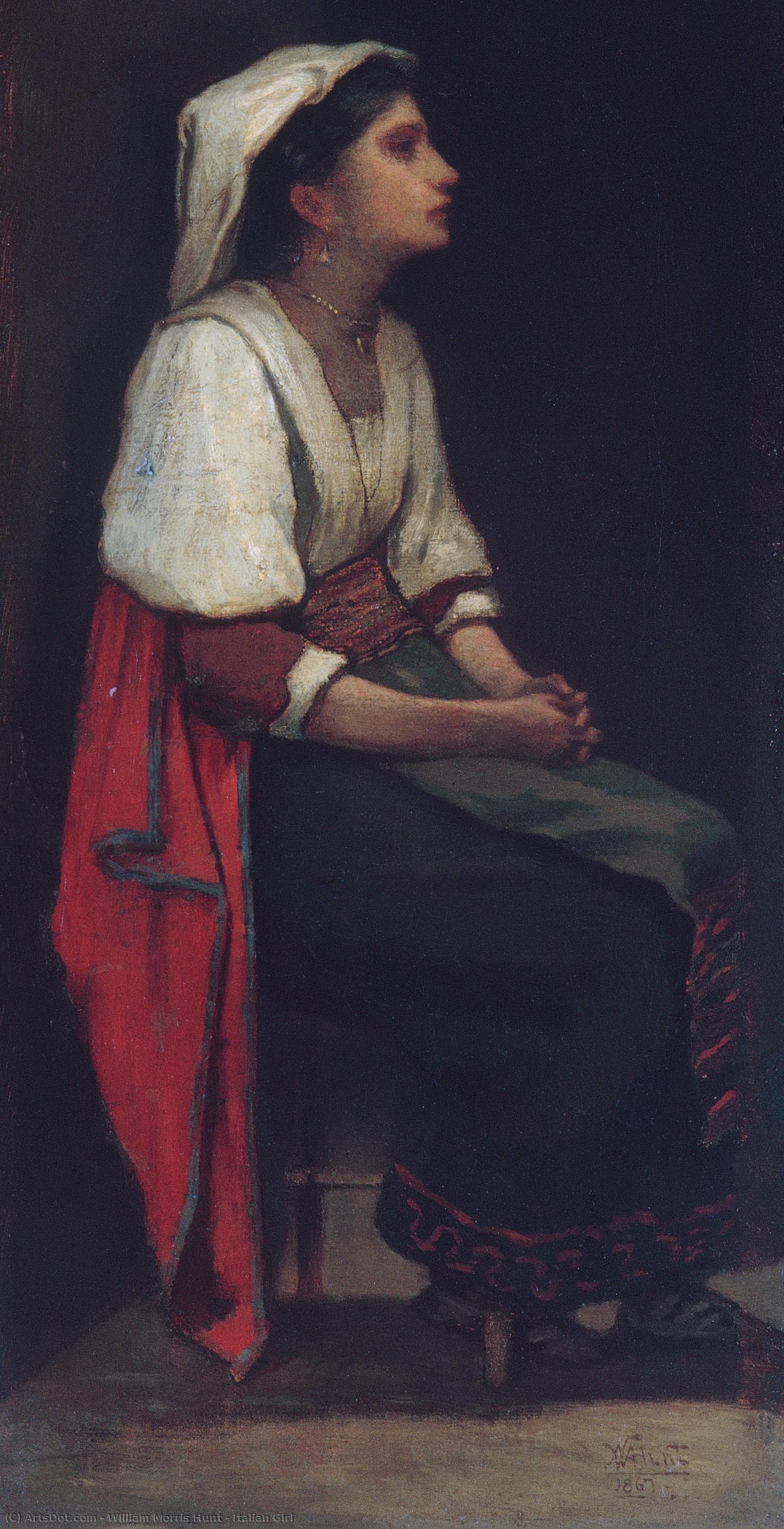
Experience the luminous introspection of William Morris Hunt's Italian Girl (1867), a masterpiece echoing Barbizon School naturalism; discover this Victorian sensibility today.
ウィリアム・モリス・ハント (1824-1879):光り輝く風景画と肖像画で知られるアメリカのバルビゾン派画家。ミレーに触発され、19世紀ボストンの芸術界を形成し、ヨーロッパの様式を広める役割を果たしました。
メトロポリタン美術館
(New York, United States of America)
5千年の芸術と文化を体験!メトロポリタン美術館で、古代エジプトの遺産からルネサンス絵画まで、世界中の至宝を発見。ニューヨークの象徴的な美術館へ。
(229文字)
A Window into Victorian Sensibility: William Morris Hunt’s “Italian Girl”
William Morris Hunt's "Italian Girl," painted in 1867, transcends mere portraiture; it embodies the spirit of the Barbizon School and captures a poignant moment of contemplation within the burgeoning American artistic landscape. Held at The Metropolitan Museum of Art in New York City, this oil on canvas offers more than just visual beauty—it invites viewers to delve into the complexities of Victorian ideals surrounding femininity and spirituality.
### Subject Matter & Composition
The painting depicts a young woman seated gracefully upon a chair, her gaze directed towards an unseen point beyond the frame. Her attire is simple yet elegant – a white headscarf framing her face – emphasizing purity and modesty, hallmarks of artistic sensibilities prevalent during Hunt’s era. The subtle positioning of her body contributes to a sense of stillness and introspection, prompting reflection on themes of inner peace and observation.
### Artistic Style & Technique: Embracing Luminosity
Hunt's masterful application of oil paint exemplifies the Barbizon School’s commitment to capturing natural light and atmosphere with remarkable realism. Unlike the polished surfaces favored by academic painters, Hunt prioritized tonal gradations and subtle brushstrokes to achieve a luminous effect that mimics the diffused sunlight filtering through foliage—a deliberate homage to Jean-François Millet's landscapes, which profoundly influenced Hunt’s artistic vision. The artist skillfully rendered textures – from the fabric of the chair to the delicate folds of the scarf – demonstrating meticulous attention to detail.
### Historical Context & Influences: Victorian Ideals Reflected
Painted in 1867, “Italian Girl” emerged during a period marked by significant social and intellectual shifts within Victorian America. The Barbizon School’s rejection of idealized beauty and its focus on depicting everyday life resonated with artists seeking to express moral seriousness alongside aesthetic appreciation. Hunt's work reflects the Victorian fascination with spirituality and the importance of inner contemplation, mirroring broader cultural trends that championed virtue and moral integrity.
### Symbolism & Emotional Resonance: A Moment Frozen in Time
Beyond its technical prowess, “Italian Girl” carries symbolic weight. The woman’s averted gaze suggests a preoccupation with something beyond the immediate visual realm—perhaps an internal dialogue or a yearning for transcendence. White symbolizes purity and innocence, reinforcing the painting's overarching message of serenity and contemplation. Hunt’s ability to convey emotion through subtle gestures and tonal nuances elevates the artwork from a mere depiction of a woman into a powerful emblem of Victorian ideals.
### Conclusion: An Enduring Legacy
“Italian Girl” remains an enduring testament to William Morris Hunt’s artistic genius and his contribution to establishing American Barbizon painting as a distinct aesthetic tradition. Its luminous quality, meticulous technique, and evocative symbolism continue to inspire admiration and offer viewers a glimpse into the soul of Victorian America—a timeless masterpiece that speaks volumes about beauty, contemplation, and the pursuit of inner harmony.