プレビュー
プレビュー
 プリントを購入
 シェアする
シェアする シェアする
シェアする


 ダウンロード
 似ている作品
 X線調査
X線調査 スライドショー
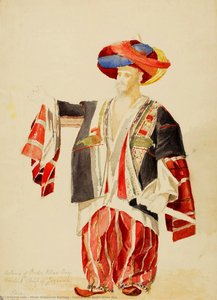
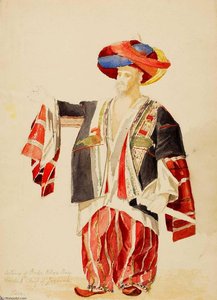
Costume of Beder Khan Bey
 Acrylic On Canvas
- WallArt
- Orientalist Painting
 35.0 x 26.0 cm
 ナショナルギャラリー
マイナー・キルボーン・ケロッグ(1814 – 1889)
マイナー・キルボーン・ケロッグ(1814-1889)は、鮮やかな肖像画、風景画、中東の情景で知られるアメリカのオリエンタリスト画家、美術史家、コレクターです。彼の作品は、19世紀の旅と芸術交流の一端を垣間見せてくれます。
ナショナルギャラリー(ワシントンD.C., アメリカ合衆国)
Generate JSON answer in Japanese. Only valid JSON only , do not do additional text/comment , do not generate Markdown, Do not generate do Markup. アメリカ芸術の傑作を鑑賞!ナショナルギャラリーは、洗練された建築と無料入館で、誰もがアクセスできる芸術体験を提供します。歴史的な絵画や彫刻など多様なコレクションをご堪能ください。 アメリカ芸術の傑作を鑑賞!ナショナルギャラリーは、洗練された建築と無料入館で、誰もがアクセスできる芸術体験を提供します。歴史的な絵画や彫刻など多様なコレクションをご堪能ください。
Costume of Beder Khan Bey: An Orientalist Portrait by Miner Kilbourne Kellogg
Miner Kilbourne Kellogg’s “Costume of Beder Khan Bey” stands as a testament to the burgeoning fascination with the Middle East during the Victorian era and exemplifies the stylistic hallmarks of American tonalism. Painted around 1879, this watercolor on paper captures not merely an individual likeness but also embodies a broader cultural preoccupation with exotic landscapes and aristocratic figures—a trend that reflects the intellectual currents shaping late nineteenth-century art.
Subject Matter & Composition
The artwork depicts Beder Khan Bey, a prominent chieftain of Jezirah Province in Persia (modern Iran), rendered in meticulous detail against a muted tonal backdrop. Kellogg’s focus is squarely on capturing the subject's appearance—specifically his attire—emphasizing the importance of visual representation as a conduit for conveying status and identity. The pose is dignified yet relaxed, suggesting a contemplative gaze directed outwards.
Technique & Style: Tonalism Revisited
Kellogg’s masterful use of watercolor demonstrates an unwavering commitment to tonal harmony—a technique championed by American tonalist painters like Frederic Church and Albert Pinkham Ryder. Rather than striving for vibrant color palettes, Kellogg employs subtle gradations of tone to create atmospheric depth and evoke a sense of mood. This approach prioritizes capturing the essence of light and shadow, mirroring the Impressionists’ influence while retaining a distinctly American sensibility.
Historical Context & Cultural Significance
The painting emerged during a period marked by intense scholarly interest in Persia—fueled by expeditions led by figures like Sir Richard Burton and James Baikie. Kellogg's depiction aligns with this broader cultural enthusiasm, reflecting the Victorian fascination for Orientalism – an artistic movement that sought to portray Eastern cultures as both alluring and mysterious. The costume itself speaks volumes about social hierarchy and ceremonial dress within Persian society.
Symbolism & Emotional Impact
"Costume of Beder Khan Bey" transcends mere portraiture; it communicates a profound appreciation for visual beauty and an astute observation of human character. Kellogg’s careful rendering of texture—particularly the folds of the turban and robe—adds to the artwork's tactile quality, inviting viewers to contemplate not only what is seen but also how it feels. Ultimately, the painting evokes a sense of serenity and contemplation, mirroring the artist’s own contemplative spirit.
Further Research & Resources
- Costume of Beder Khan Bey | Smithsonian American Art Museum
- Miner Kilbourne Kellogg: Costume of Beder Khan Bey
- Costume of Beder Khan Bey
- Costume of Beder Khan Bey | Smithsonian American Art Museum
- Costume of Beder Khan Bey | Smithsonian American Art Museum
- Miner Kilbourne Kellogg
- Miner Kilbourne Kellogg: A Study in American Tonalism & Atmospheric Landscape
Explore more about Miner Kilbourne Kellogg and his artistic legacy at ArtsDot.
作品詳細
- 作品名: Costume of Beder Khan Bey
- 作家: マイナー・キルボーン・ケロッグ
- 作品サイズ: 35.0 x 26.0 cm
- 技法: Portrait
- 著作権の状態: パブリックドメイン
- 展示場所: ナショナルギャラリー
- 技法・素材: WallArt
- 制作時期: Mature Period
- カラーパレット: Pastels
- 用途: Accent
作品詳細
- Dimensions: 35 x 26 cm
- Medium: Watercolor on paper
- Location: Smithsonian American Art Museum
- Subject or theme: Dress — costume — Beder Khan Bey Chief of Jezirah
- Title: Costume of Beder Khan Bey
- Influences: American Tonalism
QRコード