

 プレビュー
プレビュー
 プリントを購入
 シェアする
シェアする シェアする
シェアする


 ダウンロード
 似ている作品
 X線調査
X線調査 スライドショー
Inspiration of the poet

A Moment of Divine Revelation
Nicolas Poussin’s “The Inspiration of the Poet” isn't merely a portrait; it’s a carefully constructed tableau vivant, a frozen moment brimming with intellectual and spiritual significance. Painted around 1630, this oil on canvas transports us to a secluded Roman setting – a space both intimate and profoundly resonant with classical ideals. At first glance, it appears a simple gathering of figures: a young poet, poised over his writing desk, surrounded by the serene presence of Apollo, the god of music and poetry, and his attendant Cupids. Yet, beneath this surface lies a complex meditation on creativity, divine influence, and the very nature of artistic inspiration.
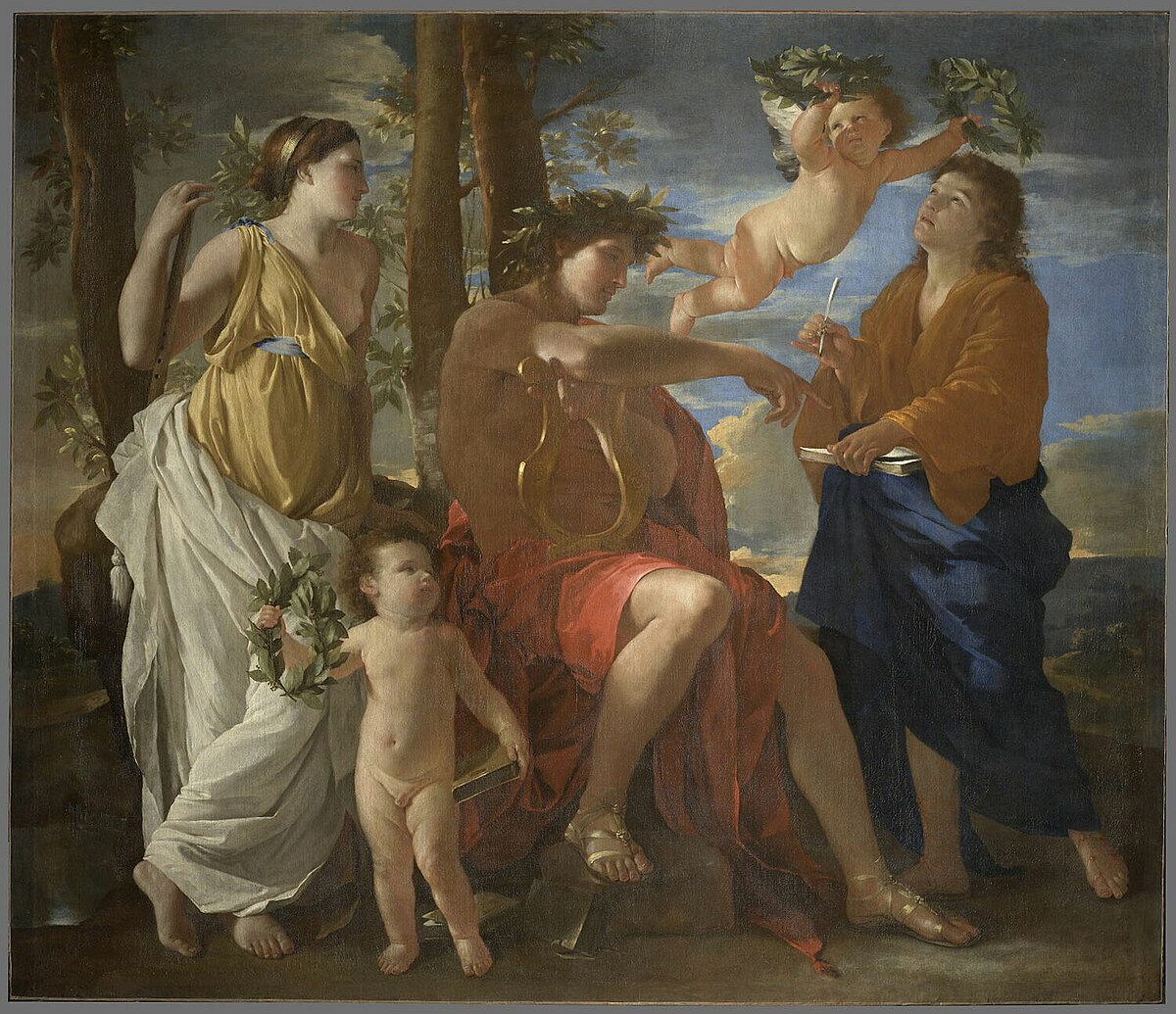
Classical Composition and Harmonious Color
Poussin’s mastery lies not just in his subject matter, but in his meticulous technique. The painting exemplifies his signature style – a deliberate restraint that prioritizes clarity, order, and an almost mathematical precision. Notice the carefully arranged pyramidal composition, anchoring the scene with Apollo at its apex. The figures are bathed in a soft, diffused light, characteristic of Poussin’s use of *chiaroscuro* (the contrast between light and dark), which lends a sense of depth and atmosphere to the space. The palette is remarkably restrained – muted earth tones, delicate blues, and subtle pinks—creating a harmonious and contemplative mood. The artist's attention to detail is astonishing; observe the texture of the poet’s clothing, the delicate folds of the drapery, and the intricate patterns on the Cupid’s wings.
- Linear Perspective: Poussin employs a sophisticated system of linear perspective, drawing the viewer's eye into the scene with converging lines.
- Atmospheric Perspective: The background landscape is rendered in hazy blues and purples, creating a sense of distance and depth.
- Color Harmony: The muted color palette contributes to the painting’s overall sense of serenity and balance.
Mythic Symbolism and Intellectual Depth
Beyond its formal beauty, “The Inspiration of the Poet” is rich in mythological symbolism. Apollo, with his lyre, represents divine inspiration – the spark that ignites artistic creativity. The young poet, lost in contemplation, embodies the human desire for knowledge and expression. The Cupids, playful yet watchful, symbolize the fleeting nature of inspiration and the importance of seizing the moment. The laurel wreath, a symbol of victory and poetic achievement, is bestowed upon the poet by Apollo, signifying his recognition as a true artist. The inclusion of Calliope, the muse of epic poetry, further emphasizes the connection between divine guidance and artistic creation. The painting can be interpreted as an allegory for the creative process itself – a journey from darkness to light, from uncertainty to clarity, guided by the hand of the gods.
A Legacy of Inspiration
“The Inspiration of the Poet” stands as a testament to Nicolas Poussin’s profound understanding of classical art and his ability to translate those principles into a deeply moving and intellectually stimulating work. Its influence can be seen in countless subsequent artists, including Jacques-Louis David and Eugène Delacroix. Today, this masterpiece continues to captivate viewers with its serene beauty, its intricate details, and its timeless exploration of the human condition. A reproduction by ArtsDot offers a remarkable opportunity to bring this iconic work into your home or office, allowing you to experience its profound impact firsthand.
ニコラ・プーサン(1594 – 1665)
ピュッソンは、古典的な美しさを追求したフランスバロック絵画の巨匠であり、特に伝説や風景画で知られています。彼の作品群は、永遠の調和と秩序を表現する芸術家としての遺産です。
作品詳細
- 作品名: Inspiration of the poet
- 作家: ニコラ・プーサン
- 技法: Landscape
- 著作権の状態: パブリックドメイン
- 動勢: Classical Baroque
- 技法・素材: Acrylic On Canvas
- コーパスの文脈: courtly art , mythological narratives
- キーワード: louvre , poet , renaissance
- 色相: Amber to Saffron
- 彩度: Balanced
作品詳細
- Year: 1630
- Artist: Nicolas Poussin
- Medium: Oil on canvas
- Influences: Italian Renaissance
- Artistic style: Neoclassical
- Location: Louvre, Paris
- Subject or theme: Poetry and Apollo
QRコード


