

 プレビュー
プレビュー
 プリントを購入
 シェアする
シェアする シェアする
シェアする


 ダウンロード
 似ている作品
 X線調査
X線調査 スライドショー
Portrait of Anna Dalkeith, Countess of Morton, and Lady Anna Kirk


A Glimpse into Elizabethan Elegance: The Portrait of Anna Dalkeith
Sir Anthony van Dyck’s “Portrait of Anna Dalkeith, Countess of Morton, and Lady Anna Kirk” is more than just a depiction of two women; it's a meticulously crafted window into the opulent world of 17th-century England. Completed in 1631, this oil on canvas painting captures a moment of quiet grace within the grand halls of Dalkeith House, Scotland – a setting steeped in history and aristocratic intrigue. The work resides today at the State Hermitage Museum in St. Petersburg, Russia, a testament to its enduring artistic merit and historical significance.
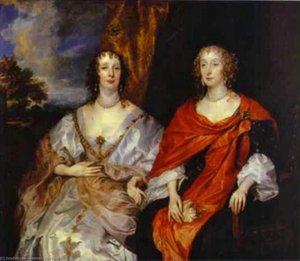
The Subjects: Ladies of Distinction
At the heart of this portrait are two remarkable women: Anna Dalkeith, Countess of Morton, and her daughter, Lady Anna Kirk. Joan Stewart, as she was known in Latin, held a fascinating position within Scottish society – a “mute lady” due to a childhood affliction that rendered her unable to speak. This quiet dignity is beautifully conveyed through the subtle expression on her face and the elegant drape of her gown. Her companion, Lady Anna, radiates youthful beauty and poise, mirroring the refined style favored by the aristocracy of the era. The careful attention to detail in their clothing—the Countess’s rich red velvet dress contrasted with the daughter's pristine white silk – speaks volumes about their social standing and the wealth associated with their lineage.
Further research reveals that Joan Stewart, the Countess, was a direct descendant of James I, King of Scotland. Her life, marked by both privilege and constraint, provides a compelling backdrop for understanding the painting’s context. The inclusion of her daughter highlights the continuation of this noble line and underscores the importance of family within the aristocratic sphere.
Van Dyck's Technique: A Masterclass in Portraiture
Anthony van Dyck was renowned for his ability to capture not just physical likeness but also the very essence of his subjects. In “Portrait of Anna Dalkeith,” he employs a masterful technique characterized by soft, diffused light and delicate brushstrokes. The artist’s use of chiaroscuro – the dramatic contrast between light and shadow – creates a sense of depth and volume, drawing the viewer's eye to the faces of the women. Van Dyck’s signature style is evident in his loose, flowing drapery, which adds movement and dynamism to the composition. The subtle modeling of the figures, achieved through careful layering of paint, gives them a remarkable three-dimensionality.
The artist's background under Peter Paul Rubens profoundly influenced his work; one can see echoes of Rubens’ dynamic compositions and vibrant color palettes in Van Dyck’s approach to light and shadow. However, Van Dyck tempered this influence with an unparalleled elegance and refinement that became the hallmark of his style.
Symbolism and Context: A Window into Elizabethan Society
Beyond the immediate depiction of the two women, the portrait offers a glimpse into the social customs and values of Elizabethan England. The elaborate clothing, jewelry, and hairstyles reflect the wealth and status of the subjects. The inclusion of the trees in the background suggests a connection to nature – a valued element within aristocratic landscapes. The painting’s placement within Dalkeith House, a significant estate associated with Scottish nobility, further emphasizes its historical context. It's likely that this portrait served as both a personal memento and a statement of social standing, reflecting the importance of lineage and patronage in 17th-century England.
The meticulous attention to detail, combined with Van Dyck’s masterful technique, elevates “Portrait of Anna Dalkeith, Countess of Morton, and Lady Anna Kirk” beyond a simple likeness. It is a captivating representation of aristocratic life, imbued with elegance, grace, and the quiet dignity of two remarkable women.
アントニ・ヴァン・ダイク(1599 – 1641)
「アントニオ・ファン・ダイク」は、ルーベンスの影響を受けながら独自の洗練されたスタイルでヨーロッパ貴族の肖像画を制作したフランドルのバロック画家。特にチャールズ1世の宮廷画家として活躍し、英語美術に大きな影響を与えました。彼の作品は優雅さと繊細さで知られ、現代でも多くの人々を魅了しています。
エルミタージュ美術館(Saint Petersburg, Russia)
エルミタージュ美術館 ロシア ミハイル・ピオトロフスキー サンクトペテルブルク エルミタージュ美術館 ルネサンス絵画 年間281万2913人(2022年) 300万点以上 芸術と文化 1764年 サンクトペテルブルクのエルミタージュ美術館へ!ルネサンスから現代まで、息をのむような名作が歴史的な宮殿に展示。芸術と文化の旅に出かけましょう。
作品詳細
- 作品名: Portrait of Anna Dalkeith, Countess of Morton, and Lady Anna Kirk
- 作家: アントニ・ヴァン・ダイク
- 制作年: 1631
- 技法: Landscape
- 著作権の状態: パブリックドメイン
- 展示場所: エルミタージュ美術館
- 技法・素材: WallArt
- 制作時期: Mature Period
- カラーパレット: Earthy
- 用途: Statement
作品詳細
- Title: Portrait of Anna Dalkeith
- Location: State Hermitage, St. Petersburg
- Notable elements: Two women, red/white dresses
- Year: 1631
- Medium: Oil on canvas
- Artistic style: Baroque portraiture
QRコード


