The Architectural Opportunity: Redefining Transitional Zones
 Elevating Interiors: How Murals are Redefining Kitchens and Bathrooms
The Resurgence of Mural Art: A Historical Perspective Draft for Mural In The Unjuried Art Show, Wall B Explore Wassily Kandinsky’s ‘Draft for Mural,’ a groundbreaking abstract work! Discover its dynamic composition, Constructivist roots & lasting inf...
In the sophisticated realm of hospitality and high-end corporate design, the most profound impact is often found not in the grand lobby, but within the quiet, transitional thresholds that connect one experience to another. For the discerning designer, a stairwell, an elevator, or a wine cellar represents more than mere utility; these are untapped architectural opportunities. While much of a project's budget is naturally directed toward primary guest suites and dining halls, it is the overlooked corridors and vertical passages that dictate the rhythm of movement through a building. By introducing bespoke murals into these interstitial spaces, a designer can transform a mundane transition into a moment of discovery.
The true power of mural art lies in its ability to redefine the perceived boundaries of a room. Unlike traditional wallpaper, which offers a repetitive and static surface, a custom-painted mural provides depth, dimension, and a sense of expansion. In confined areas like elevator interiors or narrow stairwells, a well-executed landscape or an abstract composition can visually dissolve the walls, creating an illusion of infinite space. This strategic use of art allows for a seamless continuity of theme throughout a property, ensuring that the brand’s aesthetic narrative remains unbroken, even in its most secluded corners.
Stairwells as Vertical Galleries: Creating Narrative Flow
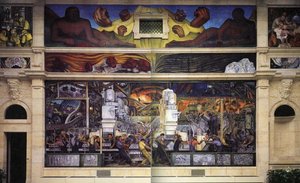 Detroit Industry, North Wall
The Mastery of Mexican Muralism Diego Rivera's "Detroit Industry, North Wall" is a monumental fresco that epitomizes the power and grandeur of Mexican Muralism. As one of Rivera's most celebrated works, this mural captures the essence of industrial l...
A stairwell is inherently a journey, a vertical progression through the layers of a structure. When approached with an artistic lens, this ascent becomes a curated gallery experience. Imagine a staircase where each landing presents a new chapter of a visual story, much like the monumental works of Diego Rivera. His Detroit Industry mural demonstrates how large-scale compositions can capture the very essence of movement and energy through bold lines and dynamic forms. By applying similar principles to a stairwell, a designer can guide the guest’s eye upward, using color transitions and compositional weight to encourage exploration.
The technical challenge of the stairwell lies in its fragmented geometry. However, this fragmentation offers a unique canvas for multi-panel installations. Utilizing a multi-panel approach—splitting a single masterpiece across three, four, or even five panels—allows the artwork to wrap around corners and follow the rise of the stairs. This creates a cohesive, modern architectural look that feels integrated into the very bones of the building. As guests ascend, the shifting perspectives of the brushstrokes and the interplay of light on the canvas create a living, breathing installation that rewards slow, attentive movement.
Wine Cellars and Elevators: Immersive Art for Intimate Enclosures
 The Fresco as Family Legacy: Preserving Heritage Through Wall Art
A Timeless Art Form: Understanding Fresco Painting Wikipedia: Fresco (pl. frescos or frescoes) is a technique of mural painting executed upon freshly laid ("wet") lime plaster. Water is used as the vehicle for the dry-powder pigment to merge with the...
In the most intimate enclosures of a luxury estate or hotel, such as a private wine cellar or a high-speed elevator, the goal is total immersion. These spaces are often characterized by their enclosure and lack of natural light, making them ideal environments for art that relies on rich, saturated pigments and dramatic chiaroscine effects. A wine cellar, in particular, benefits from murals that evoke heritage and timelessness. The use of fresco techniques—where pigment is merged into wet plaster—can lend an air of ancient permanence to a collection, turning a storage space into a sanctuary of culture.
Elevators present a different, yet equally compelling, canvas. As a small, enclosed vessel, the elevator interior acts as a private viewing room. A bespoke mural here can serve as a powerful tool for brand storytelling or sensory delight. Whether it is an abstract work reminiscent of Kandinsky’s dynamic compositions or a lush, botanical scene that provides a momentary escape from the urban bustle, the art becomes a vital component of the passenger's psychological experience. In these small volumes, every detail matters; the texture of the oil paint and the subtle variations in tone become much more intimate and impactful.
Technical Execution: From Large-Format Canvas Rolls to Custom Frescoes
 Fresco
Fresco (pl. frescos or frescoes) is a technique of mural painting executed upon freshly laid ("wet") lime plaster. Water is used as the vehicle for the dry-powder pigment to merge with the plaster, and with the setting of the plaster, the painting be...
Executing large-scale art within architectural constraints requires a sophisticated understanding of both medium and installation. For expansive surfaces, the use of massive canvas rolls offers a solution that combines the grandeur of a mural with the precision of fine art. These works are painted on high-quality cotton canvas, ensuring durability and a rich, tactile surface that far surpasses the flat aesthetic of digital prints. The process is rigorous: from the initial digital mockup to the final application of protective Damar varnish, every step is designed to ensure the artwork survives the rigors of a high-traffic environment.
For projects requiring an even deeper integration with the building's structure, the fresco technique remains the gold standard. Because the pigment becomes an integral part of the wall itself, it offers unparalleled longevity and a matte, velvety finish that is impossible to replicate with modern synthetics. Whether working with the heavy impasto of an oil reproduction or the delicate layers of a fresco, the technical focus remains on the chemistry of materials—using specialized oils and flexible gesso to prevent cracking and ensure that the masterpiece remains vibrant for generations.
Strategic Implementation: Scaling Murals for Hospitality and Corporate Interiors
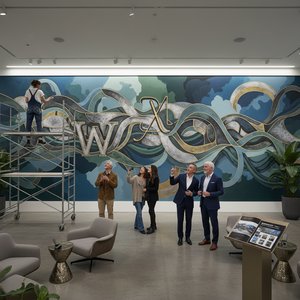 Transforming Spaces: How Custom Murals Forge Brand Identity & Enhance Customer Experience
The Enduring Power of Murals: Beyond Decoration Draft for Mural In The Unjuried Art Show, Wall B Explore Wassily Kandinsky’s ‘Draft for Mural,’ a groundbreaking abstract work! Discover its dynamic composition, Constructivist roots & lasting influence...
For procurement managers and hospitality designers, the implementation of large-scale art must be balanced with operational efficiency. The challenge is often scale; how does one decorate a hundred-foot corridor without overwhelming the budget or the architecture? The solution lies in strategic scaling and the use of repeatable, high-quality motifs. By selecting works that can be customized in size—ranging from standard dimensions to bespoke architectural scales—designers can maintain a consistent aesthetic across multiple properties while managing costs effectively.
Furthermore, the ability to "remix" art history provides a significant advantage in brand building. A designer can take a classical subject and request a contemporary color palette that aligns with a hotel's new seasonal branding. This level of customization ensures that the art is not merely an addition to the room, but a fundamental element of the interior design strategy. When implemented correctly, these large-scale works act as anchors for the entire design scheme, providing a focal point around which all other textures, lighting, and furniture are arranged.
Curating the Experience: Integrating Bespoke Art into Brand Identity
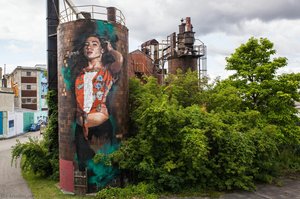 emmanuel jarus
Emmanuel Jarus: Transforming Urban Spaces Through Vibrant Mural Art Emmanuel Jarus, a Canadian artist hailing from Regina, has emerged as a significant voice in contemporary mural art, driven by a profound fascination for the human experience and an ...
Ultimately, the integration of bespoke murals is an exercise in curation. It is about more than just filling a void; it is about creating a cohesive identity that resonates with the guest's emotions. From the moment they enter an elevator to the moment they wander through a dimly lit corridor, the art should whisper the story of the brand. This requires a holistic approach, where the choice of subject matter—be it maritime, landscape, or abstract—is carefully aligned with the property's mission and target demographic.
As we look toward the future of interior design, the intersection of technology and tradition will continue to offer new ways to elevate spaces. Tools that allow for digital mockups and AI-driven stylistic transformations enable designers to visualize complex installations before a single drop of paint touches the canvas. This reduces uncertainty and ensures that the final result is a seamless extension of the architectural vision. In the hands of a skilled professional, a hidden space is never truly hidden; it is simply waiting to be revealed through the transformative power of art.
For professionals seeking to execute these ambitious visions, ArtsDot.com provides the essential infrastructure for large-scale art procurement. Specializing in high-quality, hand-painted reproductions and custom commissions, we offer the depth of catalog and technical expertise required for hospitality and corporate projects. From massive canvas rolls for corridors to bespoke frescoes for intimate cellars, our service is built for reliability, scale, and unparalleled artistic excellence.