Defining the Aesthetic: The Transition from Renaissance Stability to Mannerist Tension
To understand the profound impact of Mannerism on modern luxury interiors, one must first contemplate the serene equilibrium that preceded it. For decades, the High Renaissance—led by the divine proportions of Leonardo and Raphael—offered a vision of a rational, balanced universe. It was an era of mathematical perfection, where every composition adhered to a stable, pyramidal structure that instilled a sense of calm and predictable beauty. However, as the sixteenth century progressed, this certainty began to fracture. The emergence of Mannerism around 1520 represented a seismic shift in the European consciousness, moving away from the imitation of nature toward the expression of
maniera—the artist's unique virtuosity and stylistic artifice.
For the contemporary hotel designer, Mannerism offers a sophisticated departure from the predictable. It is a style defined by tension, elongated forms, and complex, often unsettling arrangements that challenge the viewer’s perception. Rather than seeking to mirror the world as it appears, Mannerist works interpret reality through a lens of heightened emotion and intellectual complexity. In a hospitality setting, integrating these elements allows for the creation of spaces that feel intellectually stimulating and avant-garde. By embracing the deliberate distortions and sophisticated elegance of this period, designers can move beyond mere decoration, instead offering guests an environment of profound mystery and stylistic depth.
The Baroque Revolution: Utilizing Chiaroscuro and Movement for High-Impact Interiors
If Mannerism introduced tension, the Baroque era unleashed pure, unadulterated drama. Flourishing from the early 1600s through the mid-eighteenth century, the Baroque style was a masterclass in theatricality, designed to evoke awe and spiritual fervor. This period abandoned the static nature of previous eras in favor of dynamism, movement, and an intense emotional engagement. At the heart of this revolution lies the technique of
chiaroscary—the masterful interplay of extreme light and deep shadow. This technique does more than create depth; it directs the eye with cinematic intensity, pulling the viewer into the very soul of the composition.
In the context of large-scale hotel lobbies or grand dining halls, the Baroque aesthetic serves as a powerful tool for spatial definition. The use of rich, saturated color palettes—often featuring deep reds, golds, and midnight blues—complements the dramatic lighting found in high-end architectural design. Consider the works of masters like Peter Paul Rubens or Caravaggio; their ability to render texture, from the sheen of silk to the ruggedness of stone, provides a blueprint for creating tactile, immersive environments. When a designer utilizes Baroque principles, they are not merely placing art on a wall; they are orchestrating an emotional experience that captures the guest's attention through movement and light.
Strategic Implementation: Integrating Large-Scale Baroque Murals and Frescoes in Hospitality Spaces
 Mural by Masai
Explore Louis Michel’s vibrant mural of a hummingbird! This colorful street art piece, featuring plush toy-inspired details, raises environmental awareness. Discover its urban setting & unique style.
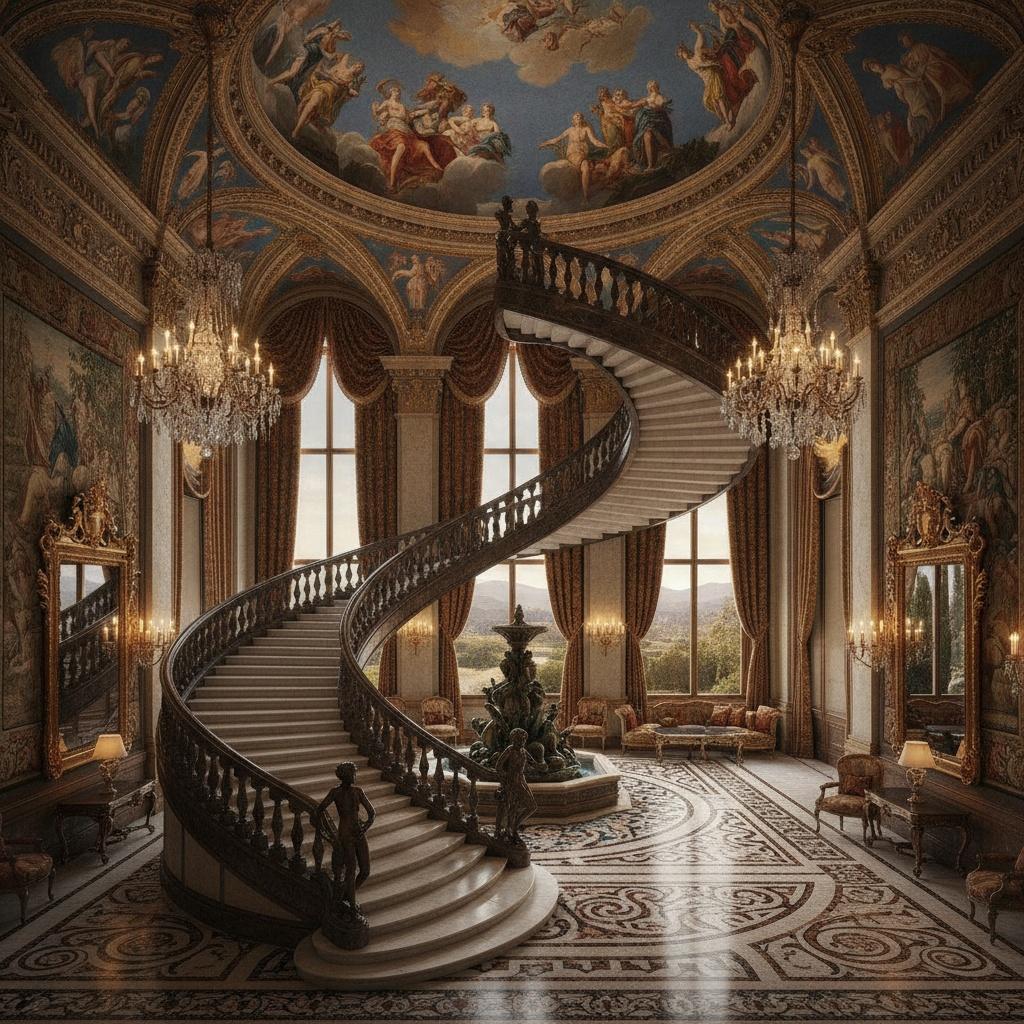
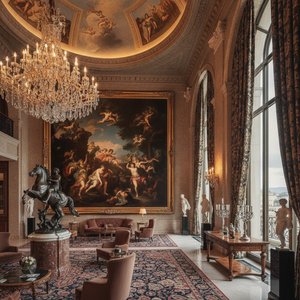
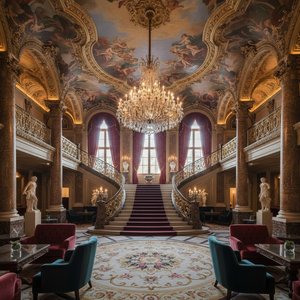
The true grandeur of the Baroque era is perhaps most felt when experienced within monumental architectural settings, such as the New Schleissheim Palace or the Basilica della Santissima Annunziata del Vastato. These spaces were designed to be immersive descents into opulence, where ceilings and walls functioned as canvases for narrative storytelling. For the hospitality professional, the implementation of large-format murals and ceiling frescoes offers an unparalleled opportunity to transform standard architectural volumes into legendary destinations.
Modern technology allows us to recreate these historical triumphs with remarkable precision. Large-scale murals, painted on massive canvas rolls, can be installed similarly to high-specification wallpaper, allowing a hotel to feature breathtaking biblical narratives or mythological scenes that span entire corridors. These works provide a sense of permanence and heritage, even in newly constructed properties. Whether it is the muscular energy of a Bolognese fresco or the sweeping, decorative grandeur of a Flemish ceiling, these large-scale interventions serve as the anchor for an entire interior concept, providing a focal point that defines the property's identity.
Curating Texture and Depth: Selecting Between Hand-Painted Oils and Premium Giclée Prints
A critical decision in the procurement process for any designer is the choice between the tactile soul of a handmade oil reproduction and the efficient precision of a premium Giclée print. For high-impact feature walls,
handmade oil reproductions are the gold standard. These pieces are meticulously crafted on 100% cotton canvas, where the artist’s visible brushstrokes and the physical thickness of the paint—often referred to as the impasto technique—create a three-dimensional texture that prints simply cannot replicate. The subtle variations in pigment and the depth of the oil layers provide a richness that responds dynamically to the changing light within a hotel suite or lounge.
Conversely, for projects requiring rapid deployment across multiple rooms or larger surface areas, premium Giclée prints offer an excellent balance of accuracy and durability. Utilizing archival 12-color inks, these prints provide a high-fidelity representation of the original's tonal range. While they lack the physical relief of oil paint, they are an essential tool for designers managing tight timelines and budgets. For those seeking a middle ground, we offer hand-painted Giclée, where an artist applies hand-painted strokes over a high-quality print, bridging the gap between digital precision and artisanal texture.
Architectural Synergy: Coordinating Multi-Panel Group Sets with Mannerist Ornamentation
Modern hotel architecture often presents challenges in the form of expansive, unbroken wall surfaces or complex staircases that can swallow a single, centered artwork. To address this, the "multi-panel" trend has become a cornerstone of contemporary luxury design. By splitting a singular, dramatic composition across three, four, or even five panels, designers can create a sense of rhythmic movement that guides the guest through a space. This approach is particularly effective when paired with Mannerist ornamentation, where the complexity of the art mirrors the intricate details of the surrounding architecture.
Coordinating these group sets requires careful consideration of color flow and structural alignment. A multi-panel arrangement allows for a more integrated architectural look, where the artwork feels like an extension of the building's skin rather than an afterthought. When executed correctly, these expansive compositions can wrap around corners or follow the ascent of a grand staircase, creating a cohesive narrative thread that connects different zones of a hotel, from the reception desk to the private elevators.
Procurement and Logistics: Managing Bulk Art Orders for Global Hotel Developments
For procurement managers and hospitality chains, the art selection process is often characterized by high pressure, strict budgets, and the need for absolute reliability. Managing large-scale commissions requires a partner who understands the complexities of global logistics, VAT compliance, and the necessity of repeatable quality. Successful art integration in a hotel development relies on a streamlined workflow—from the initial digital mockup that allows for color matching with existing upholstery, to the final delivery via secure, tracked international carriers like DHL or FedEx.
Reliability in the supply chain is paramount. Whether you are coordinating a single custom portrait or a bulk order of dozens of pieces for a new resort, the ability to receive clear documentation, tax-compliant invoices, and a transparent production timeline is essential. At ArtsDot.com, we specialize in supporting the professional trade, offering volume discounts, bespoke sizing, and the technical expertise required to ensure that every piece—from a small study to a massive ceiling fresco—arrives ready for installation, contributing to the seamless realization of your design vision.