Curating Movement: The Psychological Impact of Scenic Landscapes in Hospitality Design
 Landscape
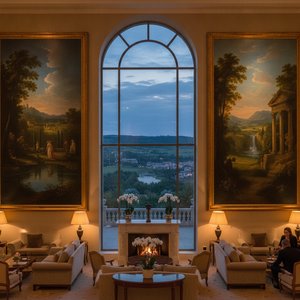
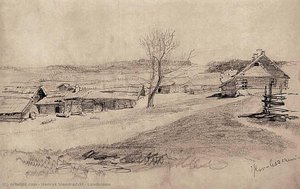
Magnificent Landscape by Henryk Siemiradzki (1873). A stunning academic painting of a serene vista. Hand-painted reproductions available. Explore Siemiradzki's art.
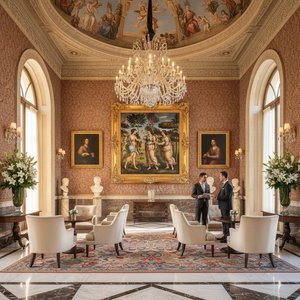
In the high-stakes environment of hospitality design, every visual element serves a functional purpose beyond mere decoration. For the discerning hotel designer, the selection of artwork is an exercise in atmospheric engineering. Landscape painting, particularly when it captures the essence of motion and natural progression, acts as a vital psychological anchor for guests navigating transitionary spaces. When a traveler enters a lobby or moves through a corridor, they are often in a state of flux; providing them with a window into a serene, expansive vista can instantly lower cortisol levels and foster a sense of profound belonging. These works do not merely depict scenery; they offer an emotional sanctuary, utilizing the vastness of mountains, forests, and seascapes to provide a humbling yet comforting connection to the eternal rhythms of the natural world.
The power of these landscapes lies in their ability to evoke what the Romantics called the sublime—a feeling of awe that transcends the mundane. By integrating scenes that suggest depth and distance, designers can effectively expand the perceived boundaries of a room, mitigating the claustrophobia of urban hotel structures. Whether it is the quiet stillness of a misty morning or the vibrant energy of a tropical coastline, the strategic use of landscape art allows a professional space to breathe, inviting guests to pause, reflect, and immerse themselves in a curated journey of visual discovery.
Strategic Selection: Integrating Impressionist Light and Motion into High-Traffic Corridors
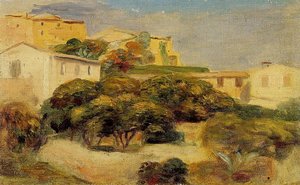
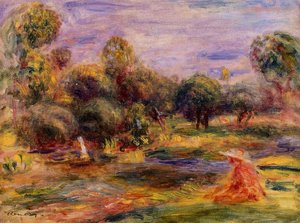
For corridors and high-traffic thoroughfares, the challenge lies in selecting art that maintains its impact during rapid movement. This is where the revolutionary techniques of the Impressionist and Post-Impressionist movements become indispensable tools for the procurement professional. Unlike static, hyper-realistic portraits that require prolonged scrutiny, Impressionistic landscapes are designed to be experienced through the lens of light and fleeting moments. The masterful brushwork of artists like Claude Monet or Paul Gauguin utilizes broken color and visible textures to create a shimmering effect that remains legible even as a guest walks past. This "visual vibration" mimics the natural movement of light on water or wind through foliage, providing a dynamic energy that prevents long hallways from feeling stagnant or lifeless.
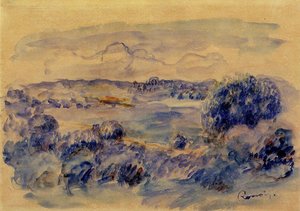
Consider the profound impact of a piece like Gauguin’s Martinique Landscape; its lush, mountainous terrain and vibrant, layered palette offer a sense of vitality that can revitalize even the most muted architectural palettes. Similarly, the soft, atmospheric gradations found in the works of James Henry Monk or the English countryside studies by Sir Alfred James Munnings provide a rhythmic continuity to a space. By selecting works characterized by tonal transitions rather than rigid outlines, designers can create a seamless flow of color and light that guides the eye through the property, turning a simple walk from the elevator to the guest room into an evocative promenade.
Scale and Composition: Utilizing Multi-Panel Sets for Large-Scale Architectural Features
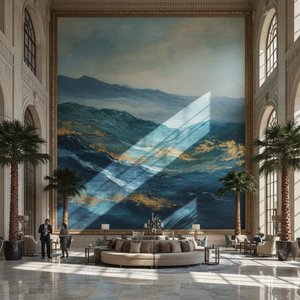
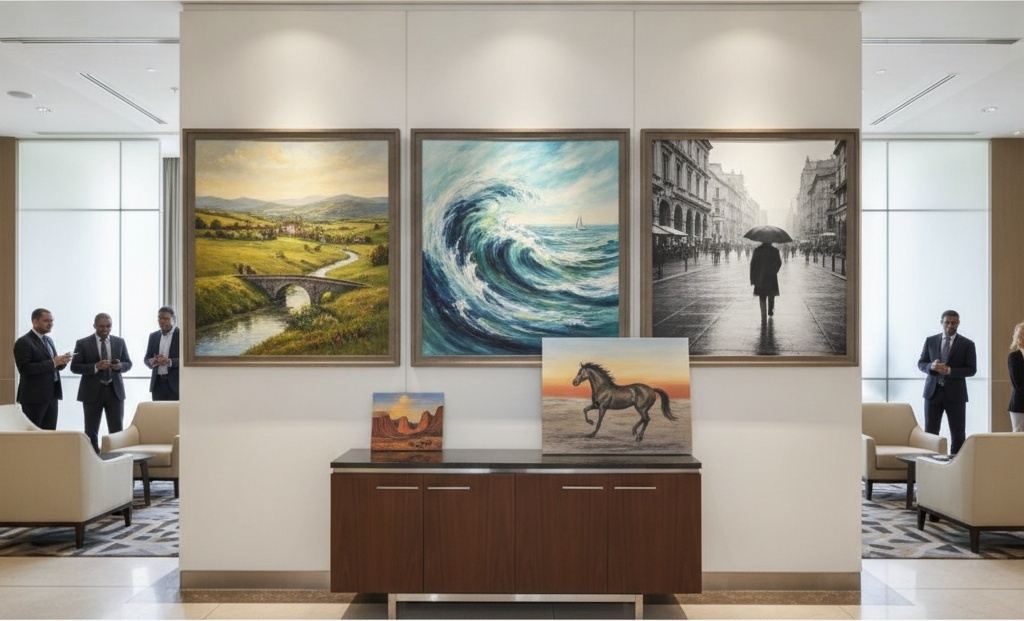
In grand architectural settings—such as soaring atriums, expansive staircases, or feature walls in luxury suites—single-canvas compositions often struggle to command the necessary presence. To address this, the modern designer must look toward the sophisticated trend of multi-panel or "split" paintings. This technique involves deconstructing a singular, breathtaking landscape across three, four, or even five separate canvases. This approach does more than just fill a void; it creates a rhythmic architectural element that mirrors the structural lines of the building itself. The seamless flow of brushstrokes and color across these panels ensures a cohesive visual narrative, allowing the artwork to function as a monumental installation rather than a mere hanging.
This method is particularly effective for creating focal points in wide lobbies or along grand stairwells where the viewer’s perspective is constantly shifting. The fragmentation of the image encourages the eye to move across the wall, discovering new details within each panel, much like one might observe a panoramic view from a moving train. When executed with precision, these multi-panel sets provide a contemporary, modular aesthetic that integrates perfectly with modern luxury interiors, offering a way to scale classical beauty to meet the demands of massive, high-end commercial volumes.
Operational Efficiency: Sourcing Hand-Painted Reproductions for Volume Procurement
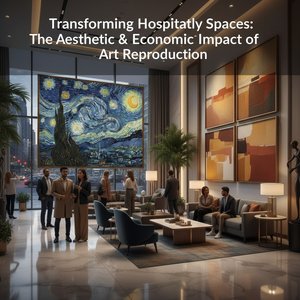
From a procurement and management perspective, the primary obstacles in art acquisition are often budget constraints, time pressure, and the logistical complexity of large-scale rollouts. For the professional managing multiple properties or a single massive renovation, the traditional fine art market can be prohibitively expensive and slow. This necessitates a shift toward high-quality, hand-painted reproductions that offer the prestige of the Old Masters with the operational reliability required by modern business. The value proposition lies in the ability to source museum-grade oil paintings—characterized by authentic impasto, deep tonal ranges, and 100% cotton canvas—at a scale and price point that allows for consistent branding across an entire hotel chain.
Efficiency is found in the predictability of the supply chain. A reliable provider offers standardized sizing, clear pricing structures, and the ability to manage large orders through a streamlined digital workflow. This includes the provision of VAT-compliant documentation, essential for corporate accounting, and the capability for bulk re-orders to ensure aesthetic uniformity across different wings or even different global locations. By focusing on the technical excellence of the reproduction—ensuring that every brushstroke is a manual labor of passion rather than a digital print—procurement managers can deliver an atmosphere of luxury without the volatility of the traditional auction house.
Technical Specifications: Durability, Customization, and Long-Term Preservation in Professional Spaces
The longevity of an art investment in a commercial environment is predicated on technical excellence and environmental resilience. In hospitality, artworks are subjected to varying humidity levels, cleaning protocols, and the physical rigors of high-traffic areas. Therefore, the material composition of the artwork is paramount. High-quality reproductions must utilize flexible gesso to prevent cracking during temperature fluctuations and specific oils, such as saffra-flower, to ensure that whites do not yellow over time. The application of a protective Damar varnish is non-negotiable, acting as a shield against dust, moisture, and atmospheric pollutants, thereby preserving the vibrancy of the pigments for decades.
Furthermore, the ability to customize artwork to meet specific architectural requirements provides a significant advantage in professional design. This includes "Period Shifts," where modern imagery can be reimagined in the style of a historical master, or custom color matching to align with a new seasonal interior palette. For large-scale installations, the engineering of the canvas—using reinforced stretcher bars to prevent warping and offering specialized wraps like MirrorWrap or ExtendedWrap for a frameless, modern look—ensures that the art integrates seamlessly with the building's skin. When these technical considerations are met, the artwork ceases to be a temporary decoration and becomes a permanent, enduring component of the property’s architectural legacy.