
Introduction
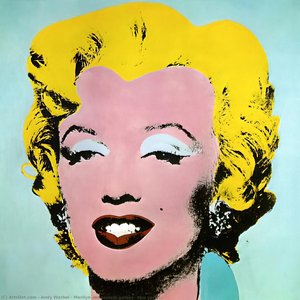
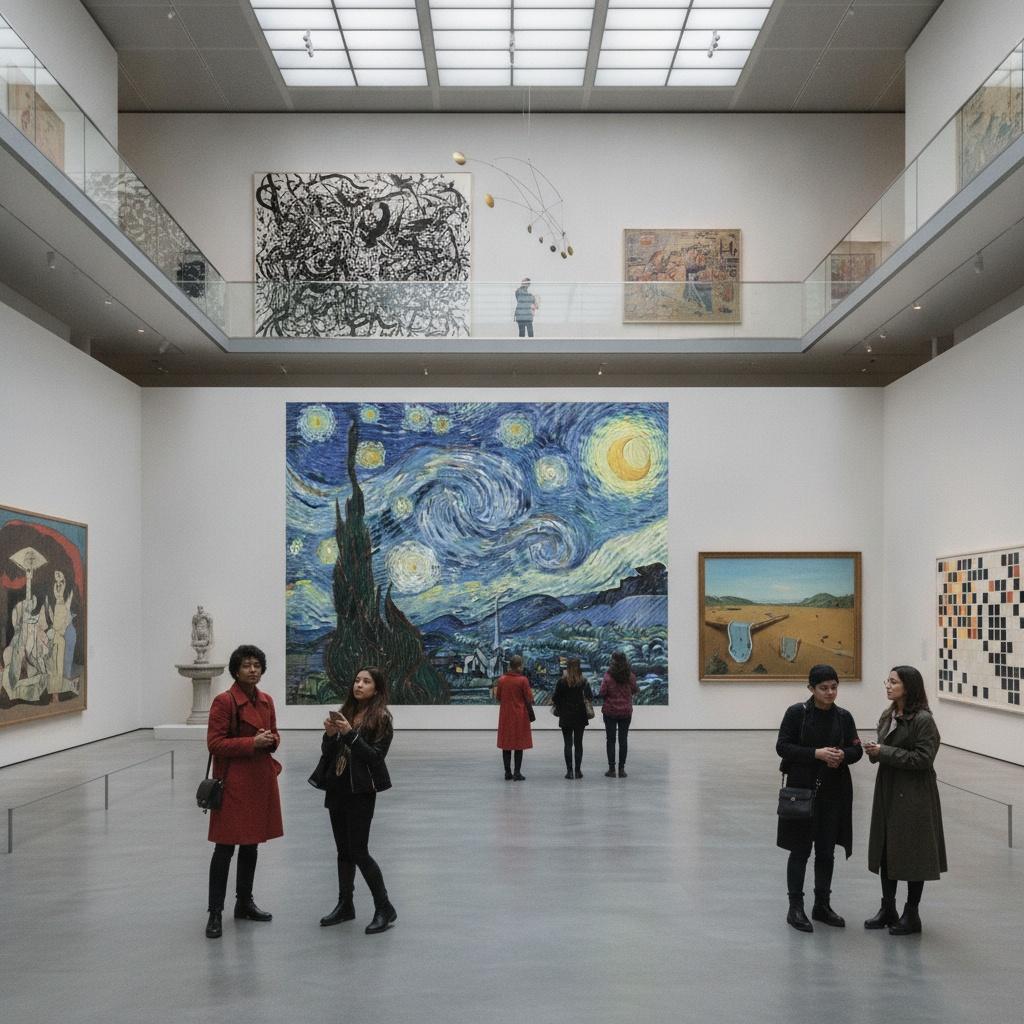
To step into the Museum of Modern Art in New York City is to enter a profound dialogue with the very heartbeat of the twentieth century. Since its founding in 1929, MoMA has functioned as far more than a repository for precious objects; it is a sanctuary for the radical and a living witness to those transformative moments when artistic convention was shattered forever. Within these walls, the atmosphere is charged with the energy of revolution—from the fragmented, groundbreaking perspectives of Picasso that redefined our visual language, to the vibrant, pop-infused echoes of Warhol that captured the electric pulse of a new consumer era.
These twenty-five selected works are not merely historical artifacts frozen in time; they remain vital, breathing entities that continue to provoke, unsettle, and inspire us within our own contemporary landscape. They represent the milestones of human ingenuity, marking the shifts from the swirling emotional depths of Expressionism to the bold, non-representational explorations of abstraction. As we embark on this journey through MoMA’s most iconic treasures, we invite you to explore a curated selection that does more than showcase beauty—it chronicles the relentless spirit of innovation that continues to shape how we perceive the world around us.
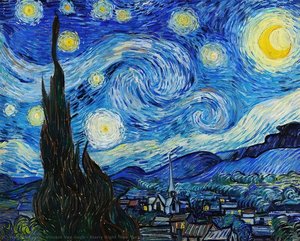
Starry Night (New York, MoMA) - vincent willem van gogh
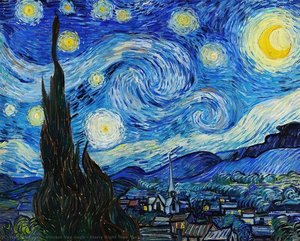 Starry Night (New York, MoMA) - vincent willem van gogh
Imagine standing in the quiet hush of a gallery, where the air seems to vibrate with an unseen energy. Before your eyes even settle on the canvas, you feel a rhythmic pulse, a cosmic restlessness that pulls you inward. Vincent van Gogh’s Starry Night is not merely a nocturnal landscape; it is a visceral window into a soul navigating profound turbulence.
Created in 1889 amidst the isolation of an asylum, this masterpiece uses thick, expressive impasto brushstrokes to transform the night sky into a swirling vortex of deep blues and radiant yellows. The towering cypress tree acts as a dark, grounding anchor between the earthly village and the celestial dance above. It belongs in the top 25 MoMA masterpieces because it captures the very essence of Post-Impressionist innovation—turning personal suffering into universal awe. To bring a reproduction of such intensity into your own space is to invite a sense of movement and profound meaning into your daily life, transforming any modern room into a sanctuary of reflection and light.
Three Musicians - Pablo Picasso
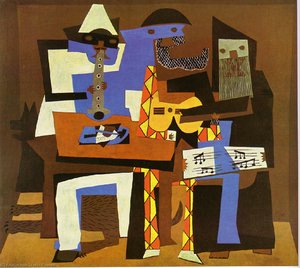 Three Musicians - Pablo Picasso
In Three Musicians by Pablo Picasso , the eye is immediately captured by a rhythmic dance of interlocking geometric shapes and sharp, angular lines. As one of the most significant pieces within the top 25 artworks in MoMA - Museum of Modern Art, New York City , this work exemplifies the height of Synthetic Cubism through its masterful use of flat planes and a balanced, decorative arrangement. The composition moves with a visual melody, where figures are deconstructed into vibrant blocks of ochre, deep blue, and muted white. This structural harmony creates a sense of timeless perfection that transcends its 1921 origins. There is a profound connection between Picasso’s controlled fragmentation and the principles of modern minimalist design; the painting's ability to ground a space with clean, sophisticated geometry makes it an enduring inspiration for contemporary aesthetics. It remains a powerful study in how mathematical balance and color can evoke a lasting, monumental presence.
The Young Ladies of Avignon - Pablo Picasso
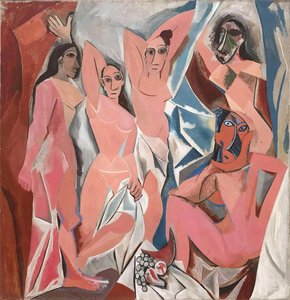 The Young Ladies of Avignon - Pablo Picasso
The Young Ladies of Avignon by Pablo Picasso stands as a seismic event in the history of modernism, acting as the definitive detonation point for Cubism. As a cornerstone among the top 25 artworks in MOMA - Museum of Modern Art, New York City , this 1907 masterpiece fundamentally shattered centuries of representational tradition. By replacing idealized beauty with fragmented, angular forms and mask-like features, Picasso forces a direct confrontation between the viewer and a new, deconstructed reality.
The painting’s presence in MoMA's essential collection is justified by its radical departure from perspective, utilizing a palette of muted pinks and ochres to create a sense of profound, unsettling dynamism. It invites us to reflect on the fluidity of perception: how much of what we see is truly there? For those curating sophisticated modern environments, the structural intensity of this work serves as an unparalleled inspiration, bridging the gap between historical rebellion and contemporary architectural elegance.
The Menaced Assassin - René Magritte
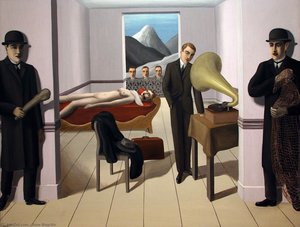 The Menaced Assassin - René Magritte
Imagine stepping into a room where the air feels heavy with unseen eyes and the silence is interrupted only by the hollow echo of a gramophone horn. In René Magritte’s 1927 masterpiece, The Menaced Assassin , the boundaries between reality and nightmare dissolve. Within this meticulously rendered scene at MoMA, a reclining figure rests in vulnerable repose, surrounded by the archetypal anonymity of men in bowler hats and shadowy faces peering from the darkness. This work captures the profound Surrealist tension—the moment when the ordinary becomes deeply unsettling. It earns its place among the top 25 artworks in MoMA - Museum of Modern Art, New York City because it forces us to confront the irrationality of the subconscious and the fragility of our perceived reality. Integrating such evocative, thought-provoking imagery into a modern environment does more than decorate; it invites a sense of intellectual mystery and profound contemplation into our daily lives.
Sleeping Gypsy - henri julien félix rousseau (le douanier)
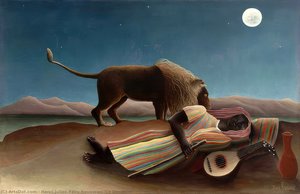 Sleeping Gypsy - henri julien félix rousseau (le douanier)
There is a profound, quiet tension in Henri Rousseau’s Sleeping Gypsy that captures the universal feeling of being caught between dreams and reality. As the traveler rests under the luminous crescent moon, the presence of the watchful lion creates a breathtaking moment of vulnerability and silent power.
This masterpiece earns its place among the top 25 artworks in MoMA - Museum of Modern Art, New York City due to its revolutionary Naïve style. By rejecting academic precision for flattened forms and dreamlike symbolism, Rousseau’s work became a foundational influence for the avant-garde. At ArtsDot.com, we bring this enchanting mystery to life through our hand-painted oil reproductions. Our artists meticulously recreate the visible brushstrokes and vibrant textures of the original, allowing you to integrate the otherworldly atmosphere of this MoMA icon into your space with unmatched authenticity.
Joan Miró- Catalan Landscape (The Hunter) - Joan Miró
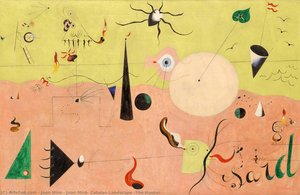 Joan Miró- Catalan Landscape (The Hunter) - Joan Miró
In the pantheon of the top 25 artworks in 'MOMA - Museum of Modern Art, New York City' , Joan Miró’s Catalan Landscape (The Hunter) stands as a profound gateway into the subconscious. This 1924 masterpiece transcends mere landscape painting, offering instead a dreamlike tapestry where Catalan identity meets Surrealist innovation. Through a delicate dance of thin color washes and precise, fluid lines, Miró weaves a narrative of organic life—amoebic forms and celestial orbs that pulse with hidden meaning.
The tension between recognizable natural elements and complete abstraction creates an enduring mystery, inviting the viewer to decode symbols like the watchful eye within a pink sun. Today, the painting’s biomorphic shapes and warm, earthy palette of ochre and terracotta resonate deeply with contemporary organic modern aesthetics. Its ability to inject movement and psychological depth makes it a vital cultural touchstone, proving that even a century later, Miró’s vision remains as vibrant and relevant in modern curated spaces as it was at the dawn of Surrealism.
Still Life with Old Shoe - Joan Miró
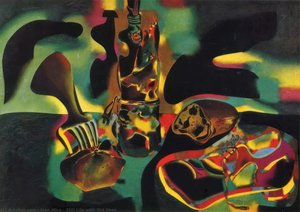 Still Life with Old Shoe - Joan Miró
Imagine Joan Miró in 1937, the air thick with the echoes of the Spanish Civil War, translating the fragmentation of his homeland onto canvas. In Still Life with Old Shoe , one of the most arresting pieces among the top 25 artworks in MOMA - Museum of Modern Art, New York City , Miró abandons traditional perspective for a dreamlike, biomorphic landscape. The worn shoe and floating bottles are not mere objects but symbols of decay and movement, rendered through heavy, textured oil strokes that pulse with an uneasy energy. His technical mastery lies in this very tension—using vibrant, saturated colors and a deliberate lack of a focal point to force the viewer into a state of active, emotional engagement. This profound level of creative intensity and structural complexity offers more than just visual interest; it provides a powerful anchor for a modern home office or study, where such a masterpiece can foster an atmosphere of deep focus and sophisticated intellectual vigor.
Dutch Interior I - Joan Miró
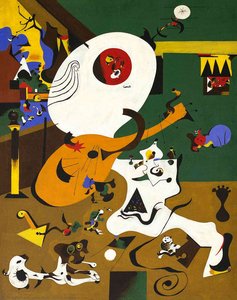 Dutch Interior I - Joan Miró
Close your eyes. Can you feel the light in Dutch Interior I by Joan Miró? It’s not just illumination; it’s a language . The artist didn’t paint light—he composed it , like a musician crafting a sonata of shapes and symbols. This is why it stands among the top 25 artworks in MoMA - Museum of Modern Art, New York City: it doesn’t just reflect light; it invents it .
In this 1928 masterpiece, Miró orchestrates a vibrant dance of abstract surrealism. Bold primary reds, blues, and yellows collide with organic forms—fragmented animals and musical motifs that pulse with energy. A central, stylized ‘8’ anchors the whimsical chaos, guiding your gaze through a landscape where geometry meets dreamscape. Now, open your eyes. That electric, invented light? It is waiting to spill into your home, turning walls into portals of inspiration.
Portrait of the Postman Joseph Roulin - vincent willem van gogh
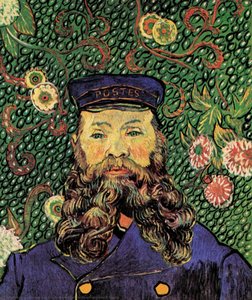 Portrait of the Postman Joseph Roulin - vincent willem van gogh
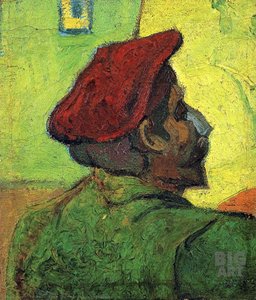
Vincent van Gogh’s Portrait of the Postman Joseph Roulin is a masterclass in emotional resonance, capturing more than just a face; it captures a profound human connection. As one of the top 25 artworks in MOMA - Museum of Modern Art, New York City , this piece stands as a testament to the artist's ability to transform personal friendship into universal expression. The thick, impasto brushstrokes and the vibrant, almost psychedelic floral background create a dynamic energy that contrasts beautifully with Roulin’s serene, contemplative gaze.
This work exemplifies the Post-Impressionist shift toward subjectivity and raw emotion through its use of swirling lines and intense color. For today's decorators and collectors, the painting's bold palette—rich greens, reds, and yellows—offers an unparalleled way to introduce character and movement into a modern interior. Whether serving as a focal point in a sophisticated corporate space or a private residence, its energetic patterns and deep textures continue to influence contemporary design sensibilities, bridging the gap between 19th-century intensity and modern aesthetic elegance.
The false mirror - René Magritte
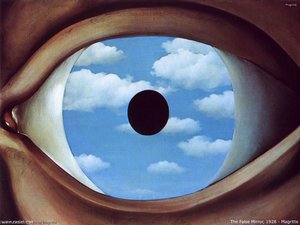 The false mirror - René Magritte
Imagine standing before a gaze that does not merely look at you, but invites you to peer through it into another dimension. Within the hallowed galleries of the Museum of Modern Art in New York City , René Magritte’s 1928 masterpiece, The False Mirror , commands a singular, haunting presence. The painting presents a hyper-realistic eye where the delicate texture of eyelashes and skin meets an impossible vista: a vibrant, cloud-swept blue sky nestled within the iris. This jarring juxtaposition of meticulous detail and dreamlike expanse challenges our very understanding of sight, pulling the viewer into a profound meditation on perception. The stark contrast between the deep, shadowy periphery and the luminous, airy center creates an atmosphere of quiet mystery. As a cornerstone of Surrealism at MoMA , its ability to disrupt reality makes it a powerful inspiration for modern living; integrating such a profound piece into a contemporary space invites endless reflection and a sense of boundless creativity.
Multiplicatiion of the Arcs - Yves Tanguy
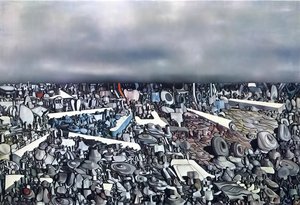 Multiplicatiion of the Arcs - Yves Tanguy
Imagine stepping into a landscape where time has stalled amidst the wreckage of progress. Yves Tanguy, a titan of Surrealism, often sought to map the irrational terrain of the subconscious, and in Multiplication of the Arcs (1954), he achieves a hauntingly precise vision of industrial decay. As one of the top 25 artworks at MoMA - Museum of Modern Art, New York City , this piece captivates through its meticulous rendering of mechanical debris—fragmented gears and metallic pipes set against a brooding, stormy sky.
The technical mastery lies in Tanguy's ability to blend sharp, angular lines with a muted palette of greys and deep blues, creating a sense of claustrophobic yet beautiful chaos. This profound exploration of structural fragmentation does more than just represent decay; it invites intense contemplation. For the discerning professional, integrating such an intellectually stimulating masterpiece into a modern home office or study provides a sophisticated backdrop that inspires deep focus and a quiet, commanding presence.
Chateau Noir - Paul Cézanne
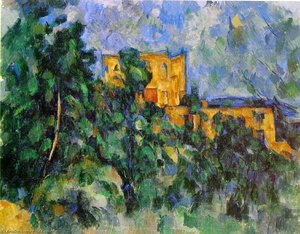 Chateau Noir - Paul Cézanne
In Chateau Noir by Paul Cézanne, the composition serves as a profound study in geometric harmony. The artist masterfully balances the weight of sun-warmed architecture against the rhythmic, textured layers of lush greenery, utilizing simplified shapes to create a sense of structural permanence. As a cornerstone among the top 25 artworks at MOMA - Museum of Modern Art, New York City , this piece achieves a timeless perfection through its calculated interplay of form and color. This internal equilibrium—where organic movement meets architectural stability—finds a striking parallel in the principles of modern minimalist design. For those curating a clean, contemporary aesthetic, Cézanne’s ability to ground a space with such balanced, structural vitality offers an enduring appeal. The vibrant contrast between warm ochre tones and cool, atmospheric blues transforms the landscape into a breathing, tactile experience, making it an essential reference for any sophisticated collection.
Hope II - Gustav Klimt
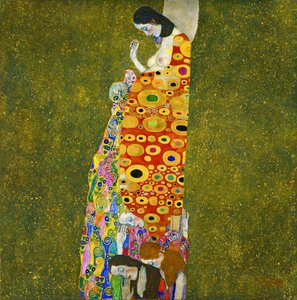 Hope II - Gustav Klimt
A golden whisper of eternity, Hope II by Gustav Klimt captures a moment where light and life intertwine in a celestial embrace. As one of the top 25 artworks in MOMA - Museum of Modern Art, New York City , this masterpiece stands as a pinnacle of the Vienna Secession, blending profound psychological depth with unparalleled decorative brilliance. The canvas breathes through a luminous, gold-green field, where swirling patterns and jewel-toned motifs—vibrant reds, deep blues, and soft purples—dance across the figures' flowing robes. Klimt’s meticulous application of paint creates a textured, shimmering surface that feels almost tactile, as if the very essence of femininity and spiritual unity is etched in gold. In a contemporary setting, the painting’s harmonious balance of organic movement and opulent ornamentation offers a sense of sophisticated calm, bringing a touch of historical grandeur and soulful reflection to any modern interior space.
Dog - Francis Bacon
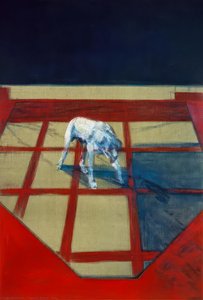 Dog - Francis Bacon
In “Dog” by Francis Bacon, the stark, bone-white of the central figure emerges from a void of deep, somber blacks and bruised blues, immediately establishing a mood of profound existential isolation. This masterful use of contrast—where the organic, vulnerable form of the dog meets the aggressive, blood-red geometry of the grid—is precisely why this piece stands as one of the top 25 artworks in MoMA - Museum of Modern Art, New York City . Bacon’s ability to weave tension through a limited yet piercing palette captures the raw, unsettled energy of the mid-century era. For the discerning decorator or collector, integrating such a powerful work into a modern living space or a minimalist dining room offers an unparalleled opportunity to curate emotional depth. The painting’s interplay of light and shadow can serve as a dramatic anchor, where the intense reds and muted tones dictate a sophisticated, moody atmosphere that commands attention and invites deep, introspective contemplation within any contemporary architectural setting.
painting, 1946 - Francis Bacon
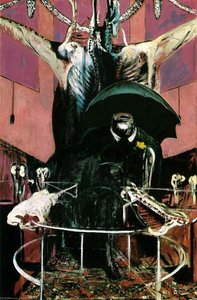 painting, 1946 - Francis Bacon
At ArtsDot, we believe in democratizing beauty by making the world's most profound masterpieces accessible to all. Within the legendary halls of MoMA - Museum of Modern Art, New York City, painting, 1946 by Francis Bacon stands as a monumental achievement. This work earns its place among the top 25 artworks through its raw, unfiltered exploration of the human condition in the wake of global upheaval.
Bacon utilizes vigorous, gestural brushwork and a striking palette of deep reds, blacks, and muted pinks to create a scene of profound existential tension. The distorted figures and unsettling, mechanical forms evoke a sense of entrapment and decay that is both terrifying and mesmerizing. Such intense, expressive energy provides a powerful focal point for contemporary interiors, offering a sophisticated layer of psychological depth. Through our high-fidelity art reproductions, you can bring this transformative presence into any home, office, or personal gallery, making the profound impact of Bacon’s vision a permanent part of your environment.
Slowly Toward The North - Yves Tanguy
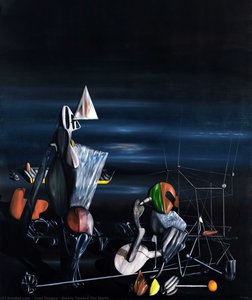 Slowly Toward The North - Yves Tanguy
Yves Tanguy’s Slowly Toward The North (1942) stands as a haunting pillar within the top 25 artworks of the MoMA - Museum of Modern Art, New York City, capturing the psychological tension of an era caught between technological advancement and profound uncertainty. This masterpiece earns its distinction through its unparalleled ability to merge biomorphic, organic forms with unsettling, mechanical structures. As you gaze into its deep blues and shadowy voids, you are invited into a subconscious landscape where the boundaries of nature and machine dissolve.
The painting challenges our very perception of reality, prompting us to reflect on the evolution of human consciousness in an increasingly complex world. For the discerning collector or decorator, this work offers more than mere decoration; it provides a profound atmospheric anchor. Its dark, moody palette and dramatic interplay of light and shadow bring a sense of quiet prestige and intellectual mystery to modern architectural spaces, turning any curated environment into a site of deep contemplation.
L'Atelier rouge Huile sur Toile - (181x219) - Henri Matisse
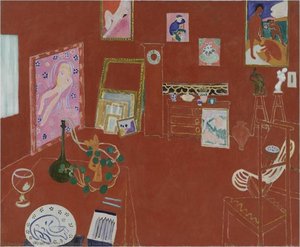 L'Atelier rouge Huile sur Toile - (181x219) - Henri Matisse
Before the world recognized him as a master of color, Henri Matisse underwent a radical simplification that would forever alter the course of modernism. In L'Atelier rouge Huile sur Toile - (181x219) , he stripped his studio of its literal details, leaving behind only the vibrant, rhythmic essence of his creative sanctuary. As a cornerstone among the top 25 artworks in MOMA - Museum of Modern Art, New York City , this piece showcases the technical brilliance of Fauvism through its bold, unmodulated red planes and flattened perspective. The composition creates a captivating tension between the organized chaos of his tools and the serene, monochromatic backdrop. This masterful command of space and color does more than document a room; it captures the very pulse of inspiration. For those seeking to curate a sophisticated home office or a professional study, the disciplined yet energetic atmosphere of this work serves as a profound blueprint for fostering deep focus and boundless creativity within a modern interior.
The city rises - Umberto Boccioni
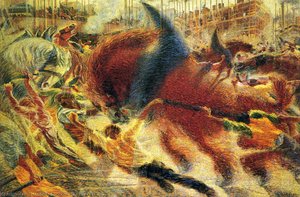 The city rises - Umberto Boccioni
In The city rises by Umberto Boccioni, one does not merely observe a scene; one feels the electric, almost overwhelming pulse of a world in motion. The painting captures the raw, unbridled energy of urban expansion, where the frantic movement of men and horses becomes a visceral metaphor for human ambition and the relentless drive of progress. Through thick, textured impasto and a vibrant, clashing palette, Boccioni deconstructs form to mirror the psychological turbulence of the industrial age. This work stands as a vital cornerstone among the top 25 artworks in MoMA - Museum of Modern Art, New York City , offering a window into the chaotic beauty of modernity. Integrating such a powerful piece into your personal space can transform a quiet sanctuary into an environment of profound dynamism and vitality. Its swirling, deconstructed forms serve as a striking centerpiece, injecting any room with an unmistakable sense of momentum and the spirited energy of the future.
White Light - Paul Jackson Pollock
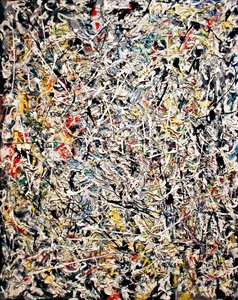 White Light - Paul Jackson Pollock
There’s a gaze in White Light by Paul Jackson Pollock that follows you—not with judgment, but with understanding . This isn’t a portrait; it’s a mirror . Its position within the top 25 artworks in MoMA - Museum of Modern Art, New York City is a testament to its power to make the invisible visible.
Created in 1954, this work captures the raw, visceral energy of Abstract Expressionism through the iconic drip technique. A vibrant yet discordant palette of reds, blues, and yellows intertwines with neutral blacks and whites, creating a rhythmic, chaotic dance across the canvas. The thick, textured impasto layers invite a tactile exploration of movement and emotion, where every gestural line reflects a moment of pure spontaneity. Now, imagine that energy in your space. Not watching you, but reminding you : you are seen. You, too, are part of this enduring story of human expression.
Reflections of Clouds on the Water-Lily Pond (tryptich, center panel) - Claude Monet
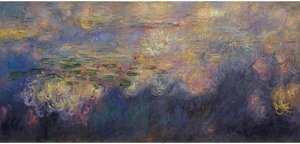 Reflections of Clouds on the Water-Lily Pond (tryptich, center panel) - Claude Monet
Imagine standing before the center panel of Claude Monet’s 1920 triptych, where the boundaries between sky and water dissolve into a single, shimmering plane. As one of the most profound highlights within the top 25 artworks at MoMA - Museum of Modern Art, New York City , this piece captures the very soul of Giverny. The palette is a masterclass in tranquility, utilizing deep blues and verdant greens to mirror the rhythmic dance of light upon the lily pond.
Monet’s signature technique—thick, visible brushstrokes—creates a tactile luminosity, making the reflections of clouds and the graceful movement of ducks feel almost palpable. This work transcends mere observation; it is an immersive sensory experience of luminism . For any contemporary space, the presence of such a masterpiece offers more than visual beauty; its serene atmosphere provides a much-needed sanctuary of stillness, inviting moments of deep reflection and calm.
The Laugh - Umberto Boccioni
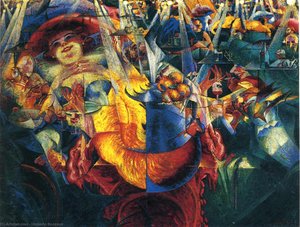 The Laugh - Umberto Boccioni
To encounter The Laugh by Umberto Boccioni is to witness the precise moment art broke free from the constraints of tradition. As one of the most electrifying pieces within the top 25 artworks in MOMA - Museum of Modern Art, New York City , this 1911 masterpiece embodies the raw, kinetic energy of Italian Futurism.
Boccioni does not merely depict a woman with a red umbrella; he deconstructs the very sensation of joy itself. Through fractured geometric planes and a vibrant palette of sun-drenched yellows and passionate reds, the canvas vibrates with an almost audible laughter. The artist’s masterful use of impasto creates a tactile depth that mirrors the frantic pulse of modern life. For the discerning collector or designer, this work offers more than historical significance; it provides a bold, rhythmic focal point that brings a sense of dynamic optimism to any sophisticated interior. It remains a timeless testament to the beauty found in motion and the enduring power of innovation.
My Grandparents, My Parents, and I (Family Tree) - Frida Kahlo
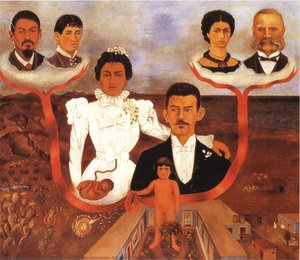 My Grandparents, My Parents, and I (Family Tree) - Frida Kahlo
Can you feel the light in My Grandparents, My Parents, and I (Family Tree) by Frida Kahlo? It is not merely illumination; it is a language . The artist did not just paint her lineage; she composed it like a musician crafting a sonata, using vibrant red roots to bind the disparate threads of German and Mexican heritage into a single, rhythmic pulse.
Within this primitive, textured landscape, Kahlo transforms ancestry into a living, breathing organism. The way the figures float amidst the branches creates a dreamlike tension between reality and memory, where earthy tones meet the ethereal. This work belongs among the top 25 at MoMA because it does not just reflect history; it invents it, offering a profound visual meditation on identity. Now, open your eyes. That ancestral light is waiting to spill into your home, turning your walls into portals of deep inspiration.
New York Movie - Edward Hopper
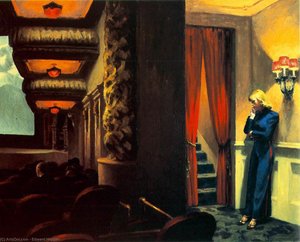 New York Movie - Edward Hopper
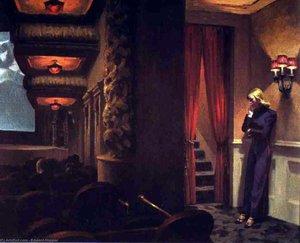
To encounter New York Movie by Edward Hopper is to step into a profound moment of cinematic stillness, a rare glimpse into the quietude of the urban soul. As one of the most significant pieces within the top 25 artworks in 'MOMA - Museum of Modern Art, New York City', this 1939 masterpiece commands attention through its masterful use of light and shadow to evoke deep introspection. The striking contrast of the vibrant red curtain against the theater's starker tones creates a stage for Hopper's signature theme: the haunting isolation of modern life. The woman, lost in her own world amidst scattered chairs and the silent presence of clocks, embodies a timeless emotional intelligence. For the discerning collector or professional decorator, such a work offers more than mere decoration; it brings a legacy of sophisticated American realism into a space. Its ability to anchor an interior with moody, atmospheric depth makes it an essential choice for those curating refined, modern aesthetics that value narrative and historical weight.
States of Mind II - Those Who Stay - Umberto Boccioni
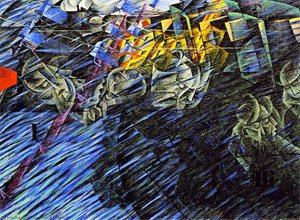 States of Mind II - Those Who Stay - Umberto Boccioni
In Umberto Boccioni’s States of Mind II - Those Who Stay , one is immediately struck by the heavy, lingering tension of a soul suspended in the wake of departure. The painting captures that profound psychological threshold where the stillness of those left behind collides with the relentless momentum of the industrial age. As a vital component of the top 25 artworks in MOMA - Museum of Modern Art, New York City , this work serves as a universal mirror for the human experience of transition and anticipation.
Through fractured perspectives and thick, rhythmic impasto strokes, Boccioni translates the chaotic energy of a train station into a visceral emotional landscape. Displaying such a powerful piece allows you to introduce a sense of dynamic history into your home; it can transform a personal sanctuary into a space for profound reflection, inviting a deep, contemplative dialogue between the movement of the modern world and the quietude of the inner self.
Woman with cockerel - Pablo Picasso
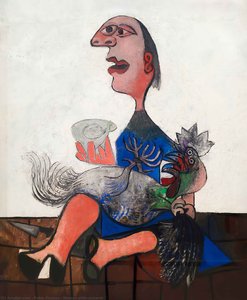 Woman with cockerel - Pablo Picasso
In the hallowed halls of MoMA, Picasso’s 1938 masterpiece, Woman with Cockerel , emerges as a profound dialogue between simplicity and fragmentation. As you stand before this canvas, you witness a striking fusion of Cubist geometry and the raw, directness of Naive Art. The figure—seated upon a textured brick ledge—is rendered in bold, contrasting tones: a deep blue dress paired with vibrant red shoes that anchor the composition. In her hands, she cradles a white bowl and a verdant green cockerel, their forms simplified yet emotionally charged.
Created amidst the shadows of the Spanish Civil War, the painting vibrates with an underlying tension; it is a work that captures both the resilience of the human spirit and the fractured reality of a world in turmoil. Owning such a piece isn’t merely a purchase; it is an inheritance . It is a lineage of taste that transcends time. With ArtsDot, this legacy is no longer confined to museum galleries—it is brought to your walls , where every glance becomes a nod to the masters.
Conclusion
The journey through MoMA’s most profound works is more than a walk through history; it is an encounter with the very pulse of human creativity. These masterpieces do not remain frozen in time within their Manhattan sanctuary, but instead flow outward, breathing life into the spaces we call home and the environments we curate for others. From the swirling, emotional depths of Expressionism to the sharp, transformative clarity of Cubism, each canvas acts as a window, inviting a continuous dialogue between the artist’s vision and our everyday existence. As these legendary images find their way onto our walls, they do more than decorate; they transform, offering a sense of permanence and profound beauty in an ever-changing world. To witness this enduring legacy is to recognize that the soul of modern art remains as vital today as it was at the moment of its creation, waiting to be rediscovered within the quiet corners of our own lives. We invite you to explore the full collection and bring this timeless inspiration into your space.