
Introduction
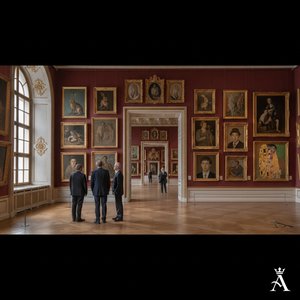
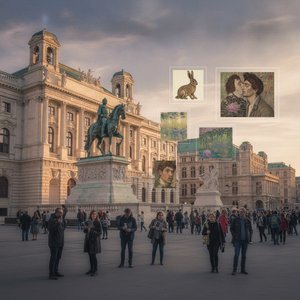
To step across the threshold of the Kunsthistorisches Museum in Vienna is to enter a sanctuary where the grandeur of the Habsburg Empire meets the eternal pulse of human creativity. This is not merely a museum; it is a monumental architectural dialogue, designed by Gottfried Semper to mirror the majesty of the Roman Forum and serve as a vessel for the very soul of Western civilization. As you wander through its palatial halls, the air seems to thicken with the weight of centuries, inviting you to lose yourself in a curated journey that spans from the dawn of antiquity to the peak of the Baroque era.
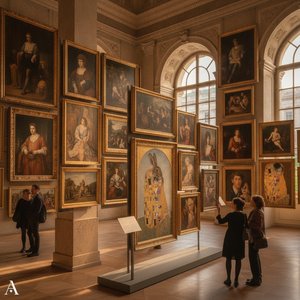
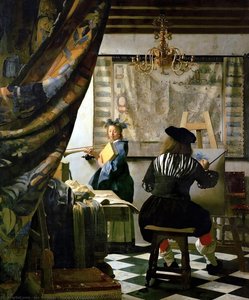
The collection housed within these walls represents one of the most significant artistic legacies in existence. Within the breathtaking Picture Gallery, the masters of the Renaissance and Baroque—names like Vermeer, Raphael, and Rembrandt —do not simply hang on walls; they command the space, offering profound meditations on light, divinity, and the human condition. Beyond the canvas, the museum’s vast Egyptian and Greco-Roman collections provide a tangible connection to the ancient world, allowing the echoes of pharaohs and classical gods to resonate alongside the triumphs of European oil painting.
These artworks remain deeply meaningful today because they transcend their historical era. They offer us a mirror in which to view our own struggles, our capacity for beauty, and our enduring curiosity about the universe. Whether it is the quiet, domestic intimacy found in a Dutch masterpiece or the sweeping, dramatic tension of a Baroque portrait, each piece serves as a bridge between the past and our modern perception of identity.
\In the following guide, we will navigate this labyrinth of brilliance, selecting twenty-five essential works that define the museum's incomparable spirit. From the meticulous precision of the Northern masters to the monumental sculptures that guard the halls, prepare to encounter the masterpieces that continue to shape the visual language of our world.
Adoration of the Trinity (Landauer Altar) - Albrecht Dürer
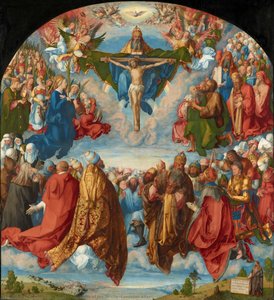 Adoration of the Trinity (Landauer Altar) - Albrecht Dürer
Albrecht Dürer’s Adoration of the Trinity (the Landauer Altar) stands as a monumental pillar among the top 25 artworks in the Kunsthistorisches Museum, Vienna, representing a pivotal moment where Northern Renaissance precision met Italianate grandeur. Painted in 1511, this massive altarpiece transcends simple religious iconography; it is a profound social tapestry that weaves together popes, emperors, and humble peasants into a single, unified moment of divine reverence. Dürer’s mastery of perspective and his ability to bathe a complex architectural setting in ethereal light create a sense of depth that pulls the viewer into Nuremberg's historical soul.
The painting’s placement in this elite collection is earned through its sheer scale and symbolic complexity, offering a masterclass in human emotion and spiritual continuity. As you observe the vibrant robes and the poignant instruments of the Passion, one cannot help but reflect on how Dürer captures the universal human search for meaning. For collectors and designers, the work’s balanced composition and rich, golden tones offer timeless inspiration, proving that even centuries later, such profound narratives can anchor and elevate a modern curated space.
Portrait of a Young Venetian Woman - Albrecht Dürer
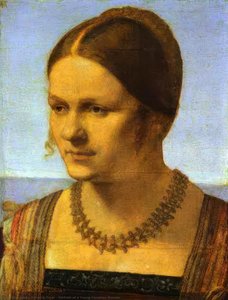 Portrait of a Young Venetian Woman - Albrecht Dürer
A soft, melancholic whisper of the Renaissance, Portrait of a Young Venetian Woman by Albrecht Dürer captures a moment of profound, quiet introspection. This masterpiece earns its place among the top 25 artworks in the Kunsthistorisches Museum, Vienna, because it represents a pivotal intersection of Northern European precision and the atmospheric, light-drenched soul of Venice. Dürer’s ability to blend meticulous German detail with the warm, golden tones of the Italian masters creates an emotional depth that transcends centuries.
The painting’s power lies in its subtle textures—the delicate sheen of skin and the heavy, flowing drapery—which evoke a sense of timeless elegance. Its presence is not merely historical; it is transformative. The subject's averted gaze invites a contemplative mood, making this work an ideal inspiration for sophisticated modern interiors. Through high-fidelity oil reproductions, you can bring this same transformative presence and historical grandeur into your own home, office, or personal gallery, allowing the serene beauty of Dürer’s vision to anchor your space with unparalleled grace.
Peasant wedding - Pieter Bruegel the Elder
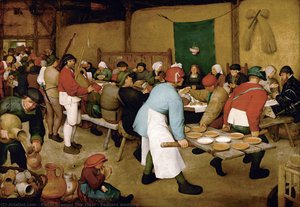 Peasant wedding - Pieter Bruegel the Elder
In the heart of the Kunsthistorisches Museum, Pieter Bruegel the Elder’s Peasant Wedding stands as a profound masterclass in Northern Renaissance naturalism, offering far more than a mere depiction of a rustic feast. It serves as a vibrant, sensory window into the social fabric of 16th-century Flanders, where the chaotic energy of the crowd is balanced by a meticulous, structured composition. Bruegel utilizes an earthy palette of ochre, deep browns, and muted reds to ground the viewer in the tactile reality of the scene—from the rough texture of wooden beams to the soft gleam of pottery.
Beyond its surface-level merriment, the painting explores themes of communal identity and the cyclical nature of human existence. In today’s curated interiors, this masterpiece remains a powerful cultural talking point; its focus on unidealized, authentic human interaction resonates with modern aesthetic trends that value raw storytelling and organic textures. As one of the top 25 artworks in the Kunsthistorisches Museum, Vienna, it continues to captivate by transforming a humble social ritual into an enduring symbol of life's shared vitality.
Summer 1 - Giuseppe Arcimboldo
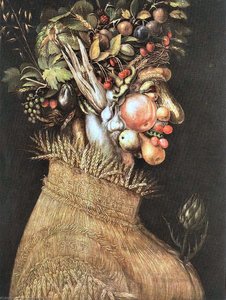 Summer 1 - Giuseppe Arcimboldo
What if I told you that Summer 1 by Giuseppe Arcimboldo was born from a moment of rebellion—a stroke of defiance against the ordinary? This is not merely a portrait; it is a visual manifesto where the boundaries between humanity and nature dissolve entirely. As one of the most striking highlights among the top 25 artworks in Kunsthistorisches Museum, Vienna , this masterpiece redefines the very essence of composition through its surrealist precursor style.
In this enigmatic work, a human visage emerges from a meticulously arranged harvest of ripe fruits, grains, and vibrant vegetables. The deep greens, warm yellows, and rich reds create a sensory feast, while the interplay of light and shadow brings an unsettling, lifelike depth to the organic textures. Its inclusion in the museum's premier collection is earned by its ability to transform agricultural abundance into profound allegory. At ArtsDot.com , we believe such transformative energy should not be confined to museum walls. Imagine this whimsical, Mannerist marvel as a centerpiece in your professional space or home—a bold statement that turns any room into a curated sanctuary of intellect and wonder.
The Hunters in the Snow (Winter) - Pieter Bruegel the Elder
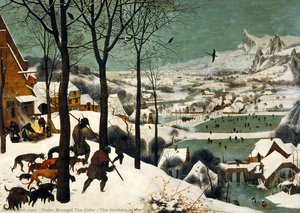 The Hunters in the Snow (Winter) - Pieter Bruegel the Elder
In Pieter Bruegel the Elder’s The Hunters in the Snow , the lines of the landscape aren’t merely drawn; they are choreographed . This is not a static composition; it is a dance frozen in time , capturing the rhythmic struggle of life during the onset of the Little Ice Age. As you stand before this masterpiece in the Kunsthistorisches Museum, Vienna, you witness a world where the weary diagonal of hunters and hounds meets the fluid, circular motion of skaters on frozen ponds.
Bruegel masterfully employs atmospheric perspective, allowing cool whites, muted greys, and deep browns to recede into a misty, distant horizon. The painting breathes with a seasonal pulse, balancing the heavy, textured foreground against the ethereal lightness of the snowy peaks. There is no single focal point; instead, your gaze wanders through a meticulously layered narrative of survival and leisure. What if your own space could hold this same profound balance? What if your walls could breathe rhythm , reflecting the harmonious chaos found in this Northern Renaissance icon?
The Tower of Babel - Pieter Bruegel the Elder
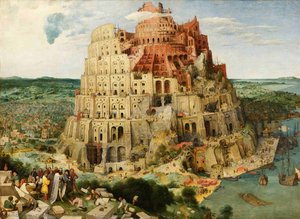 The Tower of Babel - Pieter Bruegel the Elder
In The Tower of Babel by Pieter Bruegel the Elder , the play of light serves as a profound narrative engine, guiding the eye through a landscape of monumental ambition. Bruegel utilizes a masterful command of illumination to define the staggering scale of the construction; sunlight strikes the rugged, unfinished masonry of the tower, creating sharp contrasts between sun-drenched scaffolding and the deep, atmospheric shadows lurking within its spiraling core. This sophisticated use of light does more than reveal texture—it emphasizes the tension between human industry and the encroaching divine mystery.
As one of the top 25 artworks in Kunsthistorisches Museum, Vienna , this piece captures a sense of quiet prestige through its earthy ochres and dramatic chiaroscuro. When reproduced as a hand-painted oil, the visible brushstrokes and layered glazes bring this historical light to life, offering a tactile depth that modern prints cannot replicate. Integrating such a complex interplay of shadow and glow into a contemporary space adds an unmistakable layer of luxury and intellectual weight to any professional or residential collection.
Judith with the head of Holofernes - Lucas Cranach the Elder
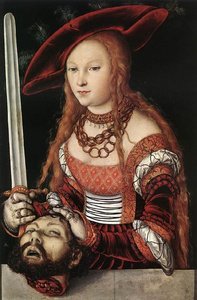 Judith with the head of Holofernes - Lucas Cranach the Elder
In Judith with the head of Holofernes by Lucas Cranach the Elder, the viewer is immediately struck by the visceral contrast in textures. The artist employs a masterful Northern Renaissance technique, using thin, translucent oil glazes to create a luminous, porcelain-like smoothness on Judith’s skin, which stands in chilling opposition to the rough, heavy rendering of Holofernes’ severed head. This interplay of light and grim materiality captures the psychological tension of the Reformation era, where themes of divine justice and bloody sacrifice collided.
The precision of Cranach’s linework and the dramatic, directional lighting create a three-dimensional presence that makes this piece a cornerstone of the Kunsthistorisches Museum's collection. At ArtsDot.com, we strive to preserve this exact tactile depth. Our hand-painted oil reproductions focus on capturing every deliberate brushstroke and the rich, impasto-like quality of the original, ensuring that the profound emotional weight and physical texture of Cranach’s masterpiece are brought into your own space with museum-grade fidelity.
Lucretia - Paolo Veronese
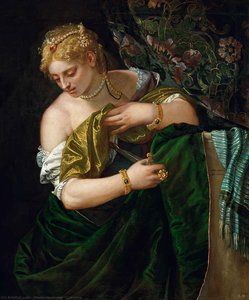 Lucretia - Paolo Veronese
Acquiring a piece of the Venetian Renaissance, such as Lucretia by Paolo Veronese, represents a profound investment in historical legacy and refined taste for any discerning collector. As one of the top 25 artworks in the Kunsthistorisches Museum, Vienna, this 1580 masterpiece stands as a pillar of Western art history. Its presence in the museum's permanent collection confirms its immense cultural value and enduring influence on the evolution of color and light.
Veronese’s mastery is palpable in the way he renders the subject’s opulent attire; the deep greens and shimmering gold accents emerge from a dramatic, dark background through expert use of chiaroscuro . The tactile richness of the heavy fabrics and the delicate glint of intricate jewelry create a sensory experience that transcends centuries. This painting does more than depict a noblewoman; it captures an atmosphere of melancholic grace and regal dignity. For those curating modern luxury interiors, a high-quality oil reproduction of this caliber brings the same aesthetic authority and prestigious status to a contemporary space, serving as a timeless focal point of sophistication.
Christ Carrying the Cross - Pieter Bruegel the Elder
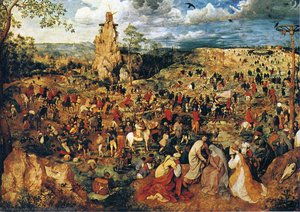 Christ Carrying the Cross - Pieter Bruegel the Elder
To stand before Pieter Bruegel the Elder’s Christ Carrying the Cross is to witness a profound collision between the divine and the mundane. It captures that overwhelming human sensation of being lost within a crowd, where a singular, sacred moment of suffering unfolds amidst the chaotic, indifferent pulse of everyday life. This masterpiece earns its place among the top 25 artworks in the Kunsthistorisches Museum, Vienna, through its unparalleled ability to weave religious narrative into a vivid tapestry of 16th-century Flemish society.
Bruegel utilizes a complex, Mannerist composition, where earthy ochres and deep reds ground a scene teeming with movement—from mourning figures to bustling peasants. The sheer density of the crowd and the dramatic interplay of light and shadow create an emotional tension that has resonated for centuries. At ArtsDot.com, we honor this legacy through our hand-painted oil reproductions. Our artists meticulously recreate Bruegel’s visible brushstrokes and rich textures on 100% cotton canvas, ensuring that the profound spiritual weight and historical grandeur of this Flemish masterpiece can be faithfully integrated into your own professional or private collection.
Pathway in Monet's Garden at Giverny - Claude Monet
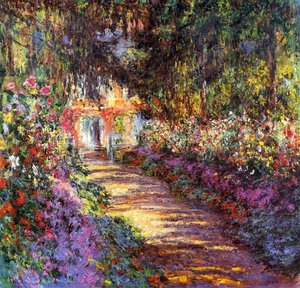 Pathway in Monet's Garden at Giverny - Claude Monet
Claude Monet’s Pathway in Monet's Garden at Giverny stands as a profound testament to the Impressionist movement's ability to capture the ephemeral. Within the prestigious halls of the Kunsthistorisches Museum, Vienna, this 1902 masterpiece serves as a vibrant window into the artist's private sanctuary, reflecting an era where light and perception began to supersede rigid form. The painting is a masterclass in color theory; a winding path is flanked by an explosion of pink, orange, and gold hues, all bathed in the soft, diffused glow of a setting sun.
As one of the top 25 artworks in the Kunsthistorisches Museum, its placement is earned through its sheer sensory impact. The thick, expressive impasto technique creates a palpable texture that invites viewers to experience the movement of wind through foliage. Beyond its technical brilliance, the work offers a timeless meditation on tranquility and the beauty of nature's cycles. For modern collectors and interior designers, the essence of Giverny provides a sophisticated way to introduce organic vitality and serene atmosphere into contemporary architectural spaces.
Miracle of St. Ignatius of Loyola - Peter Paul Rubens
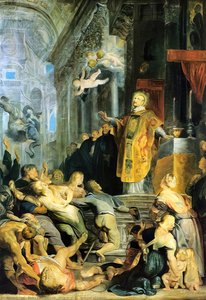 Miracle of St. Ignatius of Loyola - Peter Paul Rubens
To encounter Miracle of St. Ignatius of Loyola by Peter Paul Rubens is to witness the very pinnacle of Baroque theatricality, a work that commands the space with an almost overwhelming spiritual energy. As one of the most profound highlights among the top 25 artworks in 'Kunsthistorisches Museum, Vienna', this masterpiece serves as a masterclass in chiaroscuro and emotional intensity. Rubens employs a breathtaking palette of deep golds, rich crimsons, and earthy ochres to guide the eye toward the central figure, whose presence radiates divine authority amidst a sea of human desperation.
The painting’s dynamic composition—filled with swirling movement, dramatic gestures, and a celestial light that seems to break through the canvas—offers more than just historical insight into the Counter-Reformation; it provides a timeless study in grandeur . For the discerning collector or designer, the work’s ability to evoke profound awe makes it a cornerstone of refined aesthetics. Its legacy lies in its tactile richness and the way its luminous textures can transform a sophisticated interior into a gallery of historical prestige and enduring beauty.
Children's Games - Pieter Bruegel the Elder
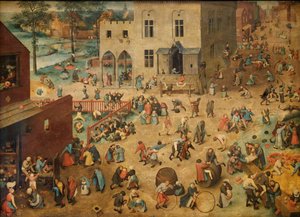 Children's Games - Pieter Bruegel the Elder
To encounter Children's Games by Pieter Bruegel the Elder is to step into a vibrant, breathing tapestry of 16th-century Flemish life. Within this densely populated masterpiece, the chaos of a village festival unfolds through a rhythmic dance of hoop rolling, stilt walking, and communal play. Bruegel utilizes a palette of earthy ochres, deep reds, and muted blues to ground this exuberant scene in a profound, tactile realism that feels almost palpable.
Beyond the surface level of childhood joy, the work serves as a sophisticated social commentary; the towering architecture in the background subtly intertwines civic authority with the foundational innocence of the community. Every brushstroke captures the texture of rustic life, inviting you to lose yourself in the intricate network of figures and pathways. Owning a reproduction of this Northern Renaissance icon is more than an aesthetic choice—it is an inheritance of history. Bringing this piece into your space allows you to carry a lineage of taste, transforming your walls into a gallery where the timeless vitality of Bruegel’s world continues to inspire.
Stormy Landscape - Peter Paul Rubens
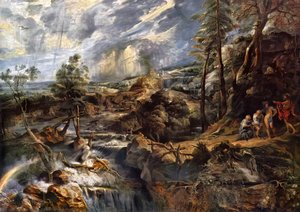 Stormy Landscape - Peter Paul Rubens
In Stormy Landscape by Peter Paul Rubens, the raw, untamed energy of the natural world is frozen in a moment of breathtaking tension. As one of the most powerful entries among the top 25 artworks in Kunsthistorisches Museum, Vienna , this masterpiece captures the visceral drama of the Baroque era through a tumultuous sky and a cascading waterfall that seems to roar off the canvas. Rubens employs a masterful use of chiaroscuro , where deep, shadowed cliffs contrast with the luminous, white spray of water, creating a sense of immense three-dimensional depth.
The palette is a rich dialogue between cool, stormy blues and the warm, earthy ochres of rugged terrain, punctuated by the symbolic brilliance of a rainbow—a quiet whisper of hope amidst the chaos. The thick, expressive impasto brushstrokes lend a tactile vitality to the foliage and stone, making the landscape feel alive. For the modern collector, such a monumental work offers more than historical significance; its dynamic movement and dramatic light provide a sophisticated focal point, bringing an atmosphere of awe and timeless prestige to any curated space.
Susanna and the Elders - Jacopo Tintoretto
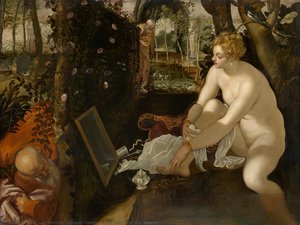 Susanna and the Elders - Jacopo Tintoretto
What story does the lush, shadowed environment in Susanna and the Elders by Jacopo Tintoretto tell? Within this 1557 masterpiece, the overgrown garden and tranquil water serve as more than a backdrop; they are a stage for intense moral tension. As one of the top 25 artworks in the Kunsthistorisches Museum, Vienna, this piece captures the precise moment where innocence meets predatory gaze. Tintoretto, famously known as Il Furioso , utilizes dramatic chiaroscuro and swift, energetic brushwork to heighten the emotional stakes of the biblical narrative.
The painting’s mastery of light—highlighting Susanna’s soft, realistic skin against the rough textures of foliage—creates a theatrical atmosphere that pulls the viewer into the Venetian Renaissance. For the modern collector, integrating such a powerful work into a curated space offers a profound sense of historical escape. The deep tonal range and dramatic shadows provide an anchor for sophisticated home decor, evoking a timeless era of virtue, drama, and unparalleled artistic craftsmanship found only in the world's finest galleries.
Jupiter and Io - Antonio Allegri da Correggio
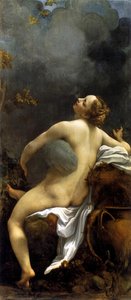 Jupiter and Io - Antonio Allegri da Correggio
In Jupiter and Io by Antonio Allegri da Correggio, the lines of the canvas are not merely drawn; they are choreographed . This is not a static composition; it is a dance frozen in time , capturing the precise moment where divine shadow meets human warmth. As one of the most captivating works within the top 25 artworks in 'Kunsthistorisches Museum, Vienna', this masterpiece utilizes a masterful chiaroscuro to blend the ethereal with the tactile.
The viewer is drawn into a lush, atmospheric world where the soft, luminous skin of Io contrasts against the turbulent, dark clouds of Jupiter’s presence. Correggio’s technique creates a sense of movement that feels almost liquid, as if the very air breathes with sensuality and mythic tension. The way light clings to the curves of the figure evokes a profound emotional depth, turning a mythological encounter into an intimate, visceral experience. What if your own space could hold this same balance? What if your walls could breathe rhythm and command the same quiet prestige found in the halls of Vienna?
The Large Forest - jacob isaackszoon van ruisdael
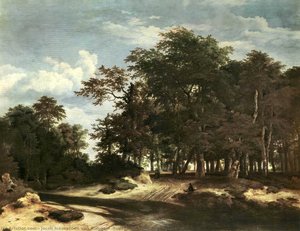 The Large Forest - jacob isaackszoon van ruisdael
In the vast collection of the Kunsthistorisches Museum, Vienna , few works command a sense of quietude quite like The Large Forest by Jacob van Ruisdael . This masterpiece of the Dutch Golden Age transcends mere landscape painting, offering an immersive window into the soul of the wilderness. Through masterful use of light and shadow, Ruisdael captures sunlight filtering through a dense canopy, casting dappled patterns across a textured forest floor that feels almost tactile to the viewer.
As one of the top 25 artworks in Kunsthistorisches Museum , this piece is essential for its profound emotional resonance; it utilizes a muted palette of deep greens and earthy browns to evoke themes of solitude and natural resilience. For the modern collector or interior designer, the painting’s atmospheric perspective and serene mood provide an unparalleled sense of calm. Its ability to anchor a room with organic elegance makes it a timeless reference for creating sophisticated, nature-inspired spaces that prioritize tranquility and depth.
Madonna del Rosario (detail) - Caravaggio
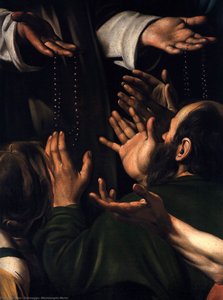 Madonna del Rosario (detail) - Caravaggio
To encounter the Madonna del Rosario (detail) by Caravaggio is to witness the raw, pulse-pounding heart of the Baroque era, a moment where divine grace meets human grit. As one of the most arresting highlights among the top 25 artworks in Kunsthistorisches Museum, Vienna , this detail showcases the master’s unparalleled ability to manipulate light and shadow. Through his revolutionary use of tenebrism , Caravaggio pierces a deep, impenetrable darkness with a singular, radiant glow that illuminates the Virgin Mary and the Christ Child with startling, tactile realism.
The composition transcends mere religious iconography; it is a masterclass in emotional intelligence. The faces emerging from the shadows—etched with curiosity and earthly reverence—bring a profound humanity to the sacred scene. For the discerning collector or designer, this work offers more than historical significance; its dramatic chiaroscuro provides a powerful aesthetic anchor for refined, high-end interiors. It is a timeless testament to a legacy of innovation that continues to influence the very definition of visual drama and sophisticated beauty.
The Fight between Carnival and Lent - Pieter Bruegel the Elder
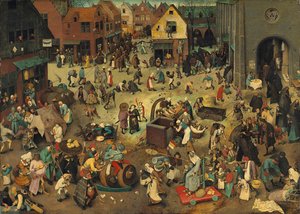 The Fight between Carnival and Lent - Pieter Bruegel the Elder
Acquiring a piece inspired by The Fight between Carnival and Lent by Pieter Bruegel the Elder is an investment in a profound artistic legacy and a testament to discerning taste. As one of the most significant works within the top 25 artworks in Kunsthistorisches Museum, Vienna , this 1559 masterpiece serves as a cornerstone of Northern Renaissance genre painting. Its historical provenance and unparalleled influence on the evolution of landscape and social commentary secure its immense market value and status among global collectors.
The composition is a sensory marvel, pulling the viewer into a bustling town square where the vibrant, boisterous energy of Carnival clashes with the somber, ascetic devotion of Lent. Bruegel masterfully juxtaposes the warmth of drunken revelry and golden pastries against the cool, muted tones of pious prayer and candlelight. This visual dichotomy creates a rhythmic tension that is both captivating and deeply symbolic. For the modern professional decorating high-end corporate spaces or luxury hospitality suites, a high-quality oil reproduction of this work brings an unmatched aesthetic authority, injecting a sense of historical depth and sophisticated storytelling into any contemporary interior.
Kardinal Niccolò Albergati (?) - Jan van Eyck
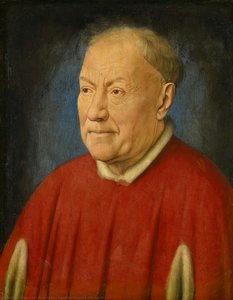 Kardinal Niccolò Albergati (?) - Jan van Eyck
In the Kardinal Niccolò Albergati (?) , Jan van Eyck does not merely paint a subject; he choreographs a moment of profound stillness. The lines of the Cardinal’s crimson robes are not simply drawn—they are a dance of light and shadow frozen in time. As one of the most significant pieces among the top 25 artworks in Kunsthistorisches Museum, Vienna, this portrait captures the very essence of Early Netherlandish realism through Van Eyck's revolutionary use of oil glazes.
The deep, saturated reds of the ecclesiastical attire contrast against a luminous blue backdrop, creating a visual rhythm that feels both monumental and intimate. Every fold of the heavy drapery and every subtle nuance of the subject's expression invites the viewer into a world of Renaissance dignity. It is a masterpiece where texture becomes tactile; one can almost feel the weight of the fabric and the solemnity of the diplomatic era. What if your own space could hold this same balance? To bring such a rhythmic, breathing energy to your walls is to invite the harmony of history into the modern home.
Three Philosophers - Giorgione
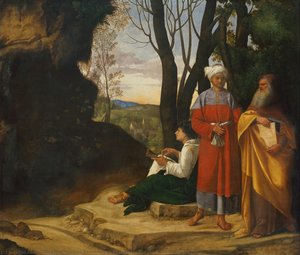 Three Philosophers - Giorgione
In Giorgione’s Three Philosophers , the mastery of light serves as the primary narrator, guiding the viewer through a profound moment of intellectual contemplation. The artist employs a sophisticated interplay of chiaroscuro , where soft, directional light illuminates the rich crimson robes and weathered faces of the figures, pulling them forward from the hazy, atmospheric backdrop. This delicate use of sfumato creates a seamless transition between the men and the rugged, rocky landscape, imbuing the scene with a dreamlike, enigmatic quality that has secured its status among the top 25 artworks in the Kunsthistorisches Museum, Vienna.
The way light catches the tools of the craft—the compass and square held by the youngest man—adds a layer of tactile reality to the symbolic mystery. For those looking to elevate a professional or residential space, a high-quality oil reproduction of this masterpiece brings an unparalleled sense of depth and quiet luxury. The subtle gradations of shadow and the warm, earthy palette offer a sophisticated focal point that adds historical weight and a serene, contemplative mood to any contemporary wall.
Jane Seymour, Queen of England - Hans Holbein the Younger
 Jane Seymour, Queen of England - Hans Holbein the Younger
To stand before Jane Seymour, Queen of England by Hans Holbein the Younger is to witness a masterclass in restrained power. Painted in 1536, this portrait captures a woman navigating the heavy shadows of the Tudor court following the tragic demise of Anne Boleyn. Holbein does not rely on flamboyant gold or excessive jewels; instead, he uses an almost photographic realism to render the rich textures of her attire and the quiet, dignified gravity of her expression. This work earns its place among the top 25 artworks in the Kunsthistorisches Museum, Vienna, by redefining portraiture through meticulous detail and emotional depth.
The painting’s ability to convey a narrative of vulnerability and duty makes it far more than a historical record—it is a profound psychological study. At ArtsDot.com, we believe such transformative pieces should not be confined to museum walls. Imagine this emblem of Renaissance precision as the centerpiece of your professional office or a sophisticated lounge, turning a standard room into a curated sanctuary of history and elegance. Bringing Holbein’s legacy into your space is more than decoration; it is an enduring statement of refined taste.
Girl in a Fur - Titian Ramsay Peale II
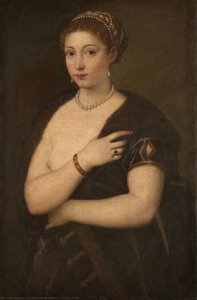 Girl in a Fur - Titian Ramsay Peale II
In Girl in a Fur by Titian Ramsay Peale II, the eye is immediately captured by the tactile interplay of textures—the heavy, plush weight of the luxurious fur cloak contrasting against the luminous, soft glow of skin. Peale II utilizes a masterful technique that echoes the Venetian masters, where every brushstroke serves to define the opulent jewelry and the delicate shimmer of pearls draped around the subject's neck. This painting is a vital inclusion in our exploration of the top 25 artworks in Kunsthistorisches Museum, Vienna , as it represents a profound dialogue between American naturalist precision and High Renaissance sensuality.
The composition masterfully balances modesty with provocation, using light to animate the intricate ornamentation and the enigmatic gaze of the sitter. At ArtsDot.com , we understand that the true essence of such a masterpiece lies in its materiality. Our hand-painted oil reproductions are meticulously crafted to preserve this tactile, three-dimensional quality , ensuring that the visible brushstrokes and deep tonal ranges of Peale II’s vision are brought into your own professional or private collection with museum-grade fidelity.
The Conquest of Jerusalem by Emperor Titus - Nicolas Poussin
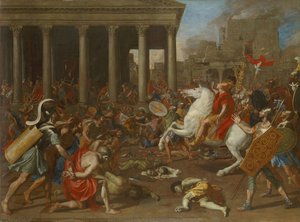 The Conquest of Jerusalem by Emperor Titus - Nicolas Poussin
In The Conquest of Jerusalem by Emperor Titus , Nicolas Poussin masterfully orchestrates a scene of profound historical gravity and kinetic energy. This 1638 masterpiece captures the chaotic intensity of the Roman siege through a disciplined lens, where the clash of swords, the movement of cavalry, and the heavy atmosphere of conflict coalesce into a singular, dramatic narrative. As one of the top 25 artworks in the Kunsthistorisches Museum, Vienna, it stands as a testament to Poussin’s ability to infuse classical composition with raw, human emotion.
The painting’s structured chaos—featuring armored figures, rearing horses, and even a watchful canine presence—offers a sophisticated study in light and shadow that remains strikingly relevant. For the modern collector or interior designer, the work's balanced palette and monumental scale provide an unparalleled focal point for grand architectural spaces. Its legacy of clarity and intellectual depth continues to inspire contemporary aesthetics, bridging the gap between ancient historical epic and the refined, structured elegance required in high-end corporate and residential environments.
Diptych - Rogier van der Weyden
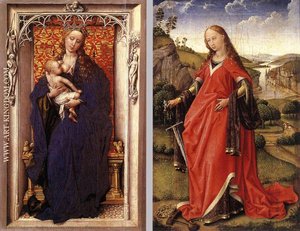 Diptych - Rogier van der Weyden
In the quiet corners of the Kunsthistorisches Museum, Vienna, the Diptych by Rogier van der Weyden offers a profound moment of spiritual intimacy. This small-scale masterpiece, dating to 1440, functions as more than just a religious icon; it is a window into the soul of the Northern Renaissance. As you stand before it, the gaze of the figures—one draped in celestial blues and crowned in royalty, the other in the scarlet robes of sacrifice—seems to follow you with an expression of deep, quiet understanding.
Van der Weyden’s pioneering use of oil paint allows for a luminous detail that feels almost tactile. You can trace the delicate folds of fabric and the tender weight of the infants held within the frame. The juxtaposition of the serene, tree-lined landscape against the rugged mountains creates a narrative of both peace and strength. This piece is a vital part of the museum's top 25 artworks because it acts as a mirror to our own capacity for devotion, reminding every viewer that they are part of a much larger, eternal story.
The Procession to Calvary [detail] - Pieter Bruegel the Elder
![The Procession to Calvary [detail]](/media/artworks/images-thumb/32/c5/32c52a8c054c3755b769d95ed8a42796.jpg) The Procession to Calvary [detail] - Pieter Bruegel the Elder
The Procession to Calvary [detail] - Pieter Bruegel the ElderWhile many view the 1564 masterpiece The Procession to Calvary as a purely religious narrative, Pieter Bruegel the Elder actually utilized this scene to conduct a profound sociological study of 16th-century Flemish life. Within this detail, the artist achieves a technical marvel: the use of grisaille —a monochromatic grey palette—to render the central holy figures. This deliberate stylistic choice creates a haunting detachment, separating the spiritual weight of Mary and Saint John from the vibrant, chaotic energy of the surrounding crowd.
Bruegel’s genius lies in his ability to layer thick, textured impasto strokes with an extraordinary eye for detail, from the muscular tension of horses to the varied expressions of morbid fascination on the onlookers' faces. The earthy browns and deep reds pull the viewer into a world where piety and everyday reality collide. This level of meticulous composition and focused intensity serves as a powerful inspiration; much like the disciplined precision required by Bruegel, integrating such a profound work into a modern home office or study fosters an atmosphere of deep concentration and sophisticated intellectual ambition.
Conclusion
As the golden light of a Viennese dusk settles over the grand halls of the Kunsthistorisches Museum, we are left with more than just the memory of pigment and canvas; we carry the weight of centuries of human emotion. These twenty-five masterpieces are not merely static relics of a bygone era, held behind glass and guarded by history. Instead, they remain living presences—vibrant, breathing dialogues that continue to shape our modern aesthetic, stir our deepest contemplations, and breathe life into the spaces we inhabit today. Whether it is the quiet intimacy of a Vermeer or the dramatic shadows of a Rembrandt, these works possess an enduring power to transform a room from a mere physical space into a sanctuary of inspiration.
At ArtsDot.com , we believe that this profound connection to beauty should not be confined to the corridors of Vienna. We strive to bridge the gap between the museum archive and your personal environment, ensuring that the soul of each original is reborn through the hands of our skilled artists. Every hand-painted reproduction we create is a labor of reverence, meticulously crafted on cotton canvas to honor the original brushstrokes, the depth of tone, and the inimitable spirit of the masters. We invite you to continue your journey through these halls of greatness by exploring our full collection , where the timeless elegance of the Habsburg treasures can find a permanent, tangible home in your own collection.