The Glitch in Reality: Magritte’s Subversion of the Familiar
 René Magritte's Masterpieces: 25 Surrealist Paintings for Art Lovers | ArtsDot
Introduction To embark on a journey through the top 25 artworks of René Magritte is to enter a realm where the familiar dissolves into the enigmatic, and reality itself becomes a question mark. These paintings are not merely images; they are portals—...
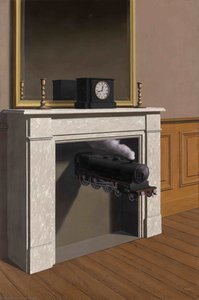
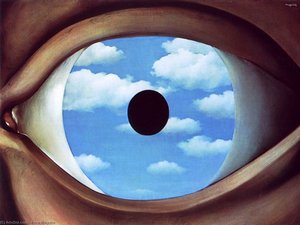
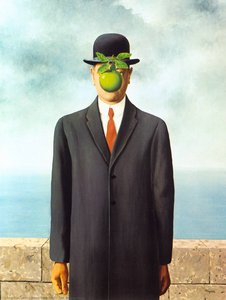
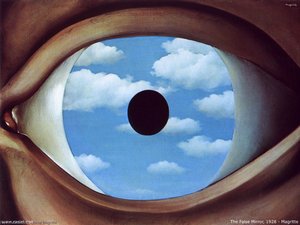
To step into a René Magritte canvas is to experience a high-definition glitch in the fabric of our perceived world. For the art student, Magritte offers something far more provocative than mere dreamscapes; he provides a masterclass in the subversion of the ordinary. He does not rely on the chaotic, melting distortions seen in Dalí’s work, but rather employs a hyper-realistic, almost academic precision to render the impossible. By utilizing meticulous oil techniques—smooth surfaces devoid of heavy impasto—he presents familiar objects like bowler hats, green apples, and pipes with an unsettling clarity. This technical restraint is his greatest weapon. When he places a massive rock floating above a calm sea or merges a daytime sky with a nocturnal streetscape in works like
The Empire of Light, the lack of painterly "noise" forces the viewer to confront the logic-defying subject matter directly. It is a visual confrontation where the familiar becomes strange, and the stability of our everyday environment begins to dissolve into a series of beautiful, perplexing questions.
Ceci n'est pas une pipe: The Paradox of Representation and Language
The Treachery of Images - Wikipedia--- title: The Treachery of Images - Wikipedia author: Show Authority Control Databases International Viaf Gnd National France Bnf Data url: https://en.wikipedia.org/wiki/The_Treachery_of_Images hostname: wikipedia.org sitename: Wikimedia Foundation,...
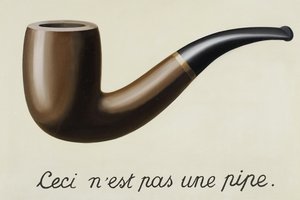
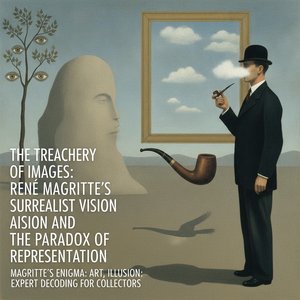
Perhaps no single image in the history of modern art has sparked as much intellectual debate as his 1929 masterpiece,
The Treachery of Images. At first glance, it is a simple, almost instructional depiction of a tobacco pipe, yet beneath the surface lies a profound linguistic trap. By inscribing the phrase
Ceci n'est pas une pipe—This is not a pipe—Magritte shatters the illusion of the canvas as a window to reality. He forces us to acknowledge the fundamental gap between an object and its representation. As he famously noted, one cannot stuff his painting with tobacco; it is merely oil and pigment on canvas. This exploration of the paradox of representation challenges students to look beyond the surface of any medium. It serves as a precursor to much of the conceptual art that would follow, reminding us that the image is a signifier, not the thing itself. In this way, Magritte turns the act of looking into an act of decoding, where language and vision are constantly at war with one another.
Shadows of the Subconscious: Trauma and the Veiled Motif
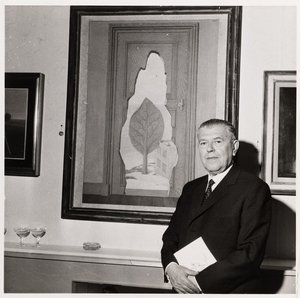 René Magritte
Early Life and the Seeds of Surrealism René Magritte, born René François Ghislain Magritte on November 21, 1898, in Lessines, Belgium, emerged into a world that would profoundly shape his enigmatic artistic vision. His early years were marked by an u...
While his work often feels like a cerebral game of wits, there is a haunting, visceral undercurrent to Magritte’s imagery that stems from the shadows of his early life. The profound trauma of losing his mother to suicide during his formative years in Belgium left an indelible mark on his creative psyche. The chilling memory of her body being recovered from the River Sambre, with her dress obscuring her face, manifested in a recurring and powerful motif: the veiled figure. Throughout his oeuvre, we see faces hidden by cloth, much like in
The Lovers, where two figures attempt to kiss through a shroud of white fabric. This use of concealment creates a sense of profound mystery and loss, suggesting that truth is often something obscured or unreachable. For the student of art history, these veiled elements are not merely stylistic choices but psychological anchors that connect his Surrealist explorations to the deeper, more turbulent currents of the human subconscious and the persistent tension between what is seen and what remains hidden.
Visual Illusions: Decoding the Architecture of Dreamscapes
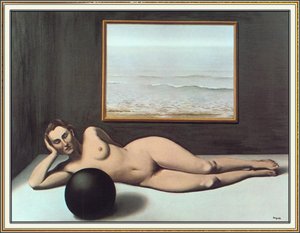 Bather between Light and Darkness
A Surrealist Meditation on Perception René Magritte’s “Bather Between Light and Darkness,” painted in 1935, stands as a quintessential example of Surrealism—a movement that sought to liberate the imagination from rational constraints and explore the ...
Magritte’s compositions function like architectural blueprints for a dream. He masterfully manipulates scale, perspective, and light to create environments that feel structurally sound yet logically impossible. In
Bather Between Light and Darkness, he utilizes stark contrasts to merge an interior room with a luminous ocean expanse, disrupting our sense of spatial boundaries. His ability to use framing devices—such as placing a framed picture of the sea within a painting of a person—serves to layer reality upon itself, creating a recursive loop of perception. This technique invites the viewer into a state of active interpretation, where one must navigate through layers of illusion to find the core of the image. His work does not just depict a dream; it constructs the very mechanics of how we experience one, using light and shadow to create a sense of depth that is both physically convincing and metaphysically unstable.
The Legacy of Mystery: From Surrealism to Contemporary Pop Culture
 rené daniels
René Daniëls: Bridging Art History and Everyday Life Through Visual Poetry René Daniëls (1950-present) stands as a prominent figure in contemporary Dutch painting, recognized for his distinctive approach – “visual poetry.” This artistic philosophy st...
The ripples of Magritte’s mind games extend far beyond the borders of the Surrealist movement. His influence is woven into the very DNA of contemporary visual culture, from the graphic punch of Pop Art to the layered, ambiguous aesthetics of modern digital design and street art. The way he recontextualized everyday objects paved the way for artists like Andy Warhol and even the "visual poetry" of later painters who sought to bridge the gap between high art and daily existence. Today, his legacy lives on in any medium that dares to question the boundary between the real and the simulated. For those of us at ArtsDot.com, Magritte remains a primary inspiration for the way we approach the "remixing" of history—taking the familiar and injecting it with a dose of the unexpected. His work teaches us that art is not just about what we see, but about the profound, enduring mystery of how we choose to perceive it.