
Beyond the Surface: Why Pop Art is More Than Just Eye Candy
Pop art is an art movement that emerged in the United Kingdom and the United States during the mid-to late 1950s. The movement presented a challenge to traditions of fine art by including imagery from popular and mass culture—including advertising, c...
At first glance, Pop Art looks like a neon explosion designed for easy consumption—a vibrant, glossy surface of bright colors and familiar faces that feels instantly at home in a modern, digital-age aesthetic. But to dismiss it as mere eye candy is to miss the entire point of the movement. Emerging as a deliberate rebellion against the introspective, heavy shadows of Abstract Expressionism, Pop Art didn't just change what we looked at; it changed how we understood the world around us. It took the banal, the kitsch, and the mass-produced—the very things society often ignores in favor of "high art"—and elevated them to a status of profound cultural significance. This wasn't just a change in subject matter; it was a seismic shift that blurred the boundaries between high culture and the everyday consumerist dream, turning the objects of our daily lives into icons of contemplation.
Iconography Unmasked: Decoding the Hidden Language of Mass Media
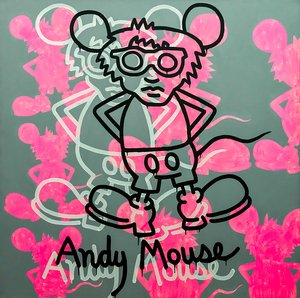 Andy mouse
Andy Mouse: A Pop Art Icon Reimagined Keith Haring’s *Andy Mouse* isn't merely a cartoon; it’s a vibrant collision of artistic movements and cultural icons. Born from the late 20th-century Neo-Pop Art movement, this piece brilliantly merges the unive...
To truly decode this movement, one must look beneath the recognizable symbols that populate our screens and streets. Take, for instance, Keith Haring’s Andy Mouse. It isn't just a playful cartoon; it is a brilliant collision of cultural titans, merging the global recognition of Disney’s Mickey Mouse with the groundbreaking aesthetic pioneered by Andy Warhol. Through Haring’s signature bold lines and simplified forms, we see a potent dose of social commentary on the commodification of art and the pervasive influence of media. Similarly, in works like Roy Lichtenstein’s Studio the dance, the use of Ben-Day dots and comic-book aesthetics transforms a fleeting, almost voyeuristic scene into an electrifying commentary on mass media itself. These pieces use familiar imagery to force us to confront the mechanical nature of our own gaze, using the language of advertising and pop culture to speak truths that traditional fine art often avoids.
The Aggressive Palette: How Saturated Color Drives Narrative Tension
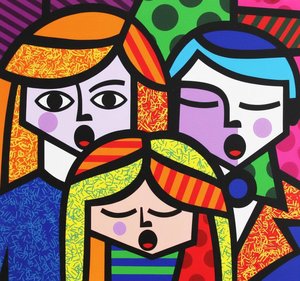 Chromatic Convergence of Three Faces in a Vibrant Pop Art Symphony
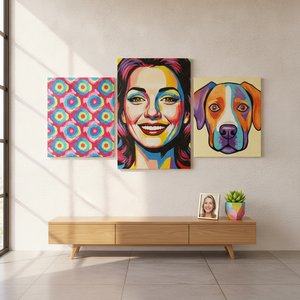
A Vision of Aggressive Confrontational Pop Experience the electric pulse of Chromatic Convergence of Three Faces in a Vibrant Pop Art Symphony , a breathtaking masterpiece that redefines the boundaries of modern graphic expression. This work captures...
The energy of this movement is driven by what we call Aggressive Pop Art—a high-impact aesthetic that refuses to be ignored. This isn't about subtle gradients or muted tones; it’s about a saturated palette of cyan, magenta, and orange that commands the room and creates an immediate, visceral impact. By utilizing thick, assertive black outlines and high-contrast tones, artists like Caroline Pelletier create a state of beautiful tension. This visual language is designed to strike back at the viewer, using chromatic convergence to create a hypnotic, high-energy experience. It is an unapologetic, confrontational energy that uses color not just for decoration, but as a tool for narrative impact and psychological weight, pulling the viewer into a dynamic symphony of form and intensity.
Pop Surrealism & The Subconscious: Finding Meaning in the Dreamlike
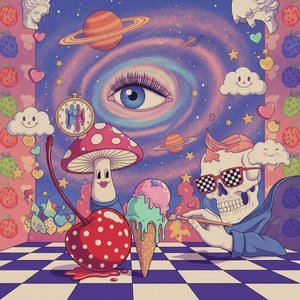 Pop Surrealism Unveiled: The Sophisticated Intersection of Vibrant Pop Art and Dreamlike Subconscious Landscapes
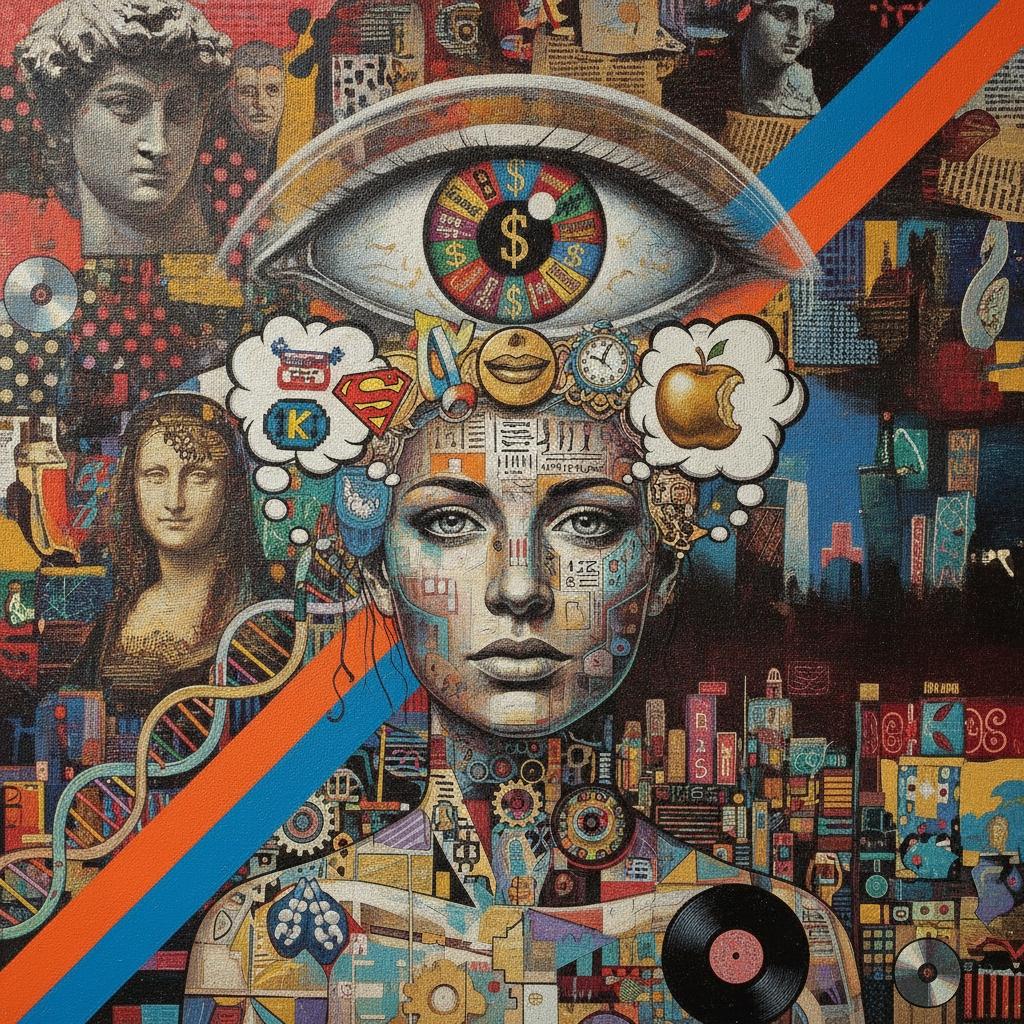
The Genesis of a Movement: From Post-War Optimism to Underground Rebellion Pop Surrealism: A Collision of Culture, Dreams & the Subconscious in Post-War Art The Roots of Rebellion: From Post-War Optimism to Underground Expression 100 Sources of Pop A...
As we move deeper into the layers of this movement, we encounter the sophisticated intersection of Pop Surrealism. This movement takes the vibrant, glossy imagery of Pop Art and infuses it with the dreamlike landscapes of the subconscious. It represents a transition from the outward celebration of post-war prosperity to an inward excavation of the psyche. Here, the recognizable symbols of mass culture are recontextualized within unsettling, imaginative settings, creating a collision between the known and the imagined. The result is a profound allure where the polished veneer of consumerism meets the turbulent depths of human dreams, allowing artists to use the tools of pop culture to explore the most complex and hidden parts of our collective identity.
Designing Rebellion: Using Bold Allegory to Kill Minimalism
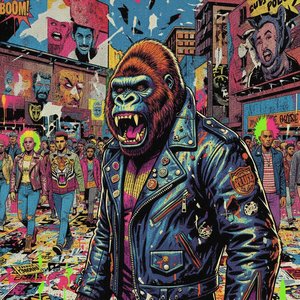 Aggressive Pop Art: The High-Impact Movement Redefining Street Style and Urban Design
The Death of Minimalism: Why Aggressive Pop is Reclaiming Modern Interiors Modern Remix: How Classical Icons Fuel Today's Boldest Street & Pop Art Trend Forecast The Death of Minimalism: Why Bold Pop Aesthetics are Reclaiming Modern Interiors Pop Art...
Ultimately, this movement serves as a visual rebellion against the "sad beige" era of modern minimalism. For too long, the design world has been held hostage by a sterile, neutral aesthetic that prioritizes quietness over actual personality. Aggressive Pop Art is reclaiming these spaces, replacing hollow silence with a visual dialogue that demands attention and reflects the electric energy of the modern metropolis. Whether through the rhythmic grid repetition of Jean-Paul Faubert’s digital imagery or the 3D textures of contemporary masters, this art is about intentional impact. It is a refusal to disappear into the background, offering instead a way to transform our environments into active, breathing spaces that celebrate the chaotic, beautiful complexity of modern life. At ArtsDot.com, we curate only these high-impact, vivid pieces—ensuring your space doesn't just exist, but makes a statement.