The Rise of Realism: Challenging Academic Conventions
Realism, Realistic, or Realists may refer to: == In the arts == Realism (arts), the general attempt to depict subjects truthfully in different forms of the arts Arts movements related to realism include: == In philosophy == Philosophical realism ...
The mid-19th century witnessed a seismic shift in the art world, a rebellion against the polished idealism that had dominated for generations. For centuries, the Académie des Beaux-Arts in Paris held an almost absolute sway over artistic taste, dictating subject matter – historical scenes, religious narratives, and portraits of the elite – and technique: meticulous detail, smooth brushwork, and a commitment to classical form. But as France underwent rapid industrialization and social upheaval, artists began to question these established norms. They sought not to depict an idealized past or mythological world, but the realities of their present—the lives of ordinary people, the grit and grime of urban life, and the complexities of modern existence. This burgeoning movement, known as Realism, wasn’t merely a stylistic change; it was a philosophical one, rooted in a desire for truthfulness and an engagement with contemporary society.
Gustave Courbet became its most vocal champion, famously declaring his intention to “record the customs, ideas, and appearances of my time.” His monumental work, *The Stonebreakers*, though lost during World War II, exemplified this commitment. It wasn’t a grand historical allegory or a flattering portrait; it was a stark depiction of manual labor, presented without sentimentality or embellishment. This directness shocked audiences accustomed to more refined and idealized representations. The Salon, the official art exhibition of the Académie, became a battleground for these new ideas. While some Realist works were accepted – often with critical derision – many were rejected outright, fueling a growing sense of alienation among artists who felt stifled by the constraints of the establishment.
The rejection wasn’t simply about subject matter; it was also about technique. Realists favored visible brushstrokes and an unvarnished palette, rejecting the smooth, polished surfaces prized by academic painters. They sought to capture the texture of reality itself, embracing imperfections and a sense of immediacy. This marked a departure from the carefully constructed compositions and idealized forms that had long been considered hallmarks of artistic excellence.
Impressionism's Revolutionary Capture of Light & Atmosphere
Impressionism was a 19th-century art movement characterized by visible brush strokes, open composition, emphasis on accurate depiction of light in its changing qualities (often accentuating the effects of the passage of time), ordinary subject matter...
Emerging in the 1860s and 70s, Impressionism built upon the foundations laid by Realism but took it in a radically new direction. While Realists sought to depict the world as it was, the Impressionists were more concerned with *how* we see the world—the fleeting effects of light, color, and atmosphere. A group of artists – Claude Monet, Pierre-Auguste Renoir, Edgar Degas, Camille Pissarro, and others – began painting *en plein air*, or outdoors, directly observing nature rather than relying on studio compositions. This was a revolutionary act, challenging the traditional notion that paintings should be completed in controlled environments.
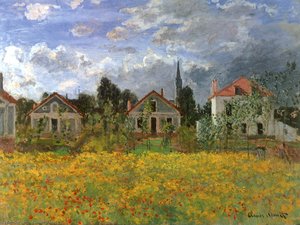
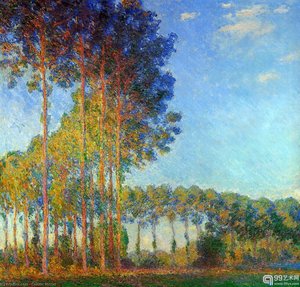
The name “Impressionism” itself came from a satirical review of Claude Monet’s *Impression, soleil levant* (Impression, Sunrise), which critic Louis Leroy derisively used to mock the perceived lack of finish and detail in the painting. However, the term stuck, and it aptly described the movement's focus on capturing momentary impressions rather than precise representations. Monet’s work exemplifies this approach: broken brushstrokes of pure color applied rapidly to capture the shifting light on water, the hazy atmosphere of a harbor scene. The emphasis wasn’t on depicting objects accurately but on recreating the sensation of seeing—the play of light and shadow, the vibrancy of color, and the overall visual experience.
This pursuit of capturing fleeting moments led to innovations in technique. Impressionists abandoned traditional shading techniques, instead using complementary colors to create a sense of vibrancy and luminosity. They also embraced open composition, often cropping scenes in unconventional ways and focusing on unusual angles. These choices were not accidental; they were deliberate attempts to capture the dynamism and spontaneity of modern life.
Salon Culture and Artistic Rebellion in 19th-Century Paris
The Salon, or sometimes Paris Salon (French: Salon de Paris [salɔ̃ d(ə) paʁi]), beginning in 1667, was the official art exhibition of the Académie des Beaux-Arts in Paris. Between 1748 and 1890 it was arguably the greatest annual or biennial art even...
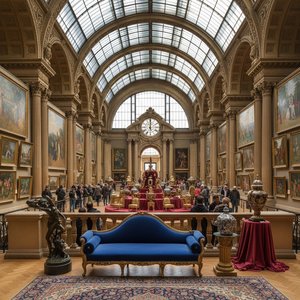
The Salon de Paris was more than just an art exhibition; it was a social event, a cultural institution, and a symbol of artistic authority. For artists, acceptance into the Salon meant recognition, commissions, and access to patronage. However, as the Realists and Impressionists challenged academic conventions, their chances of success at the Salon diminished. The juries, composed of established artists, were often hostile to new ideas and preferred works that adhered to traditional standards.
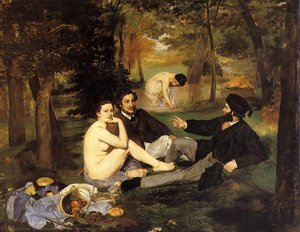
The infamous *Salon des Refusés* of 1863 was a direct consequence of this tension. After an unusually large number of paintings were rejected by the Salon jury, Napoleon III intervened, ordering a separate exhibition for those artists who had been denied entry. This event provided a platform for Realist and Impressionist works to be seen by a wider audience, albeit one still largely skeptical of their innovations. Édouard Manet’s *Le Déjeuner sur l'herbe* (Luncheon on the Grass), exhibited at the Salon des Refusés, became a scandal due to its unconventional subject matter – a nude woman picnicking with clothed men – and its rejection of traditional compositional techniques.
The repeated rejections from the Salon led the Impressionists to organize their own independent exhibitions, beginning in 1874. These shows were not as prestigious as the Salon, but they allowed the artists to showcase their work without censorship or judgment. They also fostered a sense of community and solidarity among those who felt marginalized by the art establishment. The struggle against the Salon became emblematic of the broader artistic rebellion that characterized the 19th century.
Key Figures and Masterpieces: Manet, Monet, and Beyond
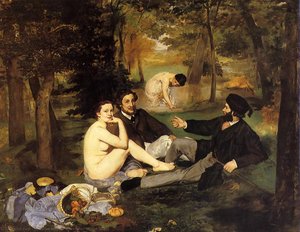 Luncheon on the Grass
Explore Édouard Manet’s "Luncheon on the Grass" – a revolutionary masterpiece of Realism & Impressionism. Discover its controversial history, artistic techniques & timeless appeal.
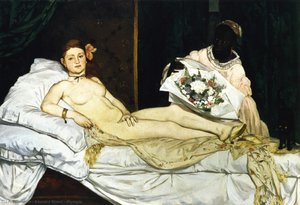
While Claude Monet is often considered the quintessential Impressionist, several other artists played crucial roles in shaping the movement. Édouard Manet, though not strictly an Impressionist himself, paved the way for their innovations with his bold subject matter and unconventional techniques. His *Olympia*, a provocative nude portrait that challenged traditional notions of beauty and morality, shocked audiences and sparked intense debate.
Pierre-Auguste Renoir captured the joy and vibrancy of Parisian life in paintings like *Bal du moulin de la Galette*, depicting a lively dance hall scene. Edgar Degas focused on scenes of modern urban life, particularly ballet dancers and horse races, employing unconventional compositions and dynamic brushwork. Camille Pissarro explored landscapes and cityscapes with a focus on capturing the effects of light and atmosphere.
Beyond these core figures, artists like Alfred Sisley and Berthe Morisot contributed significantly to the Impressionist aesthetic. Sisley’s serene landscapes captured the beauty of the French countryside, while Morisot’s intimate portraits depicted scenes of domestic life with a delicate sensitivity. Each artist brought their unique perspective to the movement, contributing to its diversity and richness.
Beyond Technique: Social Commentary and the Human Condition
While often celebrated for their aesthetic innovations, 19th-century Realist and Impressionist painters also engaged with social issues and explored the complexities of the human condition. Realists like Gustave Courbet directly addressed themes of labor, poverty, and inequality in their work, challenging viewers to confront uncomfortable truths about contemporary society. Alfred-Philippe Roll’s *The Strike of the Miners* depicted the hardship and struggle of working-class people.
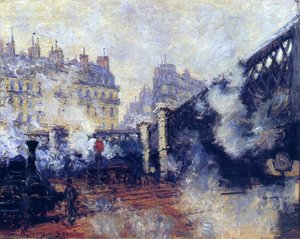
Impressionism*, while seemingly focused on capturing fleeting moments of beauty, also reflected a changing world. The depiction of modern urban life – bustling boulevards, crowded cafes, and railway stations – captured the dynamism and alienation of industrial society. The focus on everyday scenes and ordinary people challenged traditional hierarchies of subject matter, elevating the lives of those who had previously been marginalized in art.
Even paintings that appeared purely aesthetic could be interpreted as social commentary. The Impressionists’ rejection of academic conventions – their embrace of visible brushstrokes, open composition, and unconventional colors – can be seen as a reflection of broader societal shifts towards individualism and freedom. They were not simply painting what they saw; they were challenging the way we see the world.
The Lasting Legacy: How 19th-Century Painting Shaped Modern Art
The impact of Realism and Impressionism on subsequent art movements was profound. The Impressionists’ emphasis on capturing light, color, and atmosphere paved the way for Post-Impressionism, with artists like Vincent van Gogh and Paul Cézanne exploring subjective expression and formal experimentation. Their rejection of traditional perspective and representation also influenced the development of Cubism and other abstract styles.
The legacy extends beyond stylistic innovations. The Impressionists’ challenge to academic authority and their embrace of independent exhibitions established a precedent for artistic freedom and self-expression. They demonstrated that art could be more than just a reflection of reality; it could be a means of challenging conventions, exploring new ideas, and capturing the essence of human experience.
Today, the works of Realist and Impressionist painters continue to captivate audiences worldwide. Their paintings offer not only aesthetic pleasure but also a glimpse into a pivotal moment in history—a time of rapid change, social upheaval, and artistic revolution. At ArtsDot.com, we are proud to offer high-quality reproductions of these masterpieces, allowing you to bring the beauty and innovation of 19