

Unlocking Visual Literacy: The Foundation for Critical Thinking
Visual literacy is the ability to interpret, negotiate, and make meaning from information presented in the form of an image, extending the meaning of literacy, which commonly signifies interpretation of a written or printed text. Visual literacy is ...
We live in a world awash with images – a constant stream of visual information vying for our attention. Yet, the ability to truly *see*, to interpret meaning beyond the superficial, remains a surprisingly underdeveloped skill. This is where visual literacy steps into focus, not as a mere appreciation of aesthetics, but as a fundamental cognitive tool. For centuries, humans communicated through imagery long before written language took hold; consider the evocative power of cave paintings at Lascaux or the intricate symbolism woven into ancient Egyptian hieroglyphs. These weren’t simply decorative flourishes – they were narratives, histories, and belief systems rendered visible. The very act of deciphering these images required a level of visual intelligence, an understanding that pictures could ‘speak’. As societies evolved, so too did the complexity of visual communication. During the Enlightenment, there was a renewed emphasis on sensory training, recognizing how carefully crafted visuals aided in learning and comprehension. However, it wasn’t until the latter half of the 20th century, with John Debes's formal definition in 1969, that ‘visual literacy’ became a recognized field of study – encompassing the competencies we develop through seeing and integrating other sensory experiences. Today, in an age dominated by digital media, visual literacy isn’t just beneficial; it’s essential for navigating misinformation, analyzing persuasive imagery, and effectively communicating our own ideas.
Art History as Cultural Context: Connecting Past, Present & Curriculum
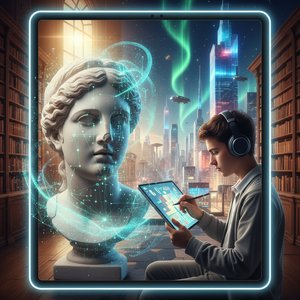 The Enduring Relevance of Art History in a Contemporary World
Explore the enduring relevance of art history! Discover how studying the past informs our present, fosters critical thinking, and preserves cultural heritage. A deep dive for art lovers & history enthusiasts.
To approach art history solely as a chronological parade of styles – Renaissance followed by Baroque, Impressionism giving way to Modernism – is to miss its profound power. Art isn’t created in a vacuum; it's inextricably linked to the cultural, political, and social forces of its time. Studying art history provides invaluable context for understanding literature, societal norms, scientific advancements, and even mathematical principles. Consider the Italian Renaissance: examining paintings by Botticelli alongside texts from Machiavelli illuminates the complex interplay between artistic expression and political maneuvering. The architectural marvels of Brunelleschi reveal not only engineering prowess but also a shift in humanist thought. Similarly, the vibrant brushstrokes of Impressionist painters like Monet weren’t simply aesthetic choices; they reflected breakthroughs in color theory and a fascination with capturing fleeting moments of light. Integrating art history into the curriculum fosters a more holistic understanding of historical events, encouraging students to consider multiple perspectives – examining artworks through the lens of different cultures, genders, and social classes. It's about recognizing that every artwork is a product of its time, a visual artifact imbued with meaning waiting to be deciphered.
Decoding Symbolism: Unveiling Hidden Meanings in Art
 Decoding Visual Language: Symbolism in Art History for the Discerning Collector
Explore the rich history of symbolism in art with ArtsDot.com. Uncover hidden meanings, understand iconography, and elevate your art collecting knowledge. Expert analysis & insights for discerning collectors.
Throughout history, artists have employed symbolism as a powerful language – a means of conveying complex ideas and narratives beyond the literal representation of objects. From the religious iconography of medieval paintings to the allegorical figures of Renaissance masterpieces, symbols unlock hidden layers of meaning for those who know how to read them. A dove, frequently appearing in Western art, often represents peace or the Holy Spirit; a skull serves as a potent *memento mori*, reminding us of mortality. However, symbolism isn’t universal or static. Its interpretation is deeply rooted in cultural context and historical period. For instance, the meaning of certain colors could vary dramatically between ancient Egypt and Victorian England. Understanding iconography – the visual vocabulary used within specific artistic traditions – is crucial for accurate analysis. Examining recurring motifs, compositional choices, and color palettes can also reveal subtle clues to an artwork’s deeper message. Before attempting to interpret symbolism, it's essential to research the cultural background of the piece, considering its intended audience and the prevailing beliefs of the time.
Museums as Living Textbooks: Maximizing Educational Visits
 Iris And b. Gerald Cantor Center For Visual Arts
Discover 5,000 years of art at Stanford's Cantor Arts Center! Explore diverse collections, including Rodin sculptures & contemporary works. Free admission!
Museums are not merely repositories of artifacts; they are living textbooks – spaces where history comes alive. A well-planned museum visit can be a transformative educational experience, fostering critical thinking, sparking curiosity, and deepening appreciation for art and culture. Before embarking on a visit, it’s crucial to prepare students by providing background information on the artworks they will encounter. Encourage them to formulate questions, identify areas of interest, and develop observational skills. During the visit, guide students to analyze specific elements – composition, color, technique, symbolism – prompting them to articulate their interpretations. Institutions like Castle High School & Visual Arts College offer unique insights into local artistic heritage, while larger museums such as the Cantor Arts Center provide access to diverse collections spanning centuries. Even virtual museum tours can be incredibly valuable, offering accessibility for students who may not be able to visit in person. The key is to move beyond passive observation and encourage active engagement with the artwork – sketching details, writing reflections, or creating presentations based on their discoveries.
Integrating Art Across Disciplines: Practical Strategies and Examples
The beauty of art integration lies in its versatility – it’s not about adding another subject to an already crowded curriculum; it's about enhancing existing lessons. In English Language Arts, students can analyze visual narratives within paintings, exploring themes of symbolism and character development. They could also create storyboards based on literary works, translating textual descriptions into visual form. In Social Studies, recreating historical scenes through artwork allows students to embody different perspectives and understand past events more vividly. Designing propaganda posters reflecting various ideologies provides a powerful lesson in persuasive communication. In Science, illustrating complex concepts – the water cycle, cellular structures, astronomical phenomena – reinforces understanding through visual representation. The key is to find meaningful connections between art and existing curriculum objectives, fostering creativity and deeper engagement with learning materials. Encourage students to experiment with different media – painting, sculpture, collage, digital art – allowing them to express their understanding in unique and innovative ways.
Visual Thinking Strategies: A Powerful Tool for Observation & Interpretation
Developed by Abigail Housen and Jerome Bruner, Visual Thinking Strategies (VTS) is a pedagogical approach designed to cultivate observational skills and encourage articulate interpretation. The core of VTS revolves around three simple yet powerful questions posed in response to an artwork: “What’s going on in this picture?”, “What do you see that makes you say that?”, and “What more can we find?”. This open-ended format encourages students to observe carefully, articulate their interpretations without fear of judgment, and support their claims with evidence from the image itself. Unlike traditional art analysis, which often focuses on pre-determined answers or historical context, VTS prioritizes observation and individual interpretation. By focusing on what *is* visible within the artwork, it fosters critical thinking, collaborative discussion, and a deeper appreciation for diverse perspectives. Integrating VTS into art education helps students develop a nuanced understanding of visual language and appreciate the subjective nature of artistic expression.