Early Influences and Artistic Formation: Laying the Groundwork
 Wikipedia: Suzanne Jackson (artist)
Suzanne Jackson (born 1944) is an American visual artist, gallery owner, poet, educator, and set designer; with a career spanning five decades. Her work has been exhibited in museums and galleries around the world. Since the late 1960s, Jackson has d...
The story of John Jackson, like many transformative artists, isn’t one of sudden revelation but rather a gradual unfolding—a complex interplay of formative experiences and intellectual currents. While not as widely celebrated as his contemporaries like Pollock or Rothko, Jackson occupies a crucial space within the Abstract Expressionist movement, representing a unique synthesis of lyrical abstraction and gestural power. His early life, marked by a nomadic upbringing and exposure to diverse artistic traditions, laid the foundation for a deeply personal visual language. Born in 1944, Jackson’s initial encounters with art weren't confined to formal training; instead, they were woven into the fabric of his surroundings—a childhood spent immersed in the natural world, coupled with an early fascination with poetry and dance. This multifaceted background instilled in him a sensitivity to rhythm, texture, and emotional resonance that would later define his canvases.
Jackson’s formal education at San Francisco State University proved pivotal, connecting him with influential figures like Charles White who encouraged experimentation and critical thinking. However, it was his subsequent travels through South America, observing the vibrant cultural landscape and engaging with diverse artistic expressions, that truly ignited his creative spark. This period fostered a sense of liberation from conventional norms, prompting him to explore new modes of representation and challenge established aesthetic boundaries. The seeds of his later work—a profound connection to nature, an embrace of spontaneity, and a commitment to expressing inner emotional states—were firmly planted during these formative years.
The Emergence of Abstract Expressionism and Jackson's Place Within It
Abstract expressionism in the United States emerged as a distinct art movement in the aftermath of World War II and gained mainstream acceptance in the 1950s, a shift from the American social realism of the 1930s influenced by the Great Depression an...
The post-World War II era witnessed a seismic shift in the art world, with New York City rapidly ascending as the new epicenter of artistic innovation. The emergence of Abstract Expressionism—a movement characterized by its emphasis on non-representational imagery, spontaneous gesture, and emotional intensity—challenged the dominance of European traditions and ushered in a new era of American artistic expression. Jackson arrived on this scene at a crucial juncture, absorbing the influences of key figures like Pollock, Gorky, and de Kooning while simultaneously forging his own distinct path.
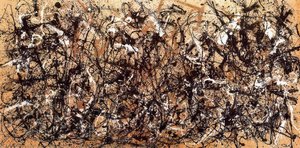
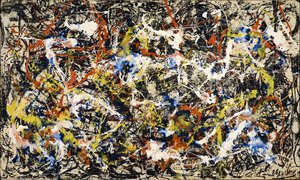
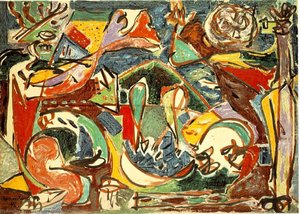
Unlike Pollock’s all-over compositions or Rothko’s meditative color fields, Jackson's work often retained subtle references to figuration and landscape. He wasn’t interested in a complete rejection of representation but rather in exploring the liminal space between abstraction and reality. This nuanced approach allowed him to imbue his canvases with a sense of psychological depth and emotional complexity that resonated deeply with viewers. His early gallery exhibitions, particularly those at Gallery 32 and Ankrum Gallery, showcased this emerging style—a delicate balance of lyrical abstraction, gestural brushwork, and symbolic imagery.
Key Characteristics of John Jackson’s Style: Materials, Techniques, and Composition
 James Brooks
James Brooks (1906-1992) was a pivotal Abstract Expressionist painter known for his innovative staining techniques, lyrical abstraction, & large-scale murals like "Flight" at LaGuardia Airport. Explore his calligraphy-infused works and legacy as a fi
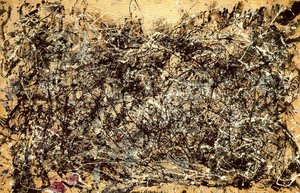
John Jackson's artistic process was deeply intuitive, prioritizing spontaneity and emotional expression over meticulous planning. While he experimented with various materials throughout his career, oil paint remained his primary medium—a versatile substance that allowed him to achieve a wide range of textures, tones, and effects. His canvases are characterized by layers of color, often applied with bold brushstrokes and dynamic gestures. He frequently employed techniques such as staining, layering, and scraping, creating surfaces that are both visually rich and emotionally evocative.
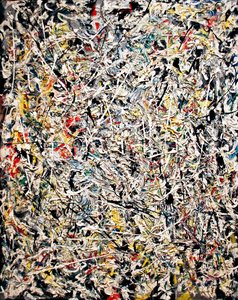
Compositionally, Jackson’s work defies easy categorization. While some paintings exhibit a clear sense of structure and balance, others embrace a more chaotic and improvisational approach. He often incorporated elements of calligraphy and symbolic imagery—references to his personal experiences, cultural heritage, and spiritual beliefs. The use of color is particularly significant in Jackson's oeuvre, with each hue carefully chosen to convey specific emotions or ideas. His palette ranges from vibrant, saturated tones to muted, earthy shades, reflecting the complexity and nuance of his inner world.
Contextualizing Jackson’s Work: Critical Reception and Historical Significance
Throughout his career, John Jackson navigated a complex art landscape—one marked by shifting critical trends and evolving aesthetic standards. While he received recognition from influential critics like Joan Ankrum who praised the “freshness and originality” of his work, he often remained on the periphery of mainstream attention. This relative obscurity can be attributed to several factors, including his refusal to adhere to a single stylistic label and his commitment to exploring deeply personal themes.
The broader historical context
is crucial for understanding Jackson’s significance. The 1960s and 70s witnessed the rise of Pop Art and Minimalism—movements that challenged the emotional intensity and subjective expression of Abstract Expressionism. In this environment, Jackson's lyrical abstraction may have seemed out of step with prevailing trends. However, his work continued to resonate with a dedicated following, attracting collectors who appreciated its unique blend of formal innovation and emotional depth. His dedication to community engagement through teaching and gallery ownership also solidified his position as an important figure in the Los Angeles art scene.John Jackson’s Legacy and Influence on Contemporary Art
Although John Jackson may not be a household name, his influence on contemporary art is undeniable. His commitment to exploring personal experiences, challenging conventional norms, and embracing spontaneity continues to inspire artists today. His work serves as a reminder that true artistic innovation often lies in the willingness to defy categorization and forge one’s own path.
Jackson's legacy extends beyond his paintings—his dedication to teaching and community building fostered a new generation of artists who continue to push the boundaries of creative expression. He demonstrated that art is not merely an aesthetic pursuit but also a powerful tool for social change and personal transformation. For collectors seeking works that embody both formal innovation and emotional depth, John Jackson represents a compelling and often overlooked figure in the history of Abstract Expressionism. Discovering his work offers a unique opportunity to engage with a truly visionary artist—one whose contributions continue to resonate long after his passing. Explore the world of John Jackson through ArtsDot.com and experience the power of abstract expressionism firsthand.