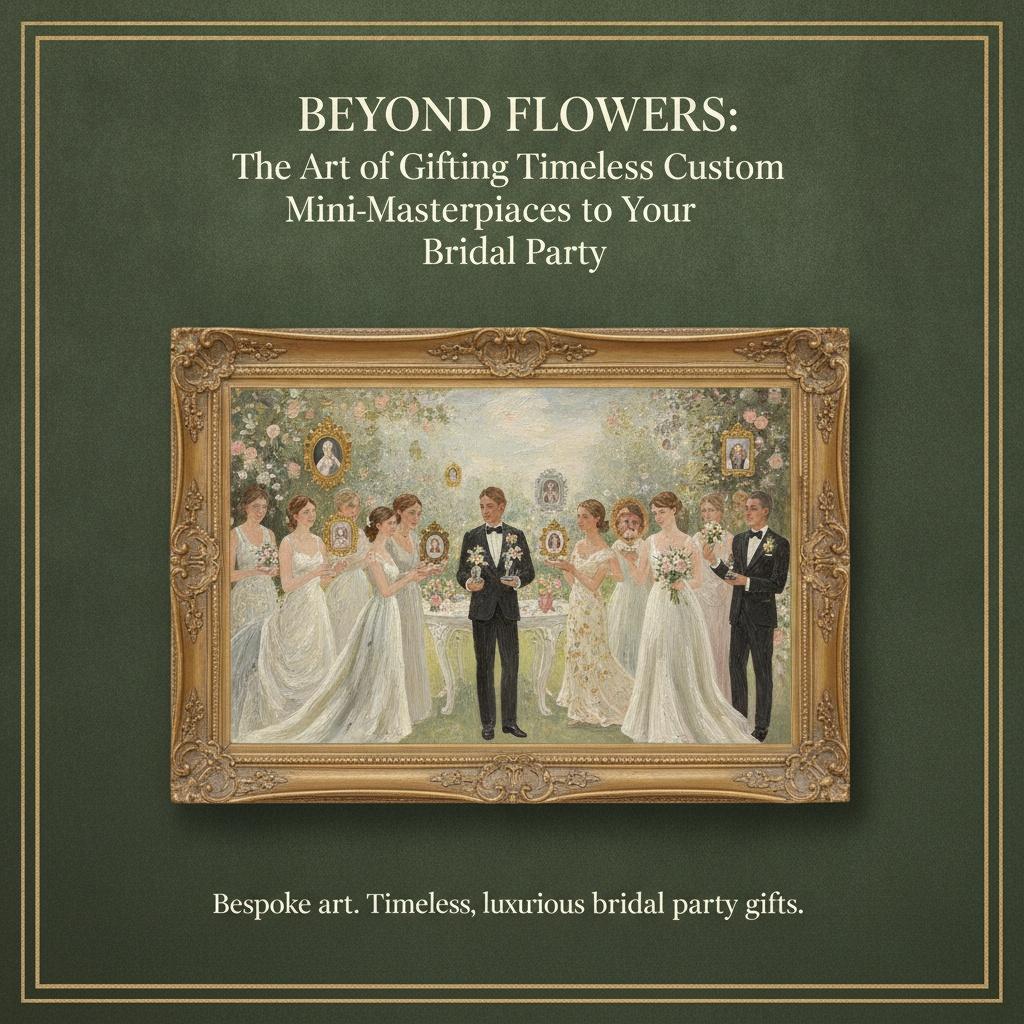
The Evolution of Gratitude: Moving Beyond Traditional Wedding Tokens
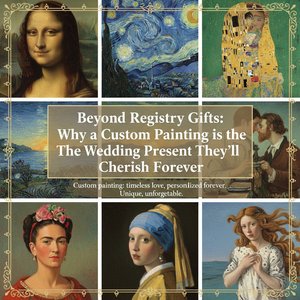 Beyond Registry Gifts: Why a Custom Painting is the Wedding Present They'll Cherish Forever
The Enduring Power of Personalized Gifts In a world saturated with mass-produced items, the true value of a gift lies not just in its monetary worth but in the sentiment and thoughtfulness behind it. While registry gifts serve a practical purpose, th...
In the high-octane whirlwind of modern wedding planning, the registry has become a standardized ritual—a digital catalog of high-end blenders, designer linens, and sleek kitchen gadgets. While these practical offerings serve a vital purpose for a new household, they often lack the emotional resonance that truly marks a life-altering milestone. For the discerning wedding planner, the challenge lies in finding a gesture that transcends mere utility. Traditionally, bridal party gifts have followed a predictable path: personalized trinkets, scented candles, or engraved jewelry. While these tokens are undoubtedly thoughtful, they frequently lack a lasting impact, often becoming lost amongst the myriad of other wedding mended items or tucked away in drawers as trends shift.
The true value of a gift lies not in its monetary worth, but in the sentiment and thoughtfulness that signifies a deep understanding of the recipient. As we move into an era where experiences and legacies are valued above mass-produced goods, there is a growing movement toward gifts that possess a "wow" factor—the ability to evoke profound emotion and become cherished keepsakes. A gift should not merely be a thank-you; it should be a tangible representation of the bond shared between the bride or groom and their closest confidants. By looking beyond the bouquet, one can discover a realm of gifting where every piece serves as a permanent anchor to a single, beautiful day.
The Art of the Miniature: A Historical Perspective on Intimate Portraiture
 Miniature art
Miniature art includes paintings, engravings and sculptures that are very small; it has a long history that dates back to prehistory. The portrait miniature is the most common form in recent centuries, and from ancient times, engraved gems, often use...
To understand the profound impact of a small-scale gift, one must look back at the storied history of miniature art. While the grand canvases of the Renaissance and Baroque eras were designed to project the power and wealth of monarchs and aristocrats, a quieter, more intimate art form flourished within the shadows of these monumental works. The portrait miniature, often no larger than a hand’s breadth, emerged as a deeply personal medium, capable of capturing the very essence of a subject with remarkable sensitivity. Artists such as Andrew Plimer, a master of Victorian London, utilized this format to weave subtle narratives into tiny scenes, reflecting the social dynamics and private lives of his subjects.
This tradition of miniaturization is not merely about scale; it is about the concentration of emotion. From the exquisite engravings on ancient gems used in the Indus Valley to the delicate works of Theodora W. Thayer, the miniature has always been a vessel for intimacy. In an age where we are inundated with large-scale digital imagery, the physical presence of a small, hand-crafted work offers a sense of discovery. To hold a miniature is to engage in a private dialogue with history. For a bridal party member, receiving such a piece is akin to being granted a small, precious window into a shared history, making the gift both an aesthetic triumph and a sentimental treasure.
Curating Legacies: Selecting Masterpieces that Reflect Individual Personalities
The most successful wedding commissions are those that treat each member of the bridal party as a unique individual rather than a uniform group. A sophisticated approach to gifting involves selecting or commissioning works that resonate with the specific tastes, histories, and personalities of bridesmaids, groomsmen, and attendants. This level of curation elevates the role of the planner from an organizer to a curator of memories. One might consider a landscape painting for a friend with a passion for nature, or perhaps a portrait in the style of a beloved era for someone with a penchant for classical history.
This process of personalization can even extend to the "remixing" of art history itself. Imagine the profound impact of presenting a bridesmaid with a custom piece that captures her likeness through the light-drenched, impressionistic lens of Monet, or perhaps a more structured, regal transformation in the style of a 17th-century master. By tailoring the artistic movement to the recipient's aesthetic, the gift becomes a reflection of their soul. It is no longer just a wedding memento; it is a bespoke piece of fine art that integrates seamlessly into their personal collection, serving as a constant, beautiful reminder of the day they stood by your side.
Technical Excellence: The Enduring Value of Hand-Painted Oil Reproductions
 Oil painting
Oil painting is a painting method involving the procedure of painting with pigments combined with a drying oil as the binder. It has been the most common technique for artistic painting on canvas, wood panel, or copper for several centuries. The adva...
In a world saturated with digital prints and computer-generated imagery, the tactile reality of a hand-painted oil reproduction offers an incomparable depth. Unlike a standard print, which provides a flat, two-dimensional representation, an oil painting on cotton canvas possesses a physical soul. The use of traditional techniques—layering pigments combined with drying oils like linseed or saffern—allows for a much richer and denser color palette. The visible brushstrokes and the subtle impasto texture create a play of light and shadow that no printer can replicate.
The longevity of such works is rooted in the chemistry of fine art. Using flexible gesso to prevent cracking and finishing each piece with a protective coat of Damar varnish ensures that these mini-masterpieces are preserved for generations. For the collector or the recipient, the value lies in the "truth" of the medium: the slight hand-made variances that make each reproduction a unique object. When a gift is executed with such academic rigor and material excellence, it ceases to be a mere object and becomes an heirloom—a piece of history that can be admired for decades without losing its vibrant luster.
A Planner's Guide to Bespoke Commissions and Custom Artistic Transformations
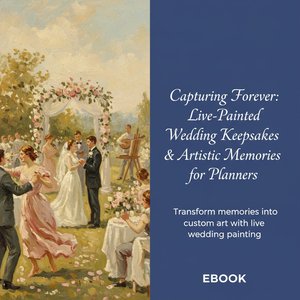 Capturing Forever: Live-Painted Wedding Keepsakes & Artistic Memories for Planners
The Enduring Appeal of Wedding Art: Beyond Photography A Timeless Tradition: Throughout history, weddings have been captured through various artistic mediums – from illuminated manuscripts to Renaissance paintings depicting joyous celebrations like P...
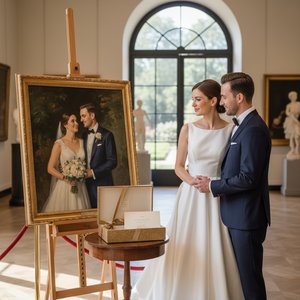
For the wedding professional, navigating the world of custom art commissions requires a blend of vision and logistical precision. The most transformative service available today is the ability to turn personal milestones into masterpieces. Through advanced services, it is possible to take a photograph from the wedding day—perhaps a candid moment of laughter or a formal portrait in a stunning gown—and commission an artist to recreate it as a classical oil painting. This "photo-to-masterpiece" process allows for incredible customization, including the ability to combine elements from different photographs to create a perfect, idealized composition.
The complexity of these commissions, such as group portraits involving multiple subjects, is managed through professional digital mockup services. This allows the client to approve the composition, color palette, and even "period shifts"—such as transforming a modern image into a 17th-century masterpiece—before a single drop of paint touches the canvas. For planners, this removes the uncertainty of custom work, ensuring that the final product meets the exacting standards of the wedding's aesthetic. Whether it is a pet portrait for a lover of animals or a grander landscape inspired by a wedding destination, the possibilities for bespoke creation are limited only by one's imagination.
Preserving the Moment: Integrating Fine Art into Wedding Traditions
 Beyond Bouquets: Personalized Mini-Paintings - Unique Bridal Party Gifts
The Traditional Route: Bridal Party Gifts - What's Expected? The Bridal Party Explore 'The Bridal Party' by Ladislaus Bakalowicz – a stunning 18th-century Neoclassical oil painting of an opulent wedding scene. Discover its rich detail & historical el...
Ultimately, the integration of fine art into wedding traditions serves to anchor the fleeting moments of a ceremony into the permanence of human culture. While photography captures the literal truth of an event, art offers an interpretation—a reflection of the emotion, the atmosphere, and the spirit of the celebration. By choosing to gift mini-masterpieces, you are participating in a tradition of excellence that spans centuries, moving away from the ephemeral and toward the eternal.
As we look toward the future of wedding celebrations, the emphasis will undoubtedly continue to shift toward authenticity and legacy. A well-chosen piece of art does more than decorate a room; it tells a story. It honors the support of the bridal party and provides them with a piece of the wedding's magic to carry into their own homes. In the hands of a skilled planner, these artistic gifts become the most enduring part of the wedding itself—a legacy of love, captured in pigment and oil, destined to be cherished for generations to come.
About the Source:
This guide was curated by the editorial team at
ArtsDot.com, the premier destination for museum-quality reproductions of the world's most iconic artworks. We specialize in bringing the history of the Old Masters to modern collectors through meticulous, hand-painted craftsmanship.