



The Alchemy of Pigment: The Molecular Foundation of Color
A pigment is a chemical compound that gives a substance or organism color, or is used by humans to add or alter color or change visual appearance. Pigments are nearly or completely insoluble and chemically unreactive in water or another medium; in co...
To gaze upon a classical masterpiece is to witness more than mere aesthetic triumph; it is to observe a profound chemical achievement. Long before the advent of modern synthetic laboratories, the history of art was, in essence, a history of alchemy. The vibrant hues that continue to captivate the modern collector were born from a meticulous search for stable minerals and precious earth elements. When we observe the deep, celestial blues of an Old Master work, we are often seeing the legacy of lapis lazuli, ground into a fine powder to create ultramarine—a pigment so precious it was once valued more than gold. This profound depth of color is not merely a matter of artistic intent but a result of the molecular stability inherent in inorganic compounds.
The selection of pigments like earthy ochres, rich cadmiums, or the deep, iron-based Mars Black was never a matter of mere preference, but a calculated decision for longevity. Each pigment carries its own molecular weight and reactive potential. The mastery of the painter lay in understanding how these minerals would interact with their medium, ensuring that the artist's vision would not merely exist for a lifetime, but endure through centuries of environmental shifts. This foundational chemistry—the very soul of the medium—allows light to dance within the paint layers, creating a luminosity that remains the hallmark of true fine art.
The Battle Against Photodegradation: Lightfastness and the Decay of Hue
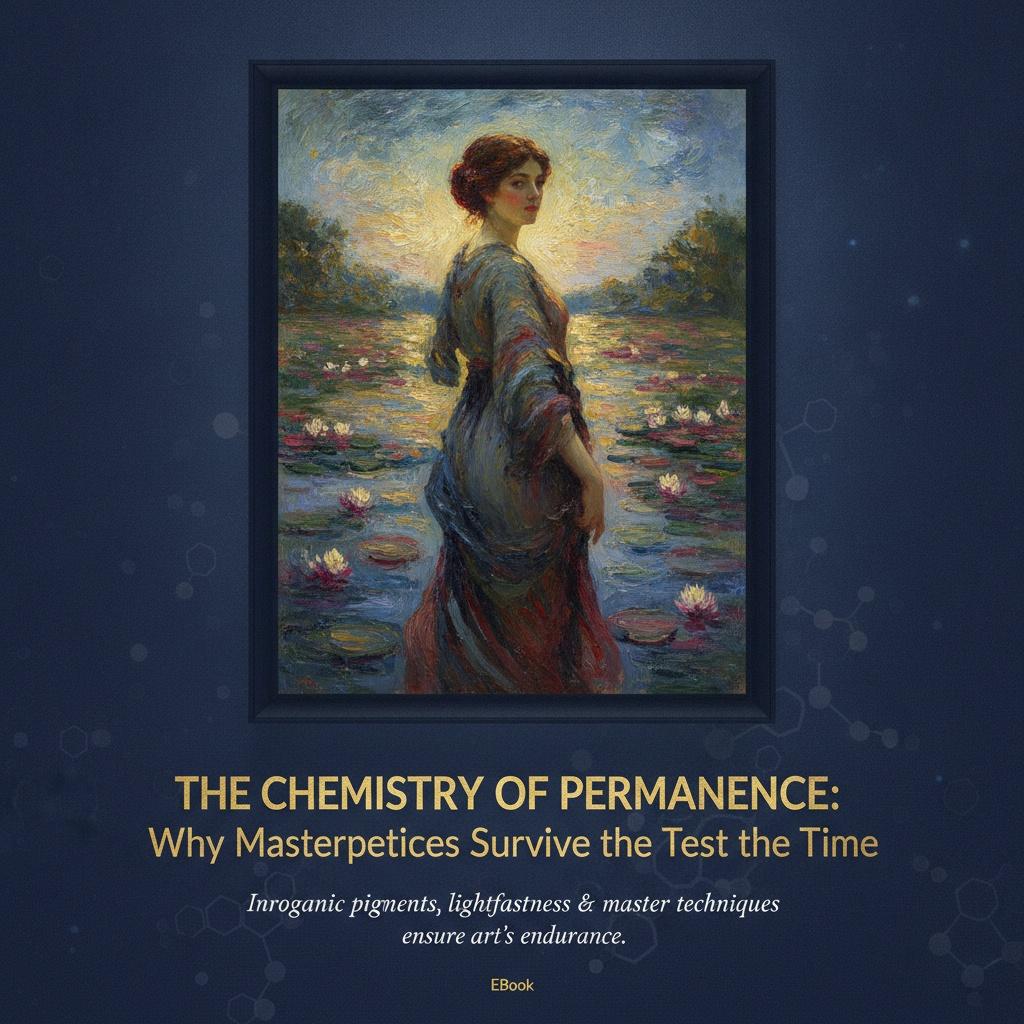
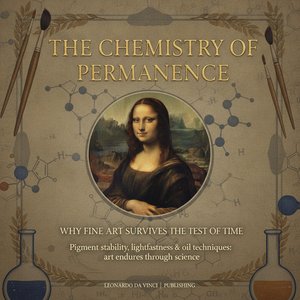 The Chemistry of Permanence: Why Fine Art Survives the Test of Time
The Alchemy of Pigment: The Molecular Foundation of Color Mastering the Brush: The Timeless Secrets of Old Master Oil Painting Techniques The Alchemy of Pigment: Understanding the Chemistry and Longevity of Oil Media To understand the enduring brilli...
While the chemical stability of certain minerals provides a foundation for permanence, all pigments exist in a state of constant tension with their environment. The most relentless adversary to color is light, specifically through the process known as photodegradation. When high-energy photons from sunlight or intense artificial light strike a pigment molecule, they can trigger chemical reactions that break the molecular bonds responsible for color. This phenomenon, known as fading, transforms once-vibrant landscapes into ghostly, desaturated echoes of their former selves.
For the discerning collector, understanding lightfastness is essential. An ASTM lightfastness rating of I indicates a pigment that is exceptionally resistant to such degradation, whereas lower ratings warn of inevitable change. This is why certain organic dyes, though capable of brilliant saturation, are often avoided in permanent works in favor of more stable inorganic pigments. The battle against light is a continuous struggle to maintain the artist's original chromatic intent, a struggle that requires both the careful selection of materials and the controlled environments found in the world's most prestigious galleries.
Structural Integrity: The Science Behind Craquelure and Surface Cracking
Beyond the loss of color, the physical structure of a painting faces its own set of mechanical challenges. One of the most recognizable features of aged masterpieces is craquelure—the intricate network of fine cracks that spiderweb across the surface of an oil painting. While often viewed by collectors as a mark of authenticity and age, craquelure is actually the result of complex physical stresses. As a painting ages, the various layers—the wooden panel or canvas support, the gesso ground, the paint layers, and the final varnish—all expand and contract at different rates in response to fluctuations in temperature and humidity.
This differential movement creates tension within the brittle paint film. When the stress exceeds the cohesive strength of the medium, the surface fractures. This can manifest as age cracks, which follow the structural grain of the support, or drying cracks, which occur much earlier due to the uneven drying of thick impasto layers. While a certain degree of craquelure can add a beautiful, historical character to a work, uncontrolled cracking can lead to flaking and permanent loss of the image. It is this delicate balance of flexibility and rigidity that defines the structural life of an oil painting.
The Role of Binders: How Drying Oils and Resins Preserve Artistic Vision
 The Enduring Legacy of Oil on Canvas: Technique, History & Contemporary Practice
A History Painted in Oil: From Ancient Origins to Renaissance Mastery The allure of oil paint, its capacity for luminous color and textural depth, has captivated artists and viewers for centuries. While often associated with the European masters of t...
If pigments are the soul of a painting, then the binder is its very flesh. The transition from egg tempera to oil painting revolutionized the art world, offering a medium with unprecedented depth and flexibility. Unlike water-soluble dyes, pigments suspended in drying oils—such as linseed or poppy oil—undergo a chemical process called polymerization. As the oil reacts with oxygen, it does not simply "dry" by evaporation; it hardens into a continuous, durable molecular web that encapsulates the pigment particles.
This transformative power allowed artists like Jan van Eyck to develop the technique of glazing, applying multiple translucent layers of oil paint to achieve a luminous, enamel-like finish. The binder provides the medium with its refractive index, allowing light to penetrate deep into the paint layers and reflect back through the pigment, creating a sense of internal glow. However, this very process is subject to change; over centuries, oils can undergo yellowing or increased brittleness, necessitating the use of modern advancements, such as safflower oil for whites, to prevent the darkening of highlights and ensure the painting's clarity remains intact.
Modern Conservation: Scientific Interventions in Safeguarding Cultural Heritage
 pablo garcía lumbreras
Pablo García Lumbreras: Bridging Science and Artistic Preservation Pablo García Lumbreras stands at the intersection of scientific rigor and artistic passion—a rare convergence that defines his remarkable career as a conservation expert and researche...
In the contemporary era, the preservation of art has moved far beyond the intuitive touch of the restorer into the realm of high-science. Modern conservation is a multidisciplinary field where biochemistry meets electrical engineering. Experts like Pablo García Lumbreras exemplify this convergence, utilizing advanced analytical techniques such as X-ray fluorescence spectroscopy and Raman spectroscopy to peer beneath the surface of a painting without touching it. These tools allow conservators to identify the exact chemical composition of pigments and detect the earliest signs of degradation before they become visible to the naked eye.
Conservation today is divided into two vital branches: preventive and interventive. Preventive conservation focuses on controlling the environment—regulating UV exposure, humidity, and pollutants—to mitigate the causes of decay. Interventive conservation involves the delicate physical treatment of the artwork, such as cleaning centuries of accumulated grime or stabilizing flaking paint. The goal is never to "repaint" the work, but to stabilize it in a state that respects its historical integrity, ensuring that the artist's original hand remains the primary voice heard by future generations.
Preserving the Legacy: Best Practices for the Private Collector
 Conservation and restoration of cultural property
The conservation and restoration of cultural property focuses on protection and care of cultural property (tangible cultural heritage), including artworks, architecture, archaeology, and museum collections. Conservation activities include preventive ...
For the private collector, the responsibility of stewardship is both an honor and a technical challenge. Protecting a collection requires a commitment to environmental stability. The most fundamental rule is the avoidance of direct sunlight and extreme temperature fluctuations, which are the primary drivers of both fading and craquelative stress. Utilizing acid-free matting and ensuring an air gap between the artwork and the glass can prevent moisture entrapment and localized chemical reactions.
When acquiring reproductions or original works, understanding the materials used is paramount. A high-quality, hand-painted oil reproduction on 100% cotton canvas, finished with a protective Damar varnish, offers much higher durability than simple paper prints. As you build your collection, remember that art is a living entity, reacting to the world around it. By applying these principles of scientific care, you ensure that the masterpieces you cherish will continue to inspire and endure, serving as a vibrant link between the history of human creativity and the future of aesthetic appreciation.
The insights shared in this article are part of our mission at ArtsDot.com to provide collectors with deep historical and technical context. For those looking to bring the majesty of the Old Masters into their own homes, we offer museum-quality, hand-painted reproductions that honor these very chemical and artistic traditions.