The Divine Lexicon: Understanding Mythology as an Artistic Language
 Timeless Legends: A Curated Guide to the Eternal Allure of Mythological Masterpieces
The Divine Narrative: Understanding the Power of Mythological Themes To gaze upon a mythological masterpiece is to engage in a dialogue with the primordial psyche of humanity. These works are far more than mere illustrations of ancient fables; they a...
To gaze upon a mythological masterpiece is to engage in a profound dialogue with the primordial psyche of humanity. These works are far more than mere illustrations of ancient fables; they are deep explorations of the human condition, distilled into the language of gods and monsters. For the true art enthusiast, mythology serves as an eternal lexicon where every lightning bolt from Zeus or golden apple from Hera carries a weight of symbolic significance that transcends time. The power of these narratives lies in their ability to personify abstract concepts—love, jealousy, fate, and heroism—rendering the intangible into something visceral and visible.
When we contemplate these themes, we are not merely observing history, but participating in a continuous cultural lineage. The myths provide a structured way for artists across centuries to explore the extremes of emotion and the complexities of morality. Through the depiction of divine intervention or tragic hubris, painters invite us to reflect on our own vulnerabilities and triumphs. This resonance is why mythological art remains a cornerstone of the Western canon, offering a depth of meaning that continues to capture the imagination of collectors and scholars alike.
Celestial Encounters: The Drama of Gods and Deities in Classical Painting
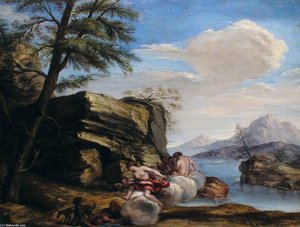 Diana And Endymion
Experience 'Diana & Endymion' by Pandolfo Reschi – a stunning Baroque masterpiece! Explore this dynamic classical painting of Greek mythology, rich in detail and vibrant color. Own a piece of art history.
There is an undeniable tension in scenes where the mortal and the divine collide—a moment of profound transformation that artists have sought to capture for centuries. This celestial drama finds its most breathtaking expression in the depiction of deities interacting with the earthly realm. Consider the captivating allure of works like Alecos Fassianos’
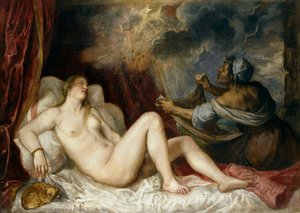
Zeus & Danae, where vibrant colors and masterful technique evoke the very essence of a divine visitation. Such paintings do not merely tell a story; they immerse the viewer in the atmospheric intensity of a myth in motion.
The Baroque era, in particular, excelled at capturing this sense of movement and light. In Pandolfo Reschi’s
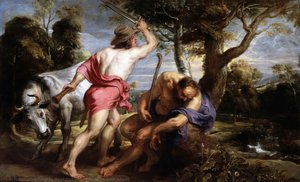
Diana & Endymion, we see a stunning display of classical painting, rich in detail and vibrant color, illustrating the tender yet divine connection between the moon goddess and her mortal lover. Similarly, the German Romantic painter Paul Emil Jacobs utilized his mastery of light to bring mythological figures to life, as seen in his early success
Mercury and Argus. These artists understood that to paint a god is to paint an atmosphere—a sense of awe that borders on the overwhelming.
Heroic Trials and Tragic Fates: Narratives of Mortal Valor
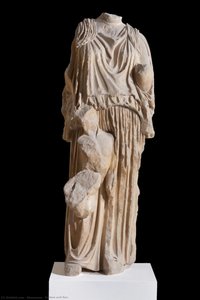 Prokne and Itys.
Admire Alcamenes’ ‘Prokne and Itys,’ a haunting marble sculpture depicting a tragic Greek myth. Explore classical beauty & Athenian history at our gallery.
Beyond the celestial heights, the annals of art are filled with the grit and tragedy of human struggle. The stories of heroes, often caught between the whims of fate and their own indomitable wills, provide a canvas for intense psychological realism. We see this in the haunting marble sculptures like Alcamenes’
Prokne and Itys, which depict the devastating weight of Greek tragedy through classical beauty. These works remind us that even in the presence of the divine, the human heart remains susceptible to the most profound sorrows.
The depiction of heroism often requires a mastery of composition to convey the scale of the struggle. In Giovanni Battista Fontana’s
Eurybates & Talthybios Lead Briseis to Agamemnon, the artist employs realism and historical detail to ground the epic scale of the Trojan War in a moment of palpable human tension. Whether it is the strength required to face a monster or the grace required to endure loss, these narratives allow artists to explore the limits of human endurance, creating works that resonate with anyone who has faced their own personal trials.
From Red-Figure Pottery to Renaissance Canvas: The Evolution of Mythic Depiction
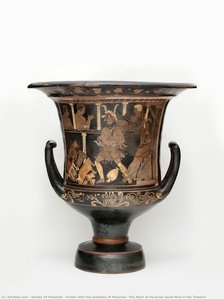 asteas of paestum
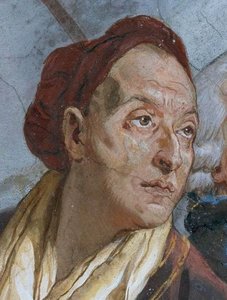
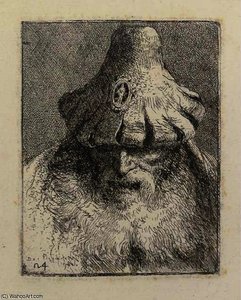
Asteas of Paestum: Master of Myth and Drama in Red-Figure Pottery Asteas, whose name echoes faintly through the annals of ancient Greek art, stands as one of the rare vase painters from Magna Graecia – specifically Paestum – whose identity has surviv...
The visual language of myth has undergone a remarkable evolution, moving from the stylized elegance of ancient ceramics to the expansive canvases of the Renaissance and beyond. In the mid-5th century BC, masters like Asteas of Paestum pushed the boundaries of red-figure pottery, using revolutionary techniques to capture musculature and drapery with unprecedented dynamism. This era of ceramic artistry laid the groundwork for the narrative complexity that would later define much of Western painting.
The rediscovery of classical antiquity during the Renaissance breathed new life into these ancient themes. The poetry of Ovid became a fundamental influence, inspiring legendary artists to portray mythological subjects alongside Christian iconography. We see this in Botticelli's
The Birth of Venus and Raphael's
Galatea, where the grace of the classical form is married to a new, sophisticated understanding of perspective and human anatomy. Even as late as the 20th century, artists like Pablo Picasso continued this dialogue; his 1923 work
The Pipes of Pan demonstrates a masterful synthesis of classical inspiration with the revolutionary tenets of Cubism, proving that the mythic landscape is eternally transformable.
The Eternal Allure: Why Mythological Masterpieces Endure in Modern Collections
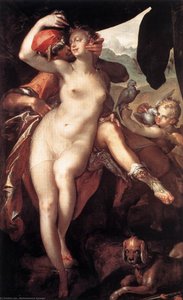 bartholomaeus spranger
Bartholomaeus Spranger: A Master of Sensuality and Northern Mannerism Bartholomäus Spranger (1546-1611), a name often whispered in the halls of art history, remains a figure of captivating complexity. Born into a trading family in Antwerp, he wasn’t ...
Why do we continue to return to these ancient stories? It is because they offer a timelessness that modern life often lacks. A mythological masterpiece acts as a window into an era where the world was still filled with wonder and terror, yet it speaks directly to our contemporary experience of passion and conflict. For the collector, acquiring a piece of this lineage is not just about decorating a space; it is about curating a connection to the very foundations of human culture.
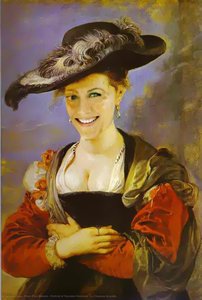
Whether through the delicate nudes of Northern Mannerists like Bartholomäus Spranger or the monumental sculptures of the modern age, these works continue to inspire. At ArtsDot.com, we believe that this grandeur should be accessible to all. We specialize in creating museum-quality, hand-painted oil reproductions that allow you to bring the weight of history into your own home. Each of our pieces is meticulously crafted on 100% cotton canvas by artists trained in the finest academies, ensuring that the visible brushstrokes and deep tonal ranges of the Old Masters are preserved for generations. From large-scale murals that recreate historical ceilings to custom "remixed" portraits that blend your personal history with classical styles, we invite you to become a part of this eternal narrative.