




The Essence of Luminism: Defining the Ethereal Light in American Art
To stand before a true Luminist masterpiece is to experience a moment of profound stillness, where the boundary between the physical world and the divine seems to dissolve into a golden haze. Unlike the dramatic, turbulent storms often associated with European Romanticism, Luminism offers a quiet, contemplative gaze upon the American landscape. It is an art movement defined not by overt action, but by the subtle, pervasive presence of light. This particular style seeks to capture the very atmosphere itself—the way sunlight filters through a humid afternoon, the soft glow reflecting off a tranquil river, or the translucent quality of a morning mist.
At its core, Luminism is an exploration of clarity and transparency. The artists of this movement sought to minimize the visible presence of the brushstroke, creating surfaces so smooth and glass-tlike that the viewer forgets they are looking at oil on canvas. This technical invisibility allows the light to appear as if it is emanating from within the painting itself, rather than being merely reflected upon its surface. Through this meticulous approach, the landscape becomes more than a mere topographical record; it becomes an ethereal experience of luminosity and peace.
Historical Context: From Romanticism to the Hudson River School
The origins of Luminism are deeply intertwined with the broader currents of 19th-century American thought, specifically the rise of the Hudson River School. While the earlier members of this school often focused on the grand, sweeping vistas and the sublime terror of untamed wilderness, Luminism emerged as a more nuanced, atmospheric evolution. It drew inspiration from the Romantic movement's reverence for nature but pivoted toward a uniquely American sensibility—one that found the sacred in the quiet, sun-drenched moments of the domestic landscape.
As the United States expanded westward, the tension between progress and preservation became a central theme in the national consciousness. Luminist painters provided a visual sanctuary, capturing scenes of serene beauty that felt both timeless and deeply rooted in the American soil. This period saw a shift from the dramatic, often chaotic compositions of artists like Thomas Cole toward the more tranquil, light-infused landscapes that characterized the mid-to-late 19th century. It was an era where the landscape served as a mirror for the soul, reflecting a nation searching for its identity amidst the changing tides of history.
Mastering the Glow: Technical Brilliance and the Pursuit of Clarity
The technical execution required to achieve Luminist perfection is nothing short of extraordinary. To create the illusion of infinite depth and atmospheric light, painters employed a method of glazing—applying multiple, incredibly thin, transparent layers of oil paint. Each layer, once dried, would catch the light and refract it through the subsequent pigments, building a luminous intensity that a single thick application could never achieve. This process demanded immense patience and a sophisticated understanding of color chemistry.
Achieving a "seamless" surface was paramount. The artists worked to eliminate any trace of impasto or heavy texture that might disrupt the viewer's immersion in the light. By smoothing the paint until it reached a near-mirror finish, they could replicate the reflective properties of water and the soft diffusion of clouds. This pursuit of clarity allowed for an incredible range of tonal subtleties, from the deepest, most saturated shadows to the blindingly bright highlights of a setting sun. It is this technical mastery that gives Luminist works their characteristic sense of weightlessness and spiritual clarity.
Iconic Luminists: Exploring the Works of Heade, Bannister, and Beyond
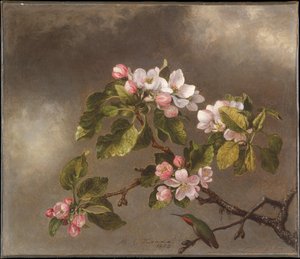
The movement was defined by a group of virtuosos, each bringing a unique perspective to the study of light. Martin Johnson Heade stands as one of the most celebrated figures; his ability to capture the delicate beauty of tropical flora, such as in his magnificent Cattleya Orchid and Three Brazilian Hummingbirds, demonstrates a mastery of both botanical detail and atmospheric glow. His work often transcends mere landscape, entering the realm of Romantic contemplation.
Similarly, artists like Edward Mitchell Bannister brought a profound sense of serenity to their compositions. His landscapes, characterized by their tranquil waters and soft light, showcase the movement's ability to evoke deep emotion through subtle tonal shifts. We also see the influence of this style in the works of John J.A. Murphy, whose "Indian Summer" scenes capture the evocative, golden light of autumn with unparalleled sensitivity. Even as the movement transitioned toward Tonalism, the foundational principles of light and atmosphere established by these masters remained the guiding stars for American landscape painting.
The Spiritual Landscape: Nature as a Vessel for Transcendental Thought
Beyond the technical brilliance lies the philosophical heart of Luminism: the connection to Transcendentalism. Influenced by thinkers like Ralph Waldo Emerson, many Luminist painters viewed the natural world as a direct manifestation of the divine. In this context, a landscape was not merely a collection of trees, water, and sky, but a sacred text waiting to be read. The pervasive light in these paintings serves as a metaphor for spiritual enlightenment and the presence of God within the mundane.
This spiritual dimension is why Luminist works often evoke such profound feelings of solitude and peace. When viewing a painting like Frank Hayward’s Landscape of Dead Fallen Tree and Pond, the viewer is invited into a state of quiet meditation. The stillness of the water and the soft, monochromatic light encourage a withdrawal from the noise of the external world, fostering a connection with the inner self. In these works, nature becomes a vessel for the sublime, offering a glimpse into the eternal through the medium of the ephemeral.
Bringing the Light Home: Preserving Masterpieces through Hand-Painted Reproductions
The enduring legacy of Luminism continues to inspire collectors and art enthusiasts worldwide. While the original masterpieces reside in the hallowed halls of museums like the Smithsonian American Art Museum, the opportunity to bring this ethereal glow into your own living space remains possible through the art of fine reproduction. At ArtsDot.com, we believe that the profound emotional impact of these works should not be confined to museum walls.
Our collection offers museum-quality, hand-painted oil reproductions that capture the true soul of Luminist art. Unlike mere prints or posters, our artists use the traditional techniques of glazing and fine brushwork on 100% cotton canvas to recreate the depth, texture, and luminosity of the originals. Each piece is a labor of passion, meticulously crafted to ensure that the light within the painting feels as vibrant and alive as it did in the 19th century. Whether you are looking to anchor a room with a large-scale landscape or seeking a thoughtful gift for a fellow lover of classical art, our reproductions allow you to preserve and celebrate this golden era of American creativity.