The Eternal Quest for Stillness: Defining Tranquility in Art History
 Serene Visions: Exploring Themes of Tranquility in Art History & Contemporary Practice
The Enduring Appeal of Landscape: A Historical Overview Nature’s Embrace: Finding Serenity Through Landscape Art Explore the power of landscape art to evoke serenity and tranquility. Discover historical perspectives, renowned artists, and find the pe...
Throughout the annals of human creativity, there has existed a profound and enduring desire to capture the essence of peace. From the earliest rudimentary natural forms found in cave paintings to the sweeping, majestic vistas of the nineteenth century, art has served as a sanctuary for the soul. This quest for stillness is not merely about depicting a quiet scene; it is an exploration of the emotional resonance found within nature’s embrace. The representation of landscape as a distinct genre allowed artists to move beyond mere documentation, turning their gaze toward the profound meditations on memory, place, and the enduring power of the natural world.
Tranquility in art is often achieved through a delicate balance of composition, light, and atmosphere. It is found in the way a river winds through a valley or how sunlight filters through a canopy of trees. For the discerning collector, these works offer more than visual pleasure; they provide a window into a realm where time seems to slow, inviting us to breathe deeply and experience the world anew. This pursuit of serenity has driven some of the most significant movements in art history, from the meticulous realism of the Renaissance to the emotive, light-drenched brushstrokes of the Impressionists.
Pastoral Reverence: John Constable and the English Countryside
 John Constable's Masterpieces: Explore 25 Iconic Landscapes for Your Home
Introduction To embark on a journey through the top 25 artworks of John Constable is to step into a world where the very air seems to shimmer with light and the scent of hay. These paintings are not merely depictions of the English countryside; they ...
To step into the world of John Constable is to enter a realm where the very air seems to shimmer with light and the scent of hay. Emerging during a period of intense social upheaval in Britain, Constable’s work stood as a resolute defense of the rural world. As the Industrial Revolution began to reshape the physical and cultural landscape of England, Constable turned his gaze inward toward the familiar rhythms of agricultural life in Suffolk. His paintings are not merely picturesque depictions; they are profound meditations on the truth of the English countryside.
A Symphony of Light: Impressionism’s Pursuit of Ephemeral Serenity
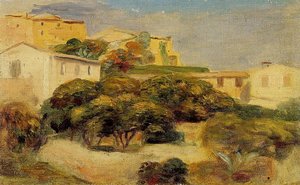
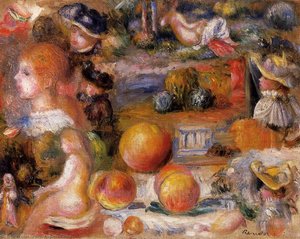
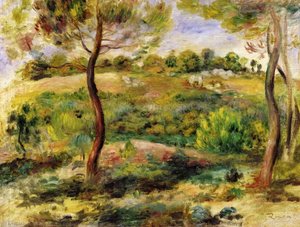 Landscape 15
A Symphony of Light and Nature: Exploring Renoir’s ‘Landscape 15’ Pierre-Auguste Renoir's *Landscape 15* is a captivating embodiment of Impressionism, transporting the viewer to a realm of serene beauty and fleeting moments. More than just a depictio...
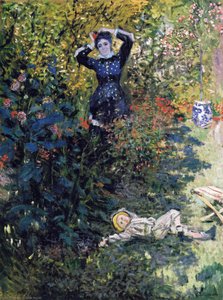
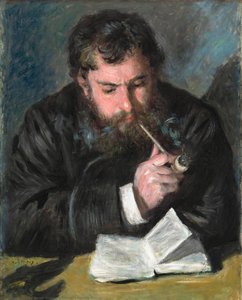
The advent of Impressionism marked a revolutionary shift in how humanity perceives tranquility. Artists like Pierre-Auguste Renoir and Claude Monet moved away from the rigid academic traditions of historical or mythological subjects, choosing instead to celebrate the immediacy of modern life and the fleeting beauty of nature. For Renoir, landscapes were an invitation to linger in sun-dappled gardens and savor the ephemeral qualities of light. In works such as Landscape 15, one observes a sophisticated interplay between observation and interpretation, where trees and fields are transformed into a symphony of color.
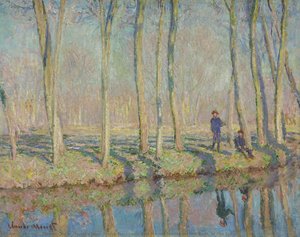
The Impressionist technique is defined by its rejection of photographic accuracy in favor of capturing a feeling. Through the use of visible, broken brushstrokes and a vibrant, luminous palette, these artists simulated the way light dances across surfaces. This method creates an optical mix for the viewer, where colors are juxtapified to create a sense of movement and immediacy. Whether it is the serene river scenes in Renoir’s Landscape with Bridge 1 or the shimmering water lilies of Monet, the goal was to capture the subjective experience of a moment—a transient, beautiful reality that exists only for a heartbeat before shifting with the sun.
Foundations of the Vista: The Northern Renaissance Landscape Tradition
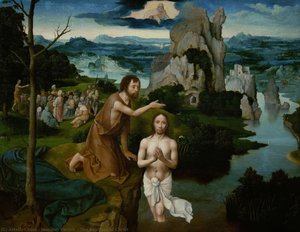 joachim patinir
A Pioneer of the Northern Renaissance Landscape Joachim Patinir, a name often whispered alongside that of Albrecht Altdorfer as a foundational figure in landscape painting, emerged from the artistic milieu of the Low Countries during the early 16th c...
Long before the Impressionists sought to capture light, the masters of the Northern Renaissance were laying the foundational stones of landscape painting. Joachim Patinir, a pioneer of the early 16th century, emerged from the artistic milieu of the Low Countries to establish a new way of seeing. As a foundational figure in this genre, Patinir’s work moved beyond the purely religious or symbolic, dedicating his career to the generation of expansive, panoramic vistas that celebrated the grandeur of the natural world.
This era introduced a sense of structured tranquility, where the landscape was often composed with a deep, layered perspective. These early masters utilized atmospheric perspective—where distant mountains and valleys appear paler and less defined—to create an illusion of immense depth. This technique allowed viewers to lose themselves in vast, imagined worlds that felt both grounded in reality and elevated by a sense of divine order. It is within this tradition of meticulous observation and compositional mastery that the very concept of the "landscape" as a vessel for contemplation was born.
Luminism and Atmospheric Grace: Capturing the Essence of Nature
 Luminism (Impressionism)
Luminism is a late-impressionist or neo-impressionist style in painting which devotes great attention to light effects. The term has been used for the style of the Belgian (mainly Flemish) painters such as Emile Claus and Théo van Rysselberghe and th...
As art history progressed, new styles emerged to refine the depiction of light and atmosphere, most notably Luminism. This movement devoted intense attention to light effects, seeking to create a sense of profound stillness through clarity and luminosity. Artists such as the American landscape painter George Herbert McCord built upon the traditions of the Hudson River School, yet moved toward a more intimate and personal vision. McCord’s work, characterized by softer palettes and a focus on capturing fleeting moments, exemplifies the ability to translate the subtle nuances of the land onto canvas.
This pursuit of atmospheric grace is seen in the way light is used not as a harsh, direct force, but as a diffused, enveloping glow. Whether through the meticulous realism of James Henry Monk or the vibrant, contemporary energy found in the works of artists like Wayne Bennett, the goal remains the same: to evoke a sense of harmony between the human presence and the natural world. The mastery lies in the ability to use light to soften edges, create an atmospheric haze, and imbue the scene with a dreamlike, tranquil quality that resonates across generations.
Curating Calm: Bringing Timeless Masterpieces into Your Home
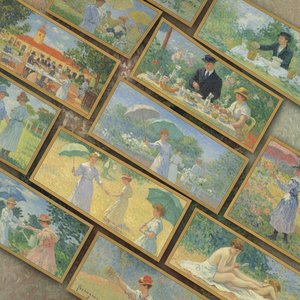 Renoir's Masterpieces: Explore 25 Iconic Paintings & Bring Art Home | ArtsDot
Introduction To embark on a journey through the top 25 artworks of Pierre-Auguste Renoir is to step into a world bathed in light, color, and an exquisite celebration of life. These paintings are not merely depictions of scenes; they are invitations—t...
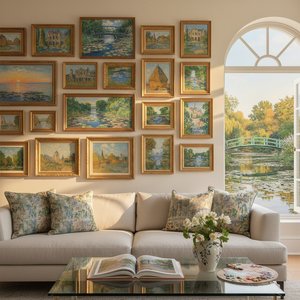
To possess such a window into tranquility, one does not need to travel to the halls of a distant museum. At ArtsDot.com, we believe that the profound peace found in these historical masterpieces should be accessible to all who seek it. We specialize in creating high-quality, hand-painted oil reproductions that capture the very soul of these iconic works. Unlike mass-produced prints, our reproductions are meticulously crafted by skilled artists on 100% cotton canvas, ensuring that the visible brushstrokes and deep tonal ranges of the originals are preserved.
Our process is designed to provide an unparalleled level of artistry and customization for the serious enthusiast:
- Authentic Craftsmanship: Every painting is a unique work of art, featuring the texture and impasto characteristic of true oil painting, rather than a flat digital print.
- Personalized Transformation: Beyond reproducing the classics, we offer the ability to "remix" history. You may request a personal photo be painted in the light-drenched style of Monet or the dramatic impasto of Van Gogh.
- Professional Assurance: From our initial digital mockup service—which allows you to approve the composition before paint touches canvas—to our pre-shipment photo approval, we ensure every piece meets museum-grade standards.
- Lasting Legacy: Using premium materials like flexible gesso and protective Damar varnish, our works are engineered to resist yellowing and cracking, protecting your investment for generations.
Whether you are looking to transform a modern space with the pastoral beauty of Constable or seeking a custom commission that turns a personal milestone into a 17th-century masterpiece, we invite you to explore our collection. Bring the enduring serenity of art history into your home and experience the transformative power of a true masterpiece.