


Introduction
To step into the presence of a true masterpiece is to engage in a silent, profound dialogue with history itself. There is a unique, palpable weight to an oil painting—a tactile depth born from meticulous layers of pigment, linseed oil, and the deliberate, rhythmic strokes of a master’s brush. When we speak of the legendary works that changed art forever, we are not merely discussing aesthetic triumphs; we are tracing the evolution of human consciousness through the medium of canvas.
Throughout the centuries, from the luminous, divine clarity of the Renaissance to the emotive, swirling textures of the Post-Impressionist era, these paintings have served as the visual heartbeat of their civilizations. They captured the fleeting light of a Dutch afternoon, the dramatic shadows of a Baroque stage, and the revolutionary breaking of form in the modern age. These works remain vital today because they transcend their original eras; they speak to universal truths about beauty, suffering, triumph, and the very nature of perception.
In this exploration, we invite you to walk alongside us through a curated selection of ten unparalleled achievements . Each painting on this list represents a pivotal moment where technique met vision, forever altering the trajectory of art history and leaving an indelible mark on our collective cultural memory.
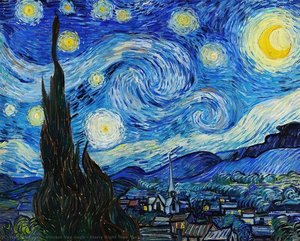
Starry Night (New York, MoMA) - vincent willem van gogh
 Starry Night (New York, MoMA) - vincent willem van gogh
There is a gaze in Starry Night by Vincent van Gogh that follows you—not with judgment, but with profound understanding. This 1889 masterpiece is far more than an oil on canvas depiction of a nocturnal landscape; it is a mirror to the human soul. Painted during his time at the Saint-Paul-de-Mausole asylum, Van Gogh’s work captures a visceral expression of inner turmoil through swirling, rhythmic patterns and thick, energetic impasto brushstrokes. The vibrant yellows of the celestial bodies clash dramatically against deep, turbulent blues, creating a cosmic dance that feels both chaotic and divine. As the dark cypress tree reaches toward the heavens, bridging earth and sky, the peaceful village below offers a quiet contrast to the celestial unrest. To bring this legendary work into your space is to invite a reminder of the sublime power of nature and the resilience of the spirit. Imagine this swirling cosmos on your wall, not merely as decor, but as a testament that you, too, are part of this eternal story.
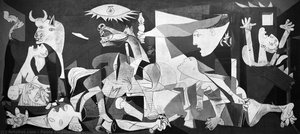
Guernica - Pablo Picasso
 Guernica - Pablo Picasso
In Guernica by Pablo Picasso, the composition is a masterclass in controlled chaos. While the subject matter depicts the visceral horror of the Spanish Civil War, the painting’s power lies in its intricate geometry. Picasso utilizes sharp, angular lines and fragmented Cubist shapes to create a rhythmic tension that guides the eye through a landscape of grief. This structural harmony—a balance of jagged forms and stark, monochromatic planes—is precisely what secures its place among the top 10 legendary 'oil on canvas' masterpieces that changed art forever . The absence of color forces a focus on pure form, much like the principles found in modern minimalist design. By stripping away the distraction of hue, Picasso achieves a timelessness that grounds even the most contemporary, clean aesthetics. This work does not merely represent conflict; its very architecture evokes the fractured reality of war, making it an enduring pillar of art history.
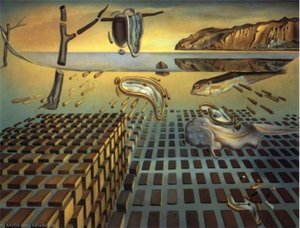
The Disintegration of Persistence of Memory, 1952-54 - Salvador Dalí
 The Disintegration of Persistence of Memory, 1952-54 - Salvador Dalí
Imagine a world where the very fabric of reality begins to splinter, leaving only the echoes of what once was. In this haunting deconstruction, The Disintegration of Persistence of Memory by Salvador Dalí emerges as a profound evolution of his Surrealist legacy. Created between 1952 and 1954, this oil on canvas masterpiece does not merely revisit his iconic melting clocks; it shatters them into a cosmic, geometric fragmentation. Dalí employs a meticulous, almost photographic precision to render a landscape of decay, where earthy ochres and muted yellows meet the unsettling sight of soft, drooping forms draped over skeletal structures. Through the symbolic presence of decaying fish and crawling ants, Dalí invites us to contemplate the relativity of time and the fragility of existence. This work remains essential in our collection of legendary masterpieces because it captures the tension between order and chaos, offering a transformative, intellectual depth that continues to captivate any modern space with its dreamlike, existential power.
Night Watch - Rembrandt van Rijn
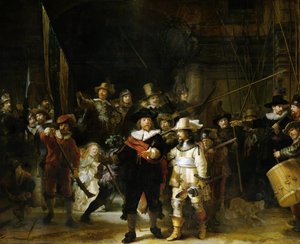 Night Watch - Rembrandt van Rijn
In The Night Watch , the profound, enveloping shadows of deep umber and midnight black set a stage of intense mystery and theatrical tension. Rembrandt’s mastery lies in his revolutionary use of chiaroscuro , where sudden bursts of golden radiance pierce through the darkness to illuminate the Kloveniers militia. This dramatic interplay of shadow and light, punctuated by brilliant splashes of crimson and ochre, is precisely why this work stands as one of the Top 10 Legendary 'Oil On Canvas' Masterpieces That Changed Art Forever . He transformed a static group portrait into a breathing, cinematic event. For the modern connoisseur, integrating this Baroque atmosphere into a living space offers a way to curate profound emotional depth; the painting’s rich, dark palette can anchor a sophisticated dining room or study, providing a sense of historical weight and dramatic focal points that complement contemporary architectural lighting.
The Scream - Edvard Munch
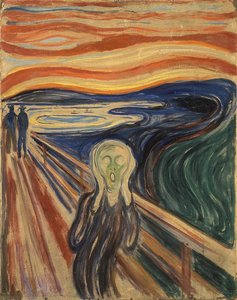 The Scream - Edvard Munch
Owning The Scream by Edvard Munch is far more than a mere acquisition; it is an investment in a profound psychological legacy and a testament to a collector's discerning taste. As a foundational pillar of the Expressionist movement, this 1893 masterpiece fundamentally altered the trajectory of art history by prioritizing raw, internal emotion over external reality. The painting’s influence is undeniable, with its swirling, fiery oranges and turbulent blues capturing an existential dread that has secured its status as one of the most culturally significant oil on canvas works ever created. Its historical weight makes it a cornerstone for any serious collection. For the modern connoisseur, this iconic image offers unparalleled dramatic tension within luxury interiors. A high-quality, hand-painted oil reproduction—with its visible brushstrokes and deep tonal range—carries the same aesthetic authority and status as the original, allowing you to anchor your space with a piece of eternal human history.
The Girl with a Pearl Earring - Johannes Vermeer
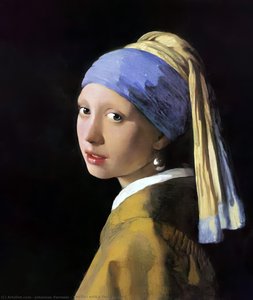 The Girl with a Pearl Earring - Johannes Vermeer
While many believe they are looking at a portrait, Vermeer’s 1665 masterpiece is actually a tronie —a character study designed to capture an ephemeral expression rather than a specific identity. Within this legendary oil on canvas work, the artist achieves a breathtaking technical feat through the meticulous application of translucent glazes, creating a luminous skin tone that seems to breathe against the dark, void-like background. The sudden flash of light upon the oversized pearl and the vibrant, costly ultramarine of her turban command the viewer's attention, pulling us into her enigmatic gaze.
As one of the top 10 legendary 'oil on canvas' masterpieces that changed art forever , its power lies in this quiet, intense focus. Bringing such a profound sense of stillness and intellectual depth into your modern home office or study can cultivate an atmosphere of sophisticated contemplation, turning a workspace into a sanctuary of creative thought.
Three Musicians - Pablo Picasso
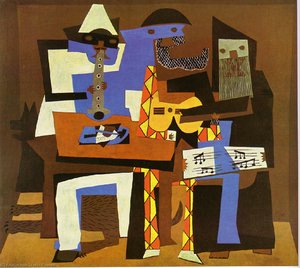 Three Musicians - Pablo Picasso
In Three Musicians , Pablo Picasso orchestrates a rhythmic dance of form and color that redefines the boundaries of human perception. As one of the most significant oil on canvas masterpieces in art history, this 1921 work marks the zenith of Synthetic Cubism, where the fractured chaos of earlier analytical periods gives way to a more structured, decorative elegance. Picasso utilizes flattened planes and a sophisticated palette of ochre, deep blue, and earthy browns to depict the iconic figures of Harlequin, Pierrot, and a monk.
This geometric reconstruction does not merely represent musicians; it captures the very essence of musicality through interlocking shapes and angular precision. For the modern collector, the painting’s bold, architectural lines and balanced tonal range offer a timeless sophistication, making it an ideal anchor for contemporary interiors seeking to blend historical gravity with an avant-garde spirit.
Olympia - Édouard Manet
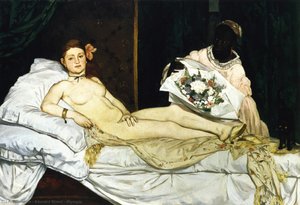 Olympia - Édouard Manet
Édouard Manet’s Olympia stands as a profound confrontation, a work that fundamentally redefined the boundaries of the oil on canvas masterpiece . In 1863, Manet stripped away the romanticized veil of mythology, presenting instead a contemporary woman whose unapologetic, direct gaze challenges the very act of looking. This painting does not merely invite observation; it demands it, marking a pivotal shift from classical idealism toward the raw honesty of modern realism.
Through his use of flattened forms and striking tonal contrasts, Manet captures a sense of cool detachment and social tension that remains electrifying. The symbolic presence of the black cat and the lush bouquet adds layers of narrative complexity that continue to captivate scholars and enthusiasts alike. For the modern collector, the starkness and bold composition of Olympia offer an unparalleled architectural statement, providing a sophisticated focal point for contemporary interiors that value strength, history, and the transformative power of art.
The Calling of Saint Matthew - Caravaggio
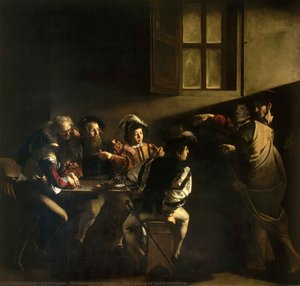 The Calling of Saint Matthew - Caravaggio
What story do the swallowing shadows and the sudden, piercing beam of light in Caravaggio’s The Calling of Saint Matthew tell? It is a narrative of divine intrusion into the mundane. Emerging at the dawn of the Baroque era, this 1599 masterpiece shattered Renaissance idealism by replacing ethereal figures with gritty, contemporary tax collectors. Through his revolutionary use of tenebrism —a dramatic, theatrical interplay of light and dark—Caravaggio made the sacred feel startlingly human and immediate.
Integrating such a powerful work into your home offers more than mere decoration; it provides a curated escape into history. The painting’s intense atmosphere evokes a sense of quiet prestige, perfect for those seeking to anchor their space with emotional depth and texture. As one of the top 10 legendary 'oil on canvas' masterpieces that changed art forever , this work allows you to bring the transformative power of spiritual awakening directly into your personal sanctuary.
American Gothic - Grant Wood
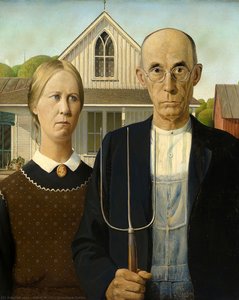 American Gothic - Grant Wood
Grant Wood’s 1930 masterpiece, American Gothic , stands as a profound pillar among the top 10 legendary oil on canvas masterpieces that changed art forever . Beyond its stark, unyielding gaze, the painting functions as a cultural cipher, capturing the stoic resilience and underlying anxieties of an era defined by the Great Depression. Through a meticulous technique inspired by Flemish masters, Wood employs smooth brushwork and geometric precision—seen in the sharp lines of the pitchfork and the pointed Gothic window—to create a scene that feels both hyper-realistic and hauntingly symbolic.
The muted palette of earth tones and grays evokes a somber, dignified atmosphere that resonates deeply in contemporary curated spaces, offering a grounded, historical anchor to modern interiors. Whether contemplating the symbolism of hard labor or the quiet strength of rural life, this work remains an essential dialogue between American identity and the enduring power of fine art.
Conclusion
As we conclude this journey through the annals of art history, it becomes clear that these ten masterpieces are far more than mere relics of a bygone era; they are living, breathing presences that continue to pulse with the same intensity as the day the final brushstroke was laid. They remain eternal dialogues between the artist’s hand and the human heart, capable of transforming any space they inhabit with their profound emotional weight. At ArtsDot.com , we strive to bridge the gap between the museum archive and the modern interior, acting as a dedicated creative partner for professionals designing the world's most refined environments. From the sweeping halls of luxury hotels to the intimate sanctuaries of private villas, our mission is to help you curate collections that turn architectural projects into profound artistic statements. Through our museum-quality, hand-painted oil reproductions and bespoke digital mockup services, we provide the tools to seamlessly integrate history into contemporary design, ensuring every canvas serves as a window into the sublime. We invite you to wander through our full collection and discover how these timeless legends can breathe new life into your most ambitious visions.