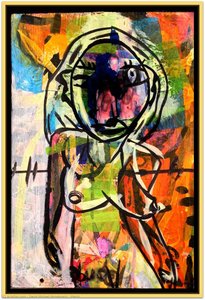
The Post-War Crucible: A World Reimagined Through Abstraction
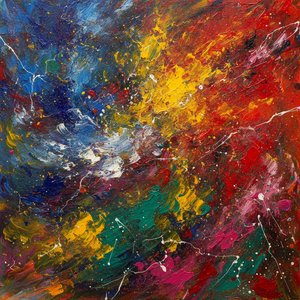 Pure Chaos & Color: The High-Voltage World of Abstract Expressionism
The Post-War Explosion: When Chaos Met Canvas Abstract expressionism Abstract expressionism in the United States emerged as a distinct art movement in the aftermath of World War II and gained mainstream acceptance in the 1950s, a shift from the Ameri...
To understand the seismic rupture of Abstract Expressionism, one must first confront the heavy, fractured atmosphere of the mid-twentieth century. The aftermath of World War II left a profound scar on the collective human psyche, creating a world grappling with unprecedented trauma, existential uncertainty, and the shattering of established social norms. In this climate of deep disillusionment, the traditional modes of representation—the landscapes that once offered solace or the portraits that anchored identity—seemed suddenly inadequate to articulate the complexities of a fractured reality. The old rules of reality had been shattered by the sheer weight of global conflict, prompting an urgent, almost desperate search for new meaning.
Emerging from this post-war crucible, primarily within the vibrant, burgeoning New York art scene of the 1940s and 50s, a small group of loosely affiliated artists began to reject the representational, religious, and classical motifs that had long defined Western art. This was not merely a stylistic shift; it was a defiant embrace of subjectivity. These artists sought an art that could communicate on a monumental scale the artist's inner state—a language capable of expressing anxieties, passions, and existential questions directly onto the canvas. By stripping away narrative constraints, they liberated the medium, allowing for a spontaneous, automatic, or subconscious creation that mirrored the turbulent beauty of the human spirit in an era of profound change.
The Visceral Canvas: Action Painting and the Gesture of Emotion
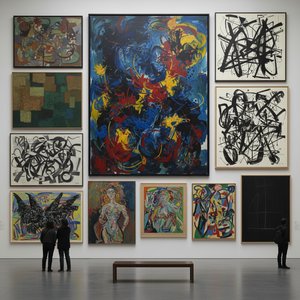 Abstract Expressionism's 10 Defining Masterpieces |
Introduction To gaze upon these ten canvases is to step into a realm where emotion reigns supreme, where the very act of painting became a visceral outpouring of the human spirit. The Abstract Expressionist movement, born in the aftermath of World Wa...
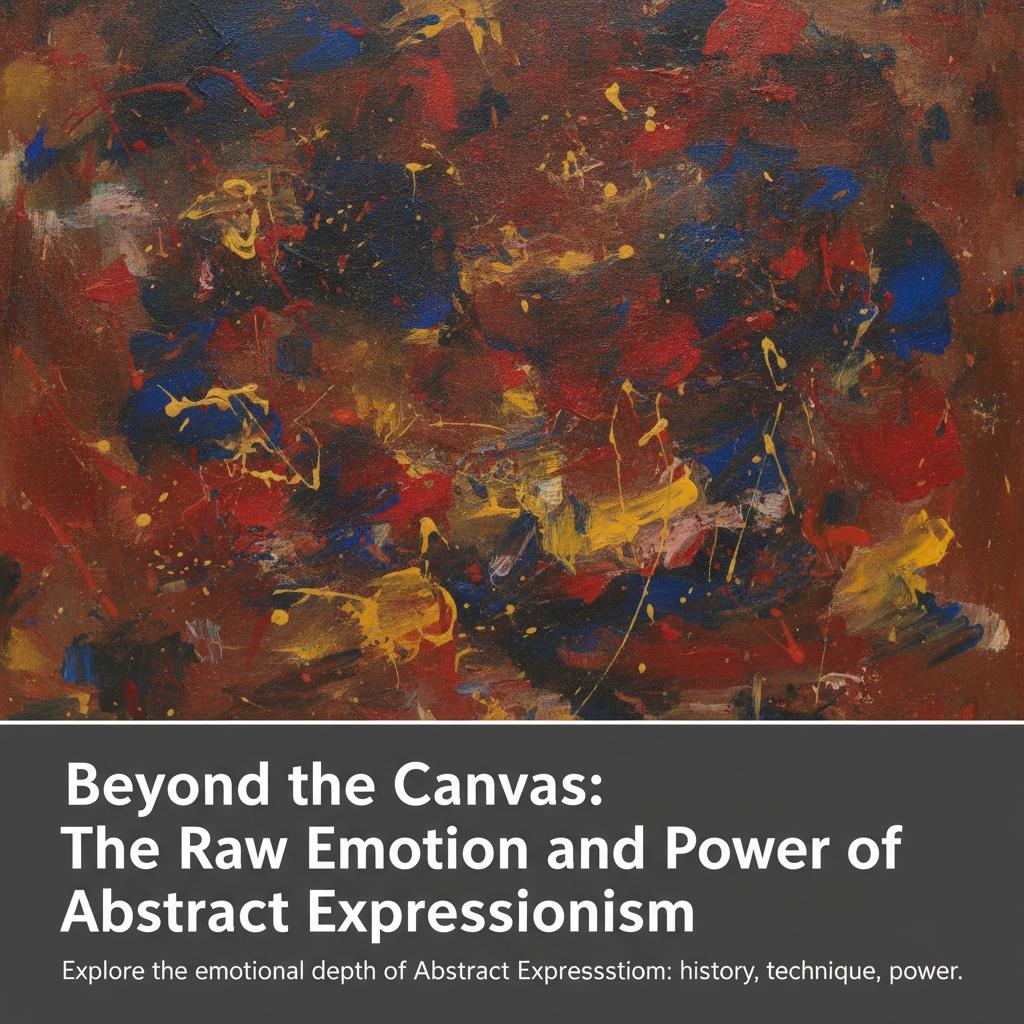
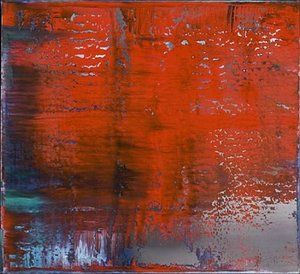
Within this revolutionary movement, a particularly high-voltage energy manifested through what would become known as Action Painting. Here, the canvas ceased to be a mere surface for depiction and instead became an arena in which to act. The very act of painting became a visceral outpouring, a physical manifestation of intense emotional labor. Artists like Jackson Pollock utilized drips and energetic gestures to turn the canvas into a record of an event, where every movement of the hand and arm left a permanent, rhythmic trace of existence.
This technique, characterized by its spontaneous and often chaotic arrangement, sought to tap into the depths of the unconscious mind, heavily influenced by the rising prominence of psychoanalysis and the works of Carl Jung. The scale of these works demanded a bodily engagement from both the artist and the viewer, inviting a direct, almost primal connection. When we observe the energetic brushstrokes and layered textures of such works, we are not just looking at paint; we are witnessing the physical residue of a struggle. Each stroke carries the weight of the artist's movement, creating a rich, tactile experience that pulses with the raw, pulsating energy of the human psyche.
Chromatic Depth: The Meditative Power of Color Field Painting
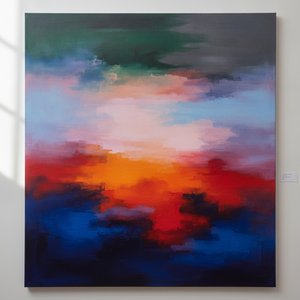 Color Field Painting: The Emotional Power of Pure Abstraction and Chromatic Depth
The Post-War Crucible: The Emergence of Color Field from Abstract Expressionism Beyond the Brushstroke: A Definitive Guide to the Emotional Power of Color Field Painting The Genesis of Abstraction: From Post-War Trauma to the Rise of Color Field Beyo...
As the movement matured, a distinct and more reflective current began to emerge from the shadows of gestural chaos. While Action Painting emphasized the theatricality of the brushstroke, Color Field painting sought a more fundamental, unmediated truth through the exploration of pure abstraction and chromatic depth. This evolution represented a shift away from the self-conciousness of the gesture toward a search for a profound, meditative stillness found within the medium itself.
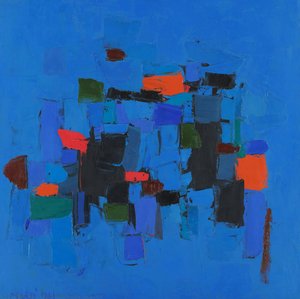
Color Field painters utilized expansive, often monumental canvases to envelop the viewer in vast planes of color. The goal was to move beyond representation and explore the emotional landscape through the sheer power of hue and saturation. In these works, the eye is not led by a narrative or a figure, but is instead invited to lose itself in a sea of pigment. This approach allowed for a more cerebral focus on open fields of color, where the tension between light and shadow, or the subtle vibration between adjacent hues, could evoke deep, contemplative responses. It was an art of atmosphere and presence, where the emotional resonance was achieved through the quiet, overwhelming weight of pure color.
Masters of the Subconscious: Exploring the Legacies of Goldberg and Resnick
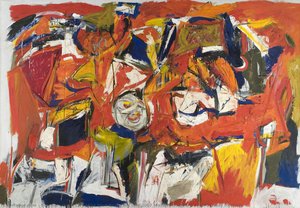 Red Sunday Morning
A Symphony of Visceral Emotion In the vast, evocative landscape of Abstract Expressionism, few works capture the raw, pulsating energy of the human psyche quite like Red Sunday Morning . This monumental canvas, measuring an imposing 202 x 289 cm, ser...
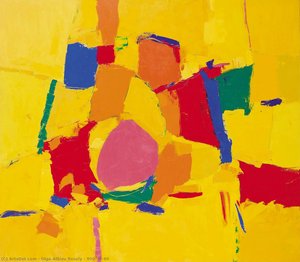
To truly grasp the soul of this era, one must look to the individual voices that emerged from the New York School, artists whose lives and works were inextricably linked to the movement's evolution. Michael Goldberg, a pivotal figure of the second generation, exemplifies this profound connection. Born in the Bronx, Goldberg’s journey was marked by an early immersion in the Art Students League, where he studied under the legendary Hans Hofmann. His work, such as the evocative Red Sunday Morning, serves as a profound window into the turbulent beauty of the subconscious. In his monumental canvases, one finds a kaleidoscopic explosion of color—vibrant reds and sun-drenched yellows dancing against melancholic blues—creating a complex tapestry that pulls at the heartstrings through its rhythmic, almost chaotic arrangement.
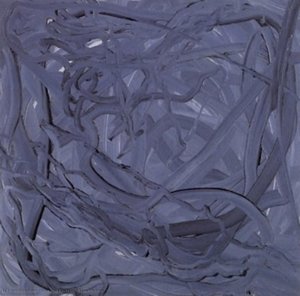
Similarly, artists like Milton Resnick contributed to this legacy by pushing the boundaries of texture and pattern. In works such as Abstraction, created in 1963, Resnick demonstrated an ability to use bold colors and intricate textures to create a dynamic, expressive quality that feels both innovative and timeless. These artists did not merely paint; they explored the very limits of what could be expressed through the medium. Their work remains a testament to a period when the boundaries of canvas and emotion were being radically redefined, leaving behind a body of work that continues to challenge and inspire our understanding of the human condition.
The Architecture of Chaos: Texture, Scale, and the Viewer's Connection
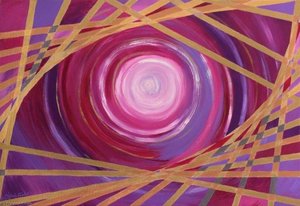 Purple and Gold Abstract
Explore 'Purple & Gold Abstract' by Michele Elizabeth Field (2005). This dynamic oil painting showcases swirling forms, impasto texture, and vibrant hues – a captivating piece of abstract expressionism.
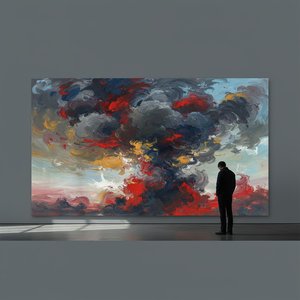
The power of Abstract Expressionism lies heavily in its physical presence—the way it occupies space and demands attention. The movement was characterized by a monumental scale that transformed the viewing experience from passive observation to active immersion. These large-format works do not merely hang on a wall; they command the room, creating an environment that can alter the viewer's perception of their own surroundings. This scale is essential to the movement's success, as it allows the painting to function as an architectural element, much like a window into another dimension.
Furthermore, the use of texture—often achieved through heavy impasto or the layering of multiple paint applications—adds a three-dimensional quality that catches the light and changes with the viewer's perspective. Whether it is the swirling forms and thick textures found in contemporary echoes of the style, such as those by Michele Elizabeth Field, or the deep, tactile layers of the mid-century masters, this physical depth is crucial. It creates a sense of permanence and weight, grounding the ethereal emotions of the subject matter in the tangible reality of the paint itself. The interplay between the recognizable texture of the brush and the abstract form creates a tension that keeps the viewer perpetually engaged.
A Lasting Legacy: How Abstract Expressionism Redefined Modern Collecting
Abstract Expressionist painters rejected representational forms, seeking an art that communicated on a monumental scale the artist's inner state in a universal ...
The legacy of Abstract Expressionism extends far beyond the era of its peak influence. By redefining the possibilities of painting and challenging conventional notions of beauty, these artists paved the way for generations of subsequent movements to explore personal expression and abstraction. For the modern collector, acquiring works within this tradition—or high-quality reproductions that capture their essence—is an engagement with a pivotal moment in art history. It is an opportunity to possess a piece of the revolution that shifted the center of the art world from Paris to New York.
Today, the influence of this movement can be seen in everything from Lyrical Abstraction to contemporary large-scale installations. The ability to appreciate the nuance of a gestural brushstroke or the profound stillness of a color field remains a hallmark of a sophisticated eye. As we continue to find new meaning in these canvases, we celebrate a period of unparalleled creative freedom—a time when art was stripped bare, liberated from narrative, and fueled by an unyielding search for universal truth.
At ArtsDot.com, we are dedicated to preserving this legacy of human creativity. We specialize in creating exquisite, hand-painted oil reproductions that capture the true soul of these masterpieces. Our master artists, each a specialist in their genre, use traditional techniques—including heavy impasto and meticulous layering—to ensure that the tactile depth and emotional resonance of the original are present in every stroke. Whether you seek to transform your space with a monumental canvas or wish to commission a custom piece that reimagines your own memories through the lens of historical masters, ArtsDot provides a bridge between the triumphs of the past and the collections of the future.