The Science of Sight: From Newton’s Prism to Goethe’s Emotion
 Chromatic Harmonies & Discord: A History of Color Theory in Art
The Genesis of Color Understanding: From Newton to Goethe Wikipedia: Color theory Color theory, or more specifically traditional color theory, is a historical body of knowledge describing the behavior of colors — namely in color mixing, color contras...
To truly appreciate the luminous magic of an Impressionist canvas, one must first understand that color is far more than a mere visual property; it is a bridge between the physical world and the human spirit. Long before the first brushstroke of Claude Monet touched a canvas, our understanding of light was undergoing a profound transformation. In the 1660s, Sir Isaac Newton’s experiments with prisms revealed the scientific truth that white light is not pure, but a complex spectrum of hidden hues. This discovery provided the mathematical foundation for color as a quantifiable phenomenon, yet it remained a cold, objective science—a matter of wavelengths and physics.
However, for those of us who find ourselves moved to tears by a sun-drenched meadow or a twilight sky, Newton’s prism only tells half the story. The true soul of art lies in the subjective experience, a transition famously championed by Johann Wolfgang von Goethe. His 1810
Theory of Colours challenged the purely physical approach, arguing instead that color is inextricably linked to human perception and psychological affect. Goethe posited that warm hues evoke activity and passion, while cool tones suggest tranquility and depth. It was this shift from the objective to the subjective that breathed life into the Impressionist movement, allowing artists to move beyond mere observation and into the realm of emotional resonance.
Chromatic Harmonies: How Impressionists Used Color to Evoke Mood
 Chromatic Abundance: Exploring the Psychological Impact of Rich Color Palettes in Painting
The Foundations of Color Theory: From Goethe to the Impressionists Chromatic Harmonies & Discord: A History of Color Theory in Art Explore the fascinating evolution of color theory in art history! Discover Impressionism, Neo-Impressionism & beyond wi...
The Impressionists revolutionized painting by treating color not as a way to define objects, but as a way to capture the very essence of atmosphere. They understood that light is never static; it dances, fades, and transforms with every passing second. By abandoning the heavy, dark shadows of traditional academic art—those somber umbers and blacks that once anchored much of Western painting—they embraced a palette of pure, vibrant light. This was not merely a stylistic choice but an emotional one. When we gaze upon a landscape by Renoir or Pissarro, we are not just seeing trees and water; we are feeling the warmth of a summer afternoon or the crispness of a spring morning.
This mastery of chromatic harmony allowed these artists to create a sense of "visual truth" that felt more real than a photograph. They utilized color contrast effects and complementary schemes to guide the viewer’s eye through a landscape, creating a rhythmic flow of light. By placing opposing colors side by side, they could simulate the shimmering effect of sunlight filtering through leaves or the way a setting sun turns a river into liquid gold. This technique creates a sensory experience that transcends the canvas, inviting us to inhabit the moment alongside the artist, finding peace in the harmonious balance of the natural world.
The Pointillist Pulse: Seurat and the Precision of Light
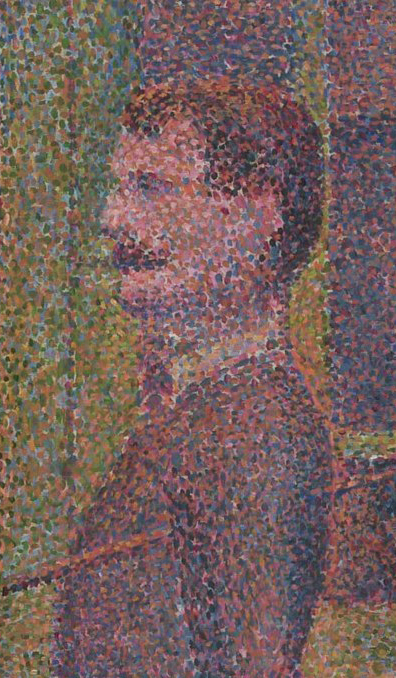 Pointillism
Pointillism (, also US: ) is a technique of painting in which small, distinct dots of color are applied in patterns to form an image. Georges Seurat and Paul Signac developed the technique in 1886, branching from Impressionism. The term "Pointillism"...
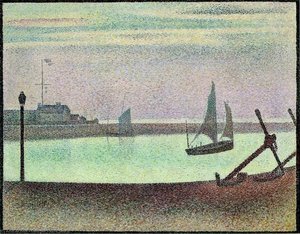
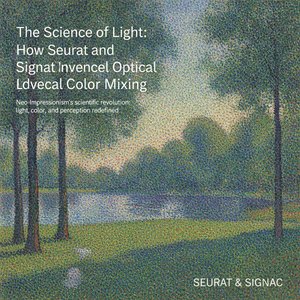
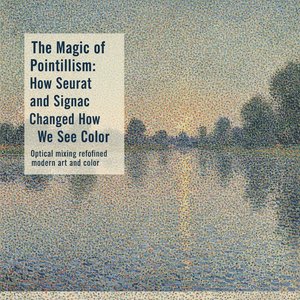
As the Impressionist movement evolved, a new, more meticulous approach emerged through the hands of Georges Seurat and the Neo-Impressionists. While the original Impressionists sought the fleeting glimpse, Seurat sought something deeper: a scientific and intellectual permanence. Through the technique known as Pointillism, or Divisionism, he applied tiny, distinct dots of primary colors in patterns designed to be blended by the viewer's own eye. This process, known as optical mixing, creates a luminosity that traditional pigment blending on a palette simply cannot achieve.
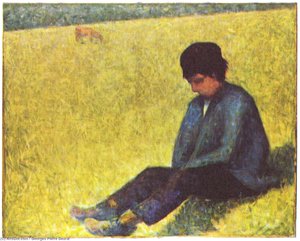
Consider Seurat’s
Peasant Boy Sitting in a Meadow. Here, the serenity of rural France is captured not through broad strokes, but through a disciplined application of color fragments. The technique demands immense patience and precision, yet the result is a breathtakingly vibrant image where the light seems to vibrate with its own internal energy. This method was a bold attempt to marry modern science with artistic temperament, promising a grand synthesis of the real and the ideal. In the hands of Seurat, the dot becomes a heartbeat, a rhythmic pulse of color that reconstructs the world in a mosaic of pure light.
Beyond the Visible: The Psychological Impact of Vibrant Palettes
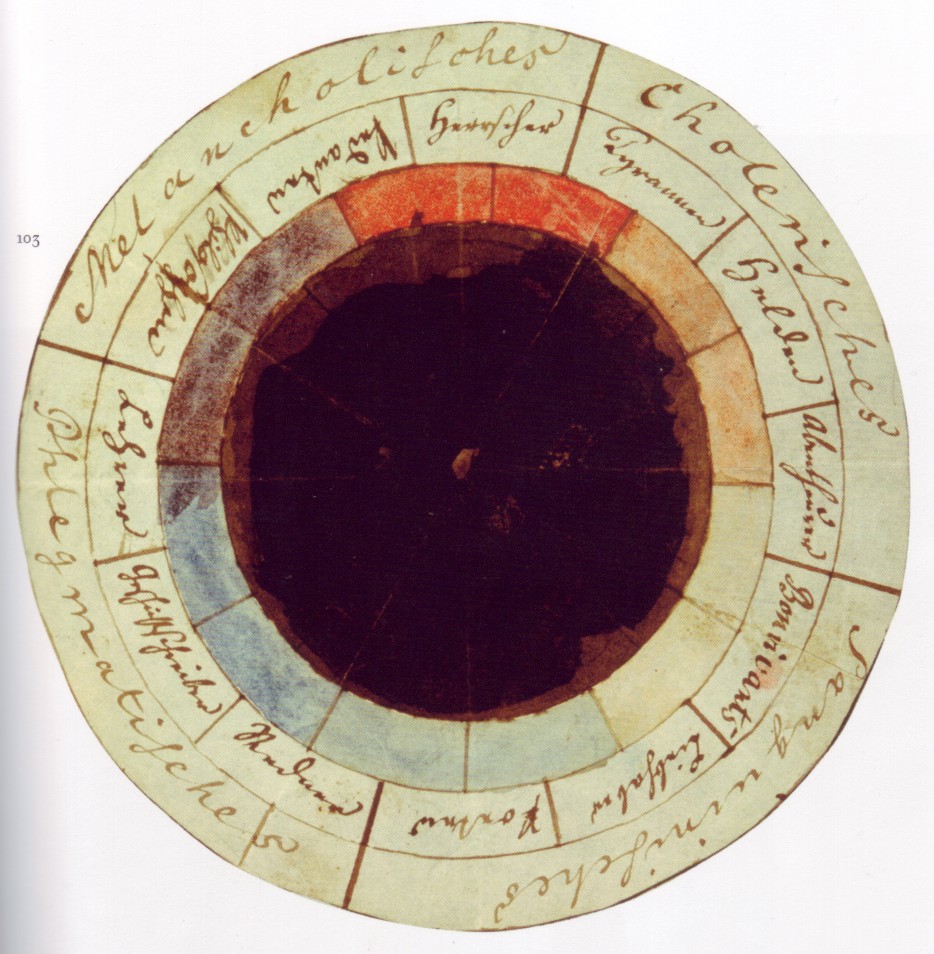 Color psychology
Color psychology is the study of colors and hues as a determinant of human behavior. Color influences perceptions that are not obvious, such as the taste of food. Colors have qualities that may cause certain emotions in people. How color influences i...
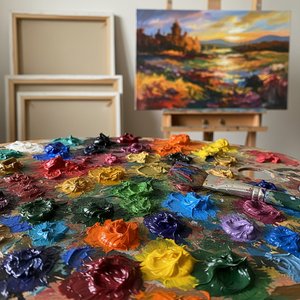
The power of an Impressionist painting often lies in its ability to influence our internal state without us even realizing it. This is the profound realm of color psychology. We know instinctively that certain palettes can soothe an anxious mind or invigorate a weary soul. The Impressionists were masters of this subtle manipulation. By utilizing a "chromatic abundance," they could tap into the deep-seated psychological associations we hold with different hues.
A palette dominated by soft blues and greens can act as a sanctuary, offering a sense of stillness and contemplation, much like the tranquil atmosphere found in the Musée de l'Orangerie. Conversely, a canvas bursting with yellows and oranges can stir a sense of joy and vitality. This emotional resonance is why these works remain so enduringly popular; they do not just show us a scene, they provide an emotional landscape. For the collector, owning such a piece is not merely about decorating a wall, but about curating an environment of emotional well-being, where every glance at a canvas offers a moment of restorative beauty.
A Legacy of Light: Finding Emotional Resonance in Modern Spaces
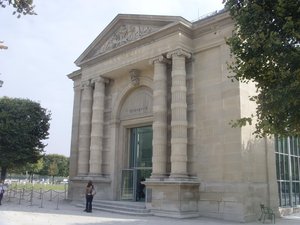 Musee de l'Orangerie
A Sanctuary of Light: The Musée de l'Orangerie Nestled within the tranquil embrace of the Tuileries Garden in Paris, the Musée de l’Orangerie is more than a repository of masterpieces; it is an immersive experience, a sanctuary dedicated to the ether...
Today, the legacy of these masters continues to illuminate our modern lives. The principles of light and color harmony established in the 19th century remain as relevant as ever, providing us with tools to transform our personal spaces into sanctuaries of peace. Whether it is through a large-scale mural that brings the dappled sunlight of Giverny into a contemporary home, or a custom-commissioned portrait that captures a loved one in the luminous style of Monet, the pursuit of beauty remains a universal human endeavor.
As we navigate an increasingly digital and often fragmented world, the tactile depth of a hand-painted oil reproduction offers a much-needed connection to the physical and the eternal. The visible brushstrokes, the rich texture of the impasto, and the careful layering of pigments all serve as a testament to the enduring power of human craftsmanship. In every stroke of color, we find a reflection of our own capacity for wonder, reminding us that even in the simplest meadow or the most fleeting sunset, there is a profound, soulful harmony waiting to be discovered.
For those seeking to bring this timeless beauty into their own homes, ArtsDot.com offers exquisite, hand-painted reproductions and custom commissions, meticulously crafted to preserve the light and soul of the masters.