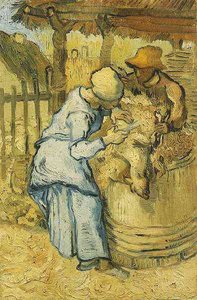
The Impressionist Foundation: A Prelude to Emotional Depth
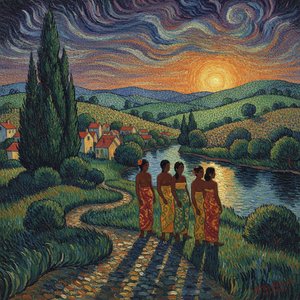 Beyond Impressionism: Exploring the Emotional Depth and Vibrant Mastery of Post-Impressionist Art
The Impressionist Legacy: A Prelude to Revolution To understand the seismic shift brought about by Post-Impressionism, one must first appreciate the luminous revolution that preceded it. The Impressionists, led by visionaries like Claude Monet and Pi...
To truly understand the profound emotional resonance found within the expressive landscapes of the late nineteenth century, one must first pause to admire the luminous revolution that paved the way. Before the Post-Impressionists dared to distort reality, the Impressionists—led by visionaries such as Claude Monet and Pierre- Auguste Renoir—had already shattered the rigid, somber dictates of the French Academy. Their mission was a beautiful, fleeting one: to capture the ephemeral dance of light upon water, the hazy atmosphere of a Parisian afternoon, and the transient warmth of sunbeams filtering through autumn leaves. Through short, broken brushstrokes, they taught us to see color as a living, breathing entity, documenting the optical truth of a moment.
Yet, while the Impressionists succeeded in capturing the external reality of light with breathtaking brilliance, their canvases often possessed a certain ethereal incompleteness. There was a sense that the subject might dissolve into mist at any moment, leaving behind a beautiful but purely sensory experience. This very tension—the gap between the fleeting optical impression and the desire for structural permanence—became the catalyst for a new generation of artists. They admired the Impressionist focus on light and color, but they felt a growing need to inject more substance, more order, and a deeper psychological weight into the landscape, moving the focus from the retina toward the very depths of the human soul.
Beyond the Retina: The Shift from Optical Truth to Inner Vision
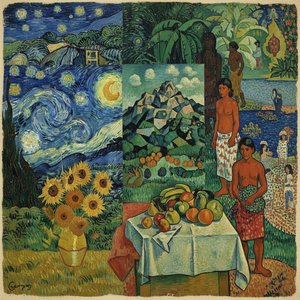 Beyond Impressionism: A Deep Dive into the Vibrant Evolution of Post-Impressionist Art
The Impressionist Legacy: The Foundation of a Revolution To understand the profound shift that occurred at the end of the nineteenth century, one must first look back at the shimmering light of the Impressionists. Before the Post-Impressionists sough...
As the nineteenth century progressed, a seismic shift occurred in the hearts of the avant-garde. The focus of art began to migrate from the mere observation of the external world to an exploration of the artist's internal landscape. This transition marked the birth of Post-Impressionism, a movement that was less a unified school and more a collective spirit of rebellion against the perceived limitations of purely optical art. Where the Impressionists sought to document how light hit an object, the Post-Impressionists sought to document how that object felt within the human psyche.
This era was fueled by rapid industrialization and evolving philosophical ideas, creating a world where artists felt compelled to reflect not just what they saw, but their subjective response to it. They began to move beyond the surface of things, utilizing the canvas as a space for symbolic meaning and personal expression. It was no longer enough to paint a sun-drenched garden; the artist now sought to convey the spiritual or emotional essence of that garden. This movement allowed for a much more profound engagement with form, where the landscape became a vessel for the artist's inner truths, inviting us to look beyond the surface and contemplate the complexities of the human condition.
Vibrant Distortions: Color and Form as Instruments of the Soul
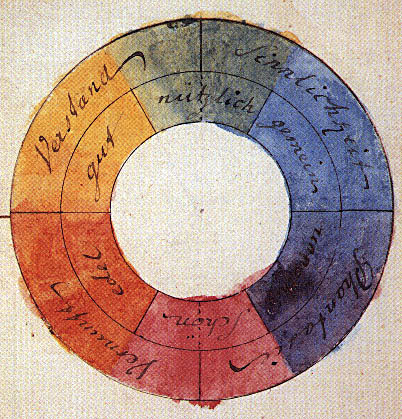 Color theory
Color theory, or more specifically traditional color theory, is a historical body of knowledge describing the behavior of colors — namely in color mixing, color contrast effects, color harmony, color schemes and color symbolism. Color theory and colo...
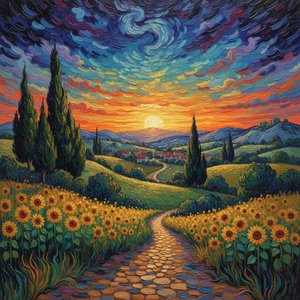
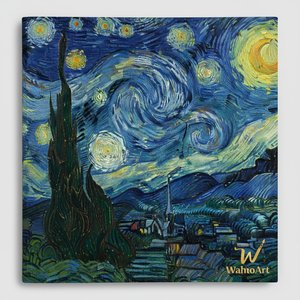
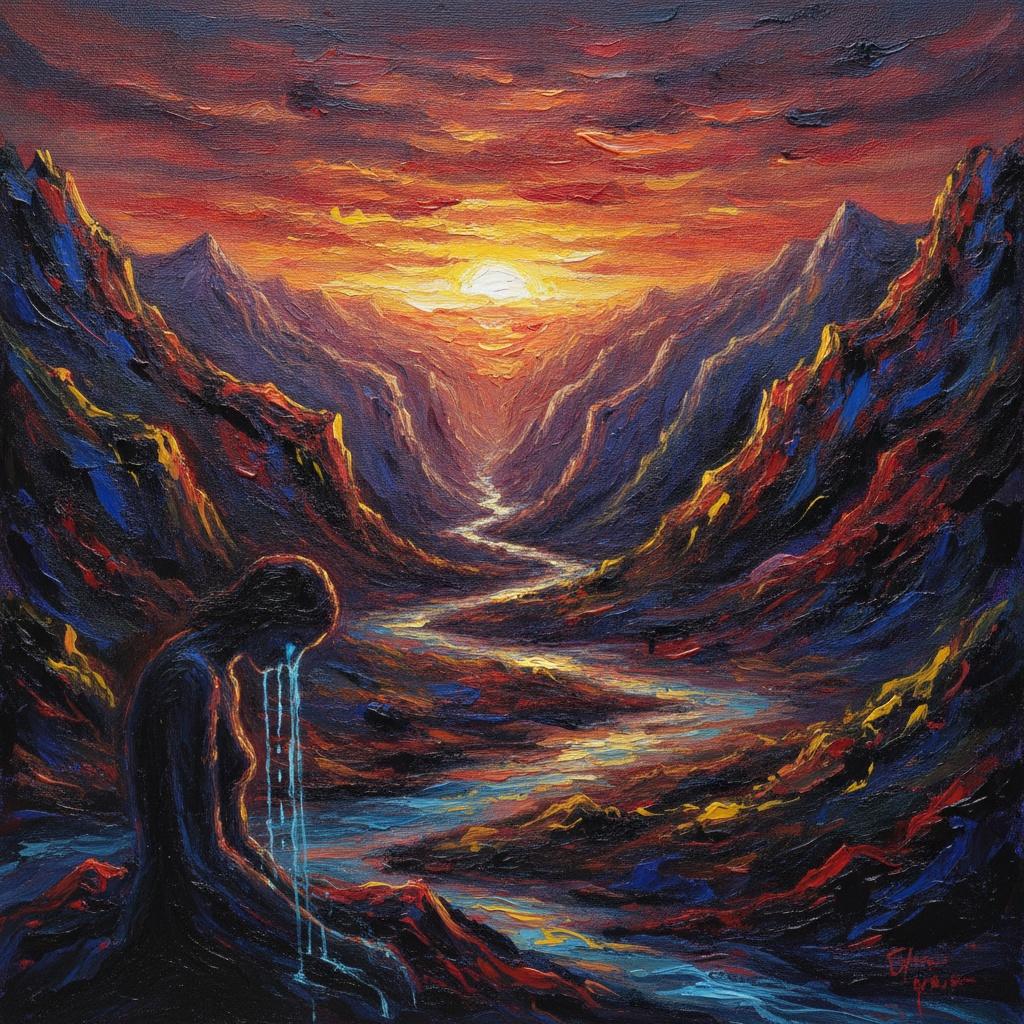
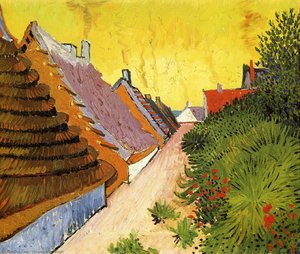
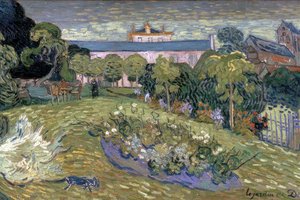
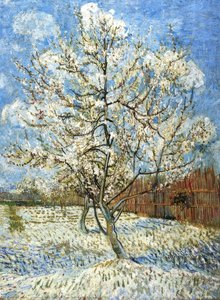
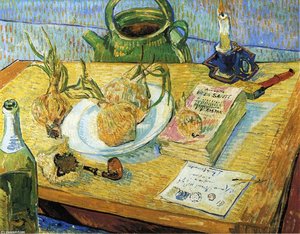
In the hands of the Post-Impressionists, color and form were liberated from the constraints of realism. They embraced intense, often non-naturalistic palettes to evoke specific moods and psychological states. This was not merely an aesthetic choice but a deliberate use of color theory to communicate emotion. By utilizing bold contrasts and vibrant, unblulended colors, artists like Vincent van Gogh and Paul Gauguin could create works that pulsed with energy and tension. The application of paint became more tactile and expressive; the thick, swirling impasto of Van Gogh’s landscapes does not just represent a night sky or a wheat field—it mirrors his own turbulent spirit.
Similarly, the manipulation of form allowed for a deeper exploration of structure and symbolism. Artists began to distort and exaggerate shapes to prioritize emotional impact over photographic accuracy. Consider the way Théo van Rysselberghe approached his Olive Trees near Nice; through a masterful use of bold brushstrokes and carefully constructed forms, he created a meditation on the emotional resonance of nature. This era proved that by breaking the rules of perspective and naturalism, an artist could achieve a much more profound truth—a truth that resides not in the accuracy of a line, but in the intensity of a feeling.
Mastering the Landscape: From Provençal Light to Urban Grids
City Landscape is the title given to a series of several abstract expressionist oil paintings by 20th-century American painter Joan Mitchell. Art critics have described the abstract works in the series as cityscapes, with their colorful, central elem...
The breadth of this expressive journey is vast, spanning from the sun-drenched Mediterranean coasts to the structured complexities of the modern city. In the rural landscapes, we find a deep reverence for the earth and its rhythms. The Post-Impressionists often looked toward the pastoral, using the textures of trees, mountains, and fields to ground their emotional explorations. These works often serve as a bridge between the natural world and the spiritual, where a simple cluster of olive trees can become a symbol of tranquility or enduring strength.
However, the movement also found its voice within the evolving urban landscape. As cities grew and changed, so did the artistic response. We see this evolution in the later works of artists like Joan Mitchell, whose City Landscape series utilizes abstract expressionist techniques to evoke the energy of urban planning. Her work, with its colorful, central elements resembling a grid, demonstrates how the principles of expressive form can be applied to the dense, rhythmic pulse of the city. Whether through the quiet majesty of a mountain range or the vibrant density of an urban street, the landscape remains a primary stage for the drama of human emotion.
The Enduring Legacy: Bringing Expressive Mastery into the Modern Home
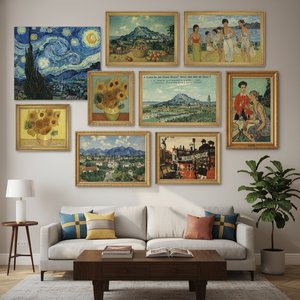 Post-Impressionism's 10 Defining Masterpieces: Art for Your Home |
Introduction Imagine stepping back in time to a world brimming with artistic revolution—a moment where painters dared to break free from the constraints of realism and embrace subjective vision. This is the essence of Post-Impressionism, a movement t...
The impact of these pioneers reverberates through the centuries, continuing to inspire how we perceive beauty and truth in our contemporary world. The ability to find profound meaning in a single brushstroke or a sudden burst of color remains one of the greatest gifts of the Post-Impressionist era. For the modern collector, these works offer more than mere decoration; they provide a window into a period of unparalleled creative courage.
Bringing such expressive mastery into your own living space allows for a continuous dialogue with history. Whether it is a meticulously hand-painted reproduction that captures the thick, tactile impasto of Van Gogh or a custom piece that reimagines a personal memory through the light-drenched lens of Monet, art has the power to transform an environment into a sanctuary of reflection. As we continue to cherish these masterpieces, we do more than preserve the past; we invite the enduring soul of expressionism to live alongside us, reminding us daily of the infinite capacity for human feeling and the eternal beauty of the world through the eyes of a master.
At ArtsDot.com, we are dedicated to preserving this luminous legacy. We specialize exclusively in the works of the Impressionist and Post-Impressionist masters—from the shimmering waters of Monet to the emotive textures of Van Gogh. Our mission is to bring the profound emotional depth of these era-defining landscapes into your home through exquisite, 100% hand-painted oil reproductions on fine cotton canvas. Each piece is a labor of passion, created by academy-trained artists who honor the original brushwork and soul of every masterpiece. Whether you are seeking a centerpiece for a grand hall or a custom transformation of a personal photo into an Impressionist treasure, we invite you to explore our curated collection and find the art that speaks to your soul.