The Dawn of a New Vision: Claude Monet and the Birth of Impressionism
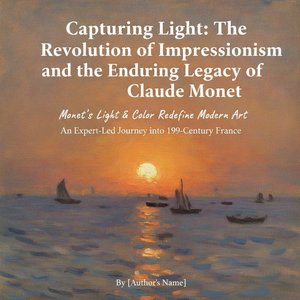 Capturing Light: The Revolution of Impressionism and the Enduring Legacy of Claude Monet
The Dawn of a Revolution: Breaking from Academic Tradition Impressionist Landscapes: 10 Masterpieces for Your Home | ArtsDot Introduction Imagine stepping into a world bathed in dappled sunlight, where colors dance and shimmer with an ethereal quali...
To understand the luminous revolution of Claude Monet, one must journey back to the salt-sprayed shores of Le Havre, Normandy. Born Oscar-Claude Monet in 1840, his early life was far removed from the ethereal landscapes that would later define modern art. A young man with an entrepreneurial spirit, he once found success selling charcoal caricatures, a talent that hinted at the mastery to come. However, it was his pivotal encounter with the landscape painter Eugène Boudin that forever altered the course of art history. Boudin did not merely teach Monet technique; he instilled in him the revolutionary concept of painting en plein air—directly from nature.
As the mid-19th century approached, the French art world was held in the iron grip of the Académie des Beaux-Arts, which favored somber, meticulously detailed historical and mythological subjects. Monet, alongside contemporaries like Renoir and Degas, sought to shatter these rigid constraints. The watershed moment arrived with the independent exhibition of 1874, where his work Impression, soleil levant (Impression, Sunrise) inadvertently gave a name to a movement that would redefine perception. This was not merely a new style; it was a rebellion of light against the shadows of tradition.
Capturing the Ephemeral: The Revolutionary Spirit of En Plein Air
 En plein air
En plein air (pronounced [ɑ̃ plɛ.n‿ɛʁ]; French for 'outdoors'), or plein-air painting, is the act of painting outdoors. This method contrasts with studio painting or academic rules that might create a predetermined look. The theory of 'En plein air' ...
The essence of Impressionism lies in its refusal to fix reality into static forms. Instead, Monet sought to capture the impression—that fleeting, shimmering moment where light meets color before the eye can even register a boundary. By embracing the en plein air method, Monet moved his easel out of the controlled environment of the studio and into the unpredictable embrace of the elements. He became a chronicler of the atmosphere, obsessed with how a single haystack or a cathedral could be transformed by the morning mist, the midday sun, or the violet hues of twilight.
This technique required a radical departure from the smooth, blended surfaces favored by the Salon. Monet utilized loose, energetic brushstrokes and a vibrant palette to mimic the vibration of light. He understood that color is never static; it is a living, breathing entity. Through his eyes, we see the world not as a collection of objects, but as a dance of sensations. This approach allowed him to portray the very movement of air and the subtle shifts in temperature, inviting the viewer to experience the landscape with a renewed, sensory intimacy.
A Symphony of Seasons: Exploring the Magic of Monet’s Series Paintings
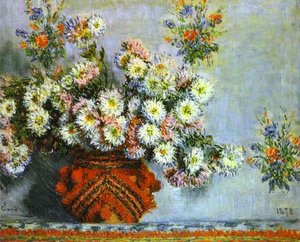 Chrysanthemums
Introduction to Claude Monet and Impressionism Claude Monet (1840-1926) was a French artist who played a pivotal role in the development of impressionist painting, which sought to capture the fleeting effects of light and color in the natural world. ...
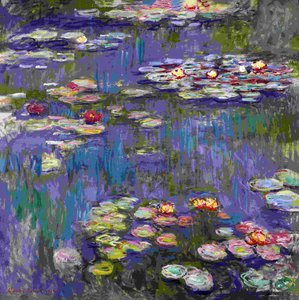
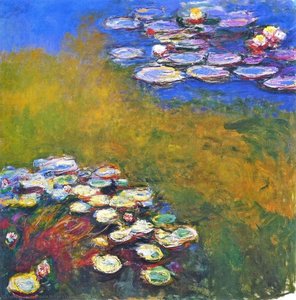
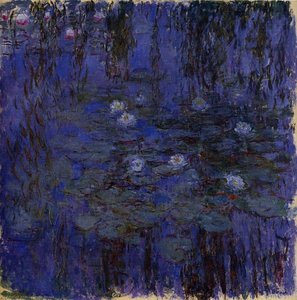
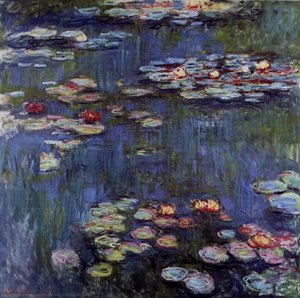
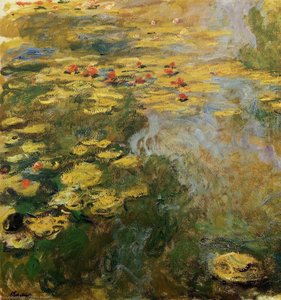
Perhaps Monet’s most profound contribution to the art of perception was his development of series paintings. By returning to the same subject at different hours and under varying weather conditions, he transformed the canvas into a temporal study. Whether it was the way light danced upon the haystacks or the ethereal reflections in his beloved Giverny water lilies, Monet used repetition to explore the infinite variations of nature. These works are not mere repetitions; they are a symphony of change, where the subject remains constant while the atmosphere undergoes a metamorphosis.
One can find deep symbolism within these seasonal explorations. Consider his Chrysanthemums, where the vibrant blooms serve as a poignant reminder of autumn and the inevitable passage of time. The intricate petals and rich tones allowed him to experiment with texture and light, much like his later, more abstract visions. In these series, Monet captures the very heartbeat of the earth—the way life blooms, fades, and is reborn through the cyclical dance of the sun and the seasons.
Intimate Echoes: Finding Emotion within the Landscapes
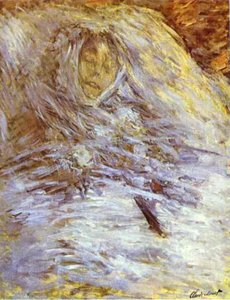 Camille Monet on Her Deathbed
The Artist: Claude Monet Claude Monet , born Oscar-Claude Monet (1840-1926), was a French artist who played a pivotal role in founding Impressionist painting, significantly influencing modernism. His philosophy, primarily based on capturing immediate...
While often celebrated for his landscapes, Monet’s work is deeply rooted in a profound emotional landscape. His canvases are infused with the personal joys and sorrows of a life lived passionately. We see this tenderness in his portraits of those closest to him, such as the heartbreakingly beautiful Camille Monet on Her Deathbed. In this masterpiece, the Impressionist technique serves a higher purpose: to convey the weight of grief and the fragility of existence through soft, emotive brushwork.
Even his later years at Giverny, supported by the quiet brilliance of Blanche Hoschedé Monet, reflected a deep connection to the domestic and the natural. The gardens he meticulously cultivated became his greatest muse, a sanctuary where the boundaries between art and life dissolved. To visit the Musée Marmottan Monet in Paris is to walk through this intimate history, seeing how his personal evolution mirrored the broader evolution of the Impressionist movement itself. His work remains a testament to the idea that the most profound truths are often found in the simplest, most fleeting moments of beauty.
Bringing the Light Home: Preserving the Impressionist Legacy in Your Sanctuary
 Monet's Masterpieces: 25 Iconic Artworks to Transform Your Home
Introduction Imagine stepping into a world bathed in dappled sunlight, where water lilies shimmer and fields of poppies dance in the breeze. Claude Monet’s art isn't merely about depicting scenes; it’s about capturing an *impression* – a fleeting mom...
For those of us who have spent decades admiring these luminous masterpieces, the desire to bring that same sense of tranquility into our own homes is a natural extension of our passion. At ArtsDot.com, we believe that art should not be confined to museum walls; it should breathe within your personal sanctuary. We specialize exclusively in the Impressionist and Post-Impressionist traditions, offering hand-painted oil reproductions that honor the true soul of the movement.
Our process is a labor of devotion, much like that of the masters themselves:
- Authentic Craftsmanship: Every piece is 100% hand-painted on fine cotton canvas. We eschew computer printing in favor of visible, textured brushstrokes that capture the true impasto and tonal depth of the original works.
- A Bespoke Journey: From your initial order to our professional digital mockup service, we ensure every detail meets your vision. You may even request "Period Shifts," such as having a modern memory reimagined in Monet’s light-drenched style.
- Meticulous Care: Our artists use specialized oils and protective damar varnishes to ensure your investment remains vibrant for generations. We offer a seamless six-step process, including pre-shipment photo approval, so you can witness the creation of your masterpiece.
Whether you are looking to transform a wide wall with a multi-panel series or seeking a custom portrait that captures a cherished milestone, we invite you to rediscover the light. Let us help you curate a collection that does more than decorate a room—let it invite the timeless, soulful beauty of Impressionism into your very heart.