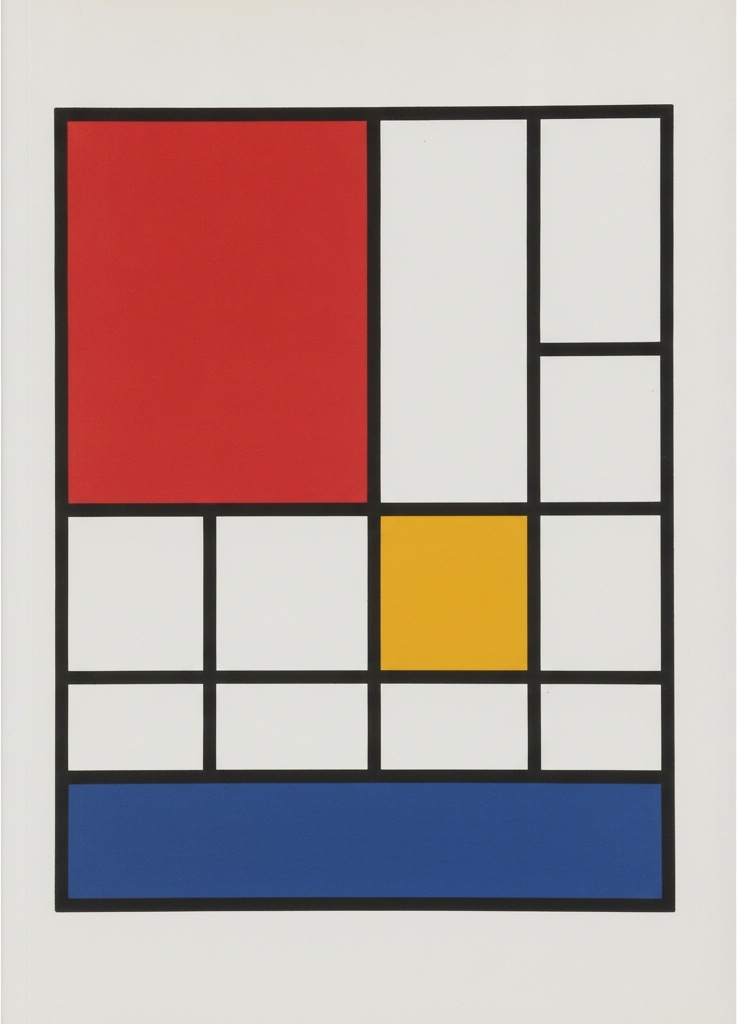
The Soul Beneath the Surface: Seeking Universal Order in a Fragmented World
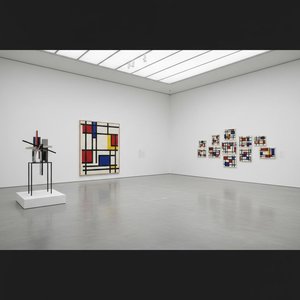 Neoplasticism Unveiled: The Power of Pure Color and Geometric Form in Modern Abstract Art
The Genesis of Neoplasticism: Piet Mondrian and the Pursuit of Universal Order In the turbulent dawn of the twentieth century, as the world grappled with the fragmentation of old empires and the industrialization of human existence, a profound moveme...
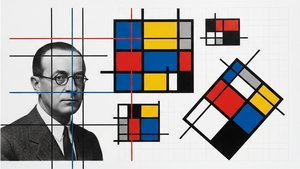
To look upon a De Stijl composition is to witness a profound attempt at stillness amidst a storm. As we reflect on the early twentieth century, we see a world fractured by the immense upheaval of the Great War and the rapid, often disorienting, march of industrialization. It was during this era of fragmentation that a group of visionary thinkers emerged from the heart of Europe, driven by a yearning for something more permanent than the shifting shadows of human emotion. They sought a truth that did not rely on the fleeting beauty of a landscape or the transient light of an Impressionist afternoon, but rather on a spiritual equilibrium that remains untouched by time.
This movement, known as De Stijl, was far more than a mere stylistic choice; it was a philosophical quest. The artists involved—including the brilliant Theo van Doesburg and the legendary Piet Mondrian—belloved that beneath the chaotic surface of our daily existence lies an underlying mathematical and spiritual order. They aimed to bridge the gap between the material and the spiritual worlds, using art as a tool to reveal the cosmic balance that governs the universe. In their eyes, the pursuit of pure harmony required a radical stripping away of the superfluous, leaving behind only the essential vibrations of reality.
The Grammar of Equilibrium: Primary Colors and the Precision of the Grid
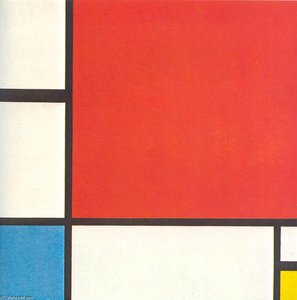
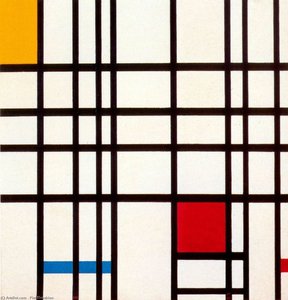
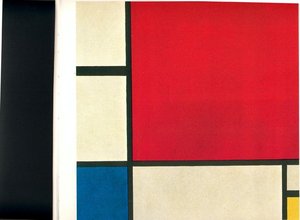 Composition with red blue and yellow
Piet Mondrian: Architect of Geometric Harmony Piet Mondrian’s *Composition with Red, Blue and Yellow*, completed in 1937–42 during his time in New York City, stands as a cornerstone of abstract art. Born Pieter Cornelis Mondriaan in Amersfoort, Nethe...
To understand the breathtaking power of Neoplasticism, one must learn its disciplined vocabulary. The movement operates through a strict yet potent grammar, rejecting the organic irregularities of nature in favor of absolute clarity. There are no curves here, no shadows to obscure the truth, and no complex textures to distract the eye. Instead, we find a world constructed from the most fundamental elements: the straight line, the square, and the rectangle.
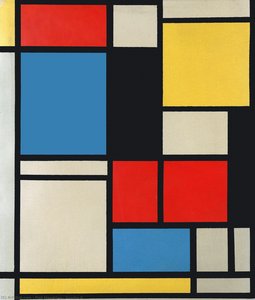
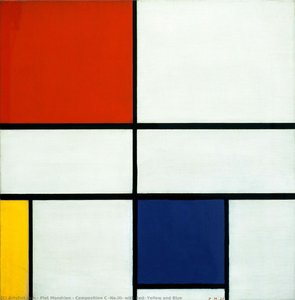
The palette is equally deliberate, restricted to the primary colors of red, yellow, and blue, complemented by the achromatic strength of white, black, and grey. These are not used to describe objects, but to act as pure energetic forces. When a vibrant block of red meets a stark field of white, it creates a tension that is both visual and intellectual. This arrangement is often anchored by the grid—a series of horizontal and vertical lines that serve as a resolution to opposing forces. For Mondrian, this orthogonal structure was not a cage, but a scaffolding for dynamic equilibrium, representing a state where all opposing energies find their perfect, balanced resting place.
Piet Mondrian and the Visionaries: Architects of Neoplasticism
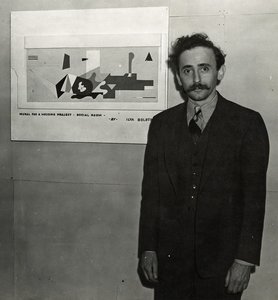 Ilya Bolotowsky
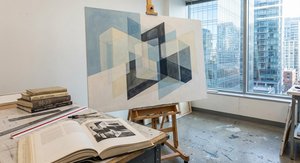
Ilya Bolotowsky: Pioneer of Geometric Abstraction Ilya Bolotowsky (1907-1981) stands as a pivotal figure in the history of 20th-century abstract art, particularly within the influential De Stijl movement. Born in Saint Petersburg, Russia, amidst the ...
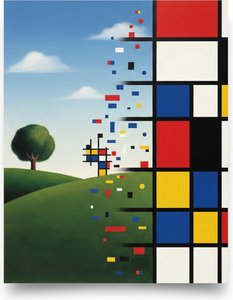
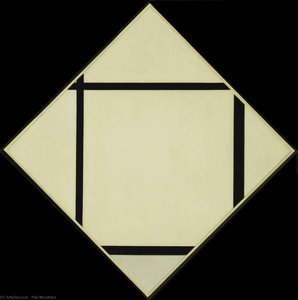
At the epicenter of this revolution stood Piet Mondrian, a visionary whose artistic journey was nothing short of transformative. He began his career immersed in the lush, descriptive traditions of Dutch landscape painting, yet he found himself increasingly drawn toward a deeper, more abstract truth. His evolution into the pioneer of Neoplasticism represents one of the most significant shifts in modern art history. Through works like Quadro I and his later New York masterpieces, Mondrian demonstrated that by reducing form to its most basic components, an artist could communicate a sense of cosmic stability.
He was not alone in this architectural meditation on existence. Figures such as Theo van Doesburg propagated these theories through influential journals, while artists like Ilya Bolotowsky carried the torch of geometric abstraction across the Atlantic. Bolotowsky, shaped by the turbulence of the Russian Revolution and later finding his voice in New York, embodied the movement's intellectual rigor and its pursuit of visual harmony. Together, these artists functioned as architects of a new reality, constructing a visual language that sought to reflect the very structure of the universe through meticulous precision and controlled brushwork.
Beyond the Canvas: The Lasting Legacy of De Stijl in Modern Design
 De Stijl
De Stijl (, Dutch: [də ˈstɛil]; 'The Style') was a Dutch art movement founded in 1917 by a group of artists and architects based in Leiden (Theo van Doesburg, J. J. P. Oud), Voorburg (Vilmos Huszár, Jan Wils) and Laren (Piet Mondrian, Bart van der Le...
The influence of De Stijl extends far beyond the gilded frames of museum galleries; it has become the very DNA of our modern aesthetic. The movement’s insistence on functional clarity, geometric purity, and the honest use of color laid the groundwork for much of twentieth-century design. We see its echoes in the clean lines of Bauhaus architecture, the streamlined efficiency of modern typography, and even the minimalist elegance of contemporary furniture.
The principles of De Stijl taught us that beauty does not require ornament; rather, it emerges from the perfect relationship between form and space. This legacy continues to inspire architects and designers who seek to create environments that feel both organized and liberating. The movement’s ability to synthesize the material and the spiritual through design remains a profound lesson for anyone looking to bring a sense of intentionality and order to the built world.
Bringing Harmony Home: Curating Geometric Abstraction for the Contemporary Space
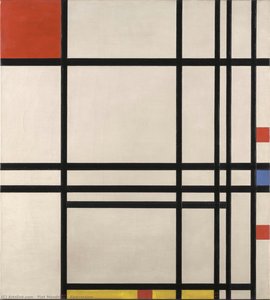 Abstraction
A Frozen Moment of Equilibrium: Exploring Piet Mondrian’s “Abstraction” Piet Mondrian's "Abstraction," painted in 1942 during his time in New York, isn’t merely a painting; it’s an architectural meditation on balance and the very structure of existen...
For the discerning collector, integrating De Stijl-inspired works into a home offers a unique opportunity to introduce a sense of meditative calm. In an age of digital noise and constant movement, the stark, balanced compositions of geometric abstraction act as a visual anchor. These pieces do not compete with a room; they provide a focal point of stability and intellectual depth.
When curating such a collection, consider how the bold primary colors can interact with your existing palette. A large-scale, multi-panel reproduction of a Mondrian composition can transform a wide wall or a grand staircase into a modern architectural statement, creating a cohesive flow of color and line across the space. Whether through a meticulously hand-painted oil reproduction that captures the subtle textures of the pigment or a sophisticated print, the presence of these geometric forms invites a moment of reflection—a chance to pause and find, within the art, that same pure harmony we all seek in our lives.