
The Invisible Scaffolding: Understanding Composition as the Grammar of Vision
 Mastering Composition: A Guide to the Rule of Thirds, Golden Ratio, and Diagonal Secrets in Art History
The Architecture of Vision: Understanding Compositional Foundations To gaze upon a masterpiece is to enter into a silent dialogue with the artist, a conversation structured not by words, but by the deliberate arrangement of form, light, and space. Fo...
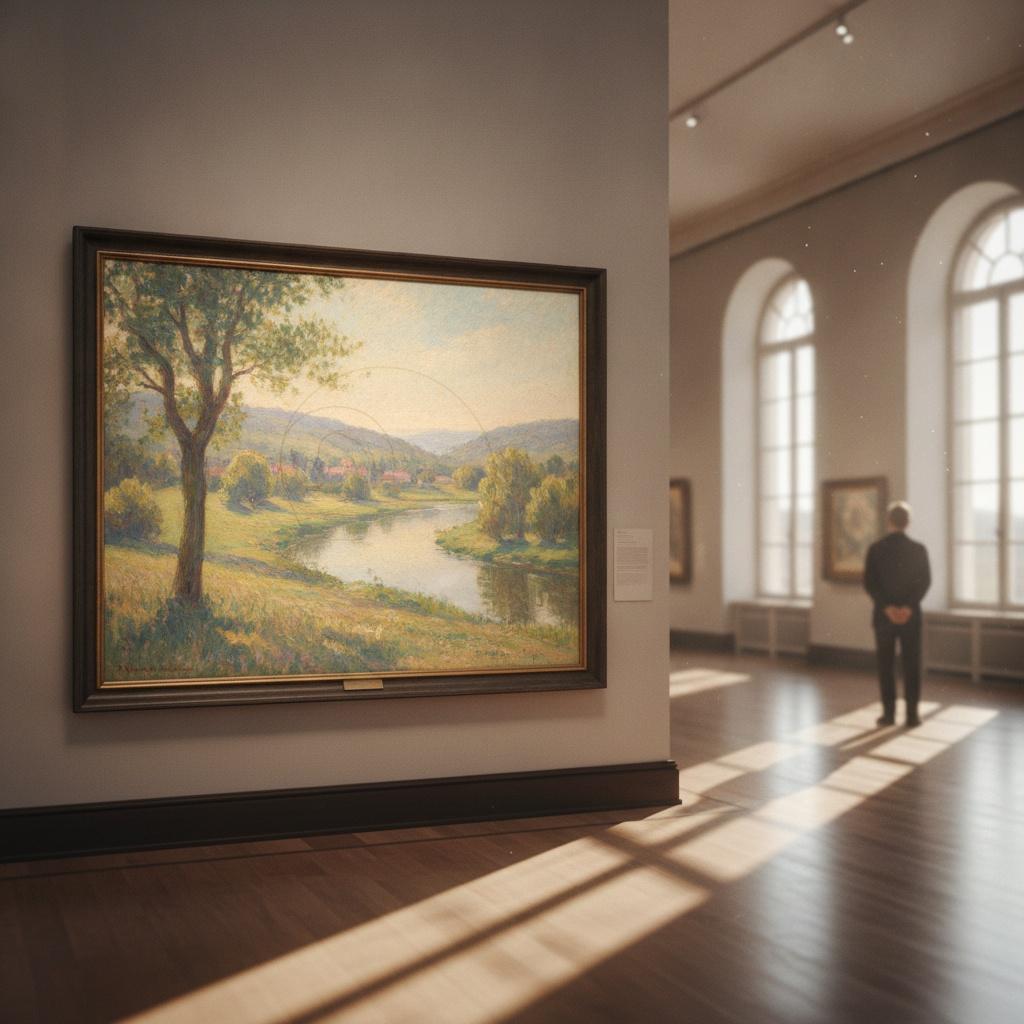
To gaze upon a masterpiece is to enter into a silent, profound dialogue with the artist—a conversation structured not by spoken words, but by the deliberate and masterful arrangement of form, light, and space. For those of us who have spent decades wandering through the hallowed halls of the Courtauld or finding sanctuary in the luminous galleries of The Barnes Foundation, we understand that composition is far more than a mere placement of objects. It is the invisible scaffolding that supports the emotional weight of a canvas, guiding our eyes from the initial moment of encounter through a carefully choreographed journey of discovery. It is the grammar of a visual language, providing the structural intent that allows even the most spontaneous brushstroke to resonate with purpose.
In the realm of Impressionism, this architecture of vision takes on a unique, almost ethereal quality. While the movement is often celebrated for its spontaneity, beneath the surface of shimmering light lies a rigorous understanding of balance. The artist uses composition to manage the tension between presence and absence, ensuring that the eye does not wander aimlessly but is instead led through a rhythmic pulse of lines and shapes. When we study these works, we are witnessing a mastery of structural intent where every element serves a larger purpose within the frame, creating a sense of stability even amidst the depiction of a fleeting, transient moment.
The Dance of Light and Form: Capturing the Fleeting Moment through Brushwork
 Bouquet in front of a Mirror
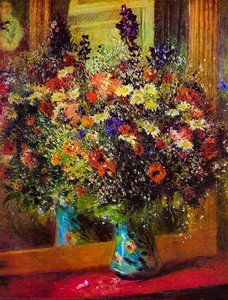
Vibrant Celebration of Nature’s Beauty This captivating still life captures a lush bouquet of flowers rendered with lively, expressive brushwork that embodies the essence of Impressionism. The composition centers on a generous arrangement of blooms i...
There is a certain magic in the way an Impressionist painter captures the ephemeral. Consider the works of Pierre-Auguste Renoir, particularly his evocative La Poste at Cagnes. In this piece, we see more than just a rural Provençal scene; we witness a distillation of light and atmosphere. Renoir abandons the rigid, meticulous details of traditional academic painting in favor of capturing the impression—the way sunlight filters through lush foliage or the warmth of the sun resting upon ancient stone. This is achieved through the use of broken color, where small strokes of pure pigment are applied side-by-side, allowing our eyes to blend them optically into a luminous, vibrating whole.
This technique creates a sense of immediacy and movement that breathes life into the canvas. In Renoir’s still lifes, such as his Bouquet in front of a Mirror, the thick, textured application of oil paint—the impasto—adds a tactile richness that invites us to feel the vitality of the blooms. The brushwork is not merely a tool for representation but an instrument of emotion. By emphasizing texture and the interplay of light over precise realism, the artist conveys the subjective experience of seeing, turning a simple arrangement of flowers into a celebration of nature’s fleeting beauty and joyful abundance.
Achieving Equilibrium: The Rule of Thirds and the Golden Ratio in Impressionist Landscapes
 Cézanne's Masterpieces: 25 Iconic Artworks to Transform Your Space
Introduction There’s a quiet intensity that clings to Paul Cézanne's work, an almost palpable sense of searching—a relentless pursuit of capturing the essence of light and form. To assemble a ‘Top 25’ is, in itself, a somewhat reductive act; it feels...
While the Impressionists sought to break free from the constraints of tradition, they remained deeply rooted in the classical principles of equilibrium. To prevent a composition from feeling static or overly symmetrical, many masters employed the Rule of Thirds. By mentally dividing the canvas into a grid, an artist can place a focal point—perhaps the delicate curve of a figure or a prominent rock formation—along these intersection points. This creates a breathing space within the painting, an organic sense of balance that prevents the viewer's gaze from becoming trapped in a stagnant center.
We see this pursuit of harmony echoed in the works of Paul Cézanne, whose landscapes are much more than picturesque vistas. Cézanne’s approach was a relentless search for the essence of form, where he used geometric primitives to anchor his compositions. In his studies of Mont Sainte-Victoire, there is a profound sense of structural stability achieved through the careful arrangement of mass and space. He wrestled with how the world felt, using the underlying order of nature to create works that vibrate with an almost unbearable intensity. Whether through the subtle use of the Golden Ratio or the strategic placement of landscape elements, these artists mastered the art of creating a visual equilibrium that feels both natural and mathematically divine.
Color as Emotion: The Harmonious Interplay of Hue, Value, and Temperature
 Harmonious Hues: 10 Masterpieces of Balanced Color |
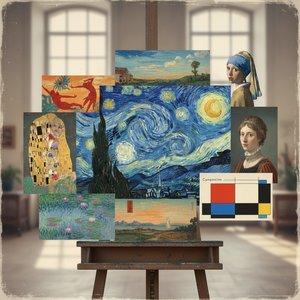
Introduction Color, at its heart, is emotion made visible. It’s a language older than words, capable of stirring memories, evoking moods, and shaping our very perception of reality. But true mastery isn't simply about *using* color; it’s about achiev...
Color is, at its very heart, emotion made visible. It is a language capable of stirring deep-seated memories and shaping our perception of reality. In the hands of an Impressionist master, color is never merely decorative; it is a tool for achieving a delicate equilibrium. True mastery lies in the harmonious interplay of hues—where no single shade dominates, but rather each tone complements its neighbor to create a visual symphony. We see this in the way warm, golden lights are balanced against cooler purative shadows, creating a sense of depth and atmospheric vibration.
The brilliance of these works often stems from the contrast between temperature and value. A vibrant bouquet of reds and oranges can be beautifully anchored by muted earth tones or cool blues in the background, enhancing the overall luminosity of the piece. This careful management of color temperature allows the artist to direct our emotional response, guiding us toward feelings of tranquility, warmth, or even the poignant melancholy of a fading afternoon. It is this sophisticated use of color that allows a painting to resonate with the soul long after we have turned away from the canvas.
Beyond the Surface: How Structural Intent Transforms Observation into Memory
Ultimately, the greatness of Impressionist and Post-Impressionist art lies in its ability to transcend mere observation. The artists of this era were not simply painting what they saw; they were reimagining the world through the lens of memory and sensation. They stripped away the illusionistic depth favored by previous generations to focus on the solidity of objects, the vibration of color, and the way light interacts with form. This shift from the objective to the subjective transformed the act of looking into an intellectual and emotional journey.
When we stand before a masterpiece, we are participating in this transformative process. We are not just observing a landscape or a portrait; we are experiencing the artist's struggle to capture the intangible. Through the careful application of composition, light, and color, these works become more than mere depictions of life—they become vessels for human experience. They remind us that beauty is found in the fleeting, the ordinary, and the balanced, turning a momentary glance into a lasting, profound memory that continues to inspire generations of art lovers.