
Introduction
To step into the world of Gustav Klimt is to surrender oneself to a dream woven from gold, light, and the profound mysteries of the human soul. There is a certain magic that happens when we encounter his canvases; it is as if the veil between our reality and a more opulent, symbolic realm begins to thin. As we prepare to wander through this curated selection of his top twenty-five masterpieces, I invite you to move slowly, much like one would stroll through the sun-drenched gardens of a Viennese estate, allowing the shimmering textures and intoxicating colors to settle upon your senses.
Born in the heart of Baumgarten, Klimt carried within him the meticulous spirit of his father, a gold engraver, a heritage that would later manifest in the breathtaking brilliance of his Golden Phase . He emerged from the rigid, conservative shadows of the late 19th-century academic tradition to lead the Vienna Secession , a rebellion of beauty that sought to break free from stifling norms. His work became a sanctuary for the avant-garde, blending the delicate elegance of Art Nouveau with the deep, psychological currents of Symbolism and the intricate patterns of Japonism.
Why do these works continue to stir our hearts more than a century later? Perhaps it is because Klimt did not merely paint figures; he painted the very essence of intimacy, Eros, and the bittersweet dance between life and mortality. His use of gold leaf creates a luminous, eternal quality that transcends time, making his subjects feel both ancient and startlingly modern. In an age that often feels fragmented, there is a restorative power in his ability to find harmony within complexity—in the way a single mosaic-like pattern can evoke a sense of profound wholeness.
In the pages that follow, we will explore a journey through his most iconic achievements. From the swirling, ethereal embraces that define romantic longing to the intricate, decorative landscapes that capture the fleeting light of the Austrian spirit, each painting serves as a window into a master's devotion. We shall trace his evolution from a skilled muralist to the legendary iconoclast, discovering how every brushstroke and gilded ornament contributes to a legacy that remains as radiant today as it was in the salons of old Vienna.
The kiss - Gustav Klimt
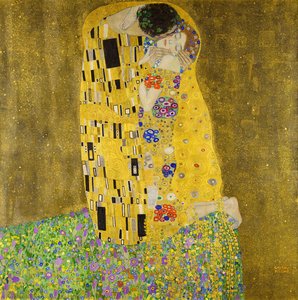
To gaze upon The Kiss by Gustav Klimt is to witness a moment of eternal tenderness, where time itself seems to dissolve into a shimmering sea of gold. As one of the most profound entries in our collection of the top 25 artworks of Gustav Klimt, this masterpiece transcends mere portraiture to become a sacred hymn to human connection. During his legendary "Golden Phase," Klimt utilized opulent gold leaf and intricate Byzantine-inspired patterns to elevate a simple embrace into a celestial event.
The sensory experience is overwhelming; one can almost feel the weight of the gilded cloak, where bold geometric shapes representing masculine strength intertwine with soft, floral motifs that whisper of femininity and life. The luminous, flattened perspective creates a dreamlike sanctuary, shielding the lovers from the outside world. In a modern home, this painting serves as a breathtaking focal point, bringing a sense of sophisticated warmth and a quiet, spiritual luxury to any space. It is not merely art; it is an invitation to find beauty in the profound intimacy of the soul.
Portrait of Adele Bloch-Bauer I - Gustav Klimt
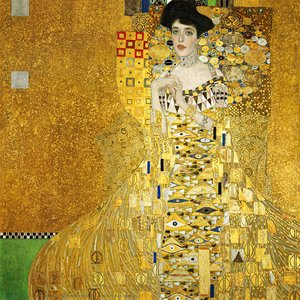
In the Portrait of Adele Bloch-Bauer I by Gustav Klimt, a radiant, transcendent gold dominates the canvas, casting a luminous glow that feels less like paint and more like captured sunlight. This shimmering palette does more than decorate; it creates an atmosphere of divine opulence and eternal stillness. As one of the most celebrated pieces in our collection of the top 25 artworks of Gustav Klimt , this masterpiece earns its place through a breathtaking marriage of precious gold leaf and intricate, symbolic geometry that defies the boundaries of traditional portraiture.
For the discerning collector, bringing this work into a home offers a unique opportunity to curate a space of profound luxury. The warm, reflective tones of the Golden Phase can serve as the emotional anchor for a dining room or a sophisticated lounge, providing a sense of warmth and grandeur. When paired with soft, ambient lighting, the painting’s textured surfaces catch the light, transforming a modern interior into a sanctuary of Art Nouveau elegance and timeless mystery.
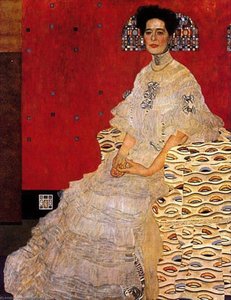
Bildnis Fritza Riedler, 1906 - Österreichische Galerie, Vienna - Gustav Klimt
In the presence of Bildnis Fritza Riedler , one does not merely view a portrait; one enters a gilded dream of Viennese high society. As one of the most captivating entries in our collection of the top 25 artworks of Gustav Klimt , this 1906 masterpiece captures the delicate tension between outward opulence and inward solitude. Klimt masterfully weaves a tapestry of deep, saturated reds and shimmering gold pigments, creating a mosaic-like atmosphere that feels both ancient and avant-garde.
The subject, Fritza Riedler, sits enveloped in an intricate white gown, her form partially obscured by the swirling, organic patterns characteristic of the Vienna Secession . Notice the striking eye-like motifs adorning her chair—a haunting symbol of surveillance and the weight of social judgment. This interplay of decorative beauty and psychological depth resonates deeply in our modern era, where the boundary between public persona and private truth remains a profound cultural dialogue. It is a symphony of texture and light that continues to enchant the soul.
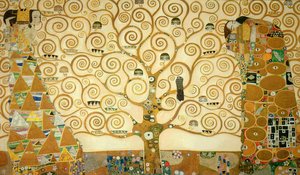
The Tree of Life - Gustav Klimt
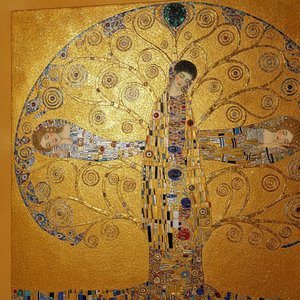
Imagine standing before a shimmering portal where the boundaries between the earthly and the divine begin to dissolve. As you approach The Tree of Life , a sense of profound stillness settles over you, broken only by the rhythmic dance of swirling gold patterns. Created in 1909, this masterpiece is not merely a painting; it is a luminous hymn to the interconnectedness of all existence.
Klimt captures the very essence of the Vienna Secession movement, using opulent gold leaf and intricate, organic spirals to weave a tapestry of life, death, and rebirth. The central tree, heavy with symbolic branches, cradles human figures and architectural whispers, suggesting that our civilization is but a delicate part of nature's eternal cycle. It earns its place among the top 25 artworks of Gustav Klimt because of its unparalleled ability to evoke spiritual longing and peace. Bringing such a work into your home does more than decorate a wall; it invites a sanctuary of serenity and timeless mystery into your daily life, reminding us of the beauty found in our deepest connections.
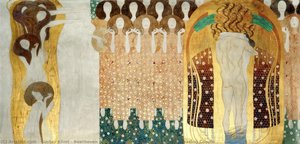
Beethoven Frieze; The Arts, Choir of Angels, Embracing Couple - Gustav Klimt
To stand before the Beethoven Frieze is to step into a luminous dream where music, divinity, and human longing converge. In this breathtaking triptych, Gustav Klimt transcends mere decoration, weaving a symbolic narrative through The Arts , the Choir of Angels , and the tender Embracing Couple . It remains a cornerstone of his legendary Golden Phase, capturing that rare, shimmering intersection of Byzantine opulence and modern emotional depth.
Klimt utilizes a breathtaking palette of gold leaf, earthy ochres, and soft, ethereal tones to guide the eye through a procession of elongated, graceful forms. The tactile richness of the impasto brushstrokes and the sinuous, flowing lines create a sense of rhythmic movement, much like a visual symphony. For the modern collector, this masterpiece offers more than historical significance; its intricate patterns and radiant light bring an unparalleled sense of spiritual transcendence and sophisticated warmth to any curated space. It is not merely a painting, but a sensory experience that continues to inspire the soul through its profound celebration of life's most sacred connections.
Water Serpents II (Bewegtes Wasser sfondo) - Gustav Klimt
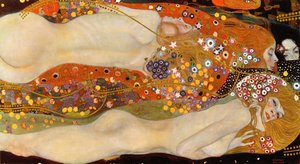 Water Serpents II (Bewegtes Wasser sfondo) - Gustav Klimt
To gaze upon Water Serpents II (Bewegtes Wasser sfondo) is to lose oneself in a dream of liquid gold and primordial grace. In this mesmerizing masterpiece, Gustav Klimt invites us into a realm where the boundaries between the human form and the natural world dissolve into swirling, serpentine rhythms. There is a profound, quiet magic in how the reclining figure emerges from the undulating patterns, her presence as fluid and essential as the water itself.
This work earns its place among the top 25 artworks of Gustav Klimt through its unparalleled ability to evoke both serenity and a haunting, mysterious sensuality. It is a pinnacle of the Art Nouveau movement, where every curved line and vibrant, organic shape tells a story of life’s hidden currents. At ArtsDot.com, we strive to honor this breathtaking legacy. Our artists meticulously recreate the thick, tactile impasto and the luminous, golden textures of Klimt's technique on 100% cotton canvas. Through our hand-painted oil reproductions, you can bring the ethereal, dreamlike atmosphere of this Austrian masterpiece into your own sanctuary, preserving the very soul of the Vienna Secession for generations to come.
Farm Garden with Crucifix - Gustav Klimt
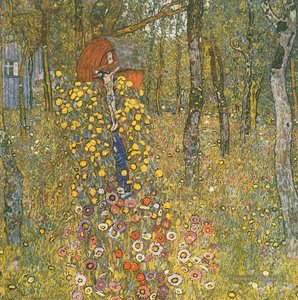 Farm Garden with Crucifix - Gustav Klimt
To possess a piece like Farm Garden with Crucifix by Gustav Klimt is to invest in a profound legacy of taste and emotional depth, securing a fragment of the Vienna Secession’s most luminous era for your private collection. As one of the top 25 artworks of Gustav Klimt, this 1911 masterpiece stands as a testament to his ability to weave the sacred with the sensory. The canvas vibrates with an impressionistic energy, where fiery yellows and lush greens collide in short, rhythmic brushstrokes that capture the fleeting pulse of summer.
Within this floral sanctuary, a solitary figure under a crimson parasol invites a quiet, melancholic introspection, while the subtle presence of the crucifix adds a layer of spiritual gravity. The market value of Klimt’s landscapes remains peerless due to their rare ability to balance decorative beauty with deep symbolism. For the discerning decorator, a high-quality oil reproduction of this work brings an unmatched aesthetic authority to modern luxury interiors, offering a soulful focal point that radiates the prestige and timeless elegance of a true museum masterpiece.
Music I - Gustav Klimt
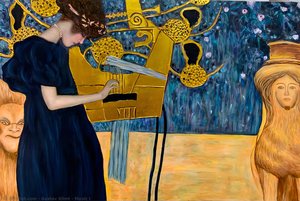 Music I - Gustav Klimt
In Music I , Gustav Klimt invites us into a realm where sound becomes visible and the boundaries between the physical and the spiritual dissolve. There is a profound, rhythmic pulse in this 1895 masterpiece that transcends mere painting; it is an invitation to listen with your eyes. As you gaze upon the central figure seated at the ornate harpsichord, you feel the weight of a silent melody, a moment of deep musical contemplation captured in time.
The composition is a mesmerizing dance of Art Nouveau elegance and Symbolist mystery. Klimt weaves together deep, soulful blues with the warm, shimmering golds that would later define his iconic Golden Phase. The swirling, organic patterns and sculpted figures flanking the scene create an ethereal atmosphere, as if the very air is vibrating with celestial harmony. To possess such a work is to bring a sense of transcendence into your home—a reminder that even in silence, there is a beautiful, intricate song playing within us all.
Allegory of 'Sculpture' - Gustav Klimt
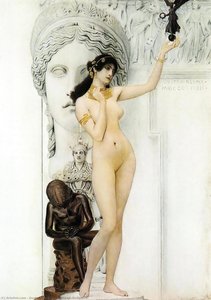 Allegory of 'Sculpture' - Gustav Klimt
In the 1889 masterpiece Allegory of 'Sculpture' , we witness a young Gustav Klimt mastering the delicate dance of light and shadow long before his famous Golden Phase. The work is defined by a hauntingly beautiful use of chiaroscuro; soft, diffused light washes over the central nude figure, creating a luminous, ethereal glow that contrasts sharply with the deep, melancholic shadows of the decaying architectural ruins. This interplay of illumination breathes life into the marble-like textures of the skin, making the figure appear almost translucent against the heavy, carved reliefs in the background.
This sophisticated command of light is precisely what secures its place among the top 25 artworks of Gustav Klimt . It captures a moment of transition between classical realism and the dreamlike mystery of Symbolism. When brought into a modern home as a hand-painted oil reproduction, the subtle gradations of light and the muted, nostalgic palette offer an unparalleled sense of depth and quiet luxury, transforming any contemporary wall into a portal to Vienna's golden past.
Birch Forest, 1903 - Vienna, Osterreichische Museum für Angewandte Kunst - Gustav Klimt
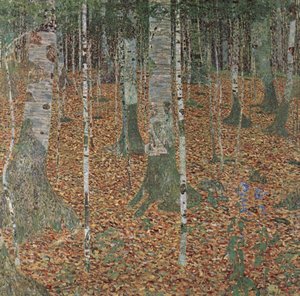 Birch Forest, 1903 - Vienna, Osterreichische Museum für Angewandte Kunst - Gustav Klimt
Before the world came to know him for the shimmering gold of his later masterpieces, Gustav Klimt found a profound, quiet sanctuary in the rhythmic patterns of the natural world. In Birch Forest (1903), we witness a breathtaking moment of transition, where the artist moves away from the rigid decorative structures of the Vienna Secession toward a more atmospheric, Impressionistic soul. The canvas is a mosaic of light and texture; vertical white trunks stand like silent sentinels against a rich, autumnal carpet of ochre, burnt orange, and deep umber. There is a tactile magic in his broken brushstrokes, creating a sense of movement as if a soft breeze might scatter the fallen leaves at any moment.
A subtle, unexpected touch—a small cluster of blue flowers nestled in the earth—serves as a poignant symbol of resilience amidst the cycle of decay. This mastery of color and light does more than capture a landscape; it captures a mood of deep introspection. Hanging such a piece in a modern study or home office invites that same sense of focused tranquility, fostering an environment of sophisticated calm and creative clarity.
Poppy Field - Gustav Klimt
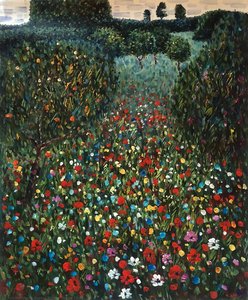 Poppy Field - Gustav Klimt
To possess Poppy Field by Gustav Klimt is to invest in a profound legacy of aesthetic brilliance and refined taste. As one of the most captivating entries in our collection of the top 25 artworks of Gustav Klimt , this 1907 masterpiece transcends mere landscape painting; it is a sensory immersion into the soul of the Vienna Secession. The composition invites us through a dark, hedge-like archway into a sun-drenched meadow, where a riot of crimson poppies dances against lush, verdant greens.
Klimt utilizes a breathtaking impasto technique, applying oil paint with such tactile depth that the blossoms appear to vibrate with life. While his famous "Golden Phase" often dazzles with metallic opulence, Poppy Field showcases his mastery of organic form and light, capturing the ephemeral beauty of nature's fleeting blooms. This work holds immense prestige in the art market due to its unique blend of Symbolist depth and Art Nouveau fluidity. For the discerning collector, a high-quality, hand-painted reproduction of this piece brings an unparalleled sense of tranquility and botanical splendor to modern luxury interiors , commanding the same aesthetic authority as the original masterpiece.
Judith - Gustav Klimt
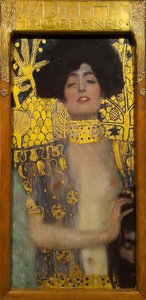 Judith - Gustav Klimt
To stand before Judith is to encounter a moment of breathtaking, gilded tension. As you gaze upon this 1901 masterpiece, the air seems to thicken with the scent of old Vienna and the shimmer of precious metals. Klimt captures a woman of regal, serene confidence, her presence radiating a strength that is both soft and commanding. The painting is a sensory feast; the eye wanders through a labyrinth of flowing Art Nouveau lines, where deep, verdant greens meet the intoxicating luster of gold leaf.
In this work, Klimt transcends the biblical narrative of power and sacrifice, transforming it into a celebration of feminine resilience. The texture of the piece—the way light dances across the intricate, organic patterns—creates a dreamlike atmosphere that feels both ancient and strikingly modern. Bringing such a piece into your home does more than decorate a wall; it introduces a focal point of profound mystery and opulence. It is an invitation to quiet reflection, offering a luminous sanctuary of beauty and grace amidst the rush of contemporary life.
Avenue of Schloss Kammer Park - Gustav Klimt
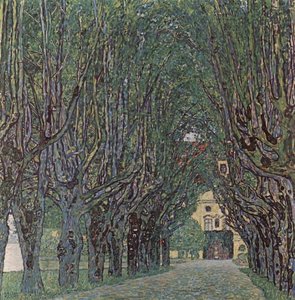 Avenue of Schloss Kammer Park - Gustav Klimt
In Avenue of Schloss Kammer Park , Gustav Klimt invites us to lose ourselves in a quiet, emerald sanctuary where the boundary between reality and dream begins to dissolve. There is a profound sense of solitude captured here; as your eyes follow the dappled, sun-drenched path through the towering, slender trees, you feel as though you are being guided toward a private moment of introspection. This 1912 masterpiece moves away from his famous gilded opulence, embracing instead a lush, almost pointillist texture that breathes with life.
The symphony of greens—from deep, shadowed moss to vibrant, light-filled lime—creates a tunnel-like effect that wraps the viewer in a protective, natural embrace. As one of the top 25 artworks of Gustav Klimt , this piece serves as a universal mirror for anyone seeking peace amidst life's transitions. Hanging such an atmospheric landscape in your home can transform a quiet corner into a personal retreat, turning a simple room into a space for profound reflection and a gentle, rhythmic calm that lingers long after you have looked away.
Hope II - Gustav Klimt
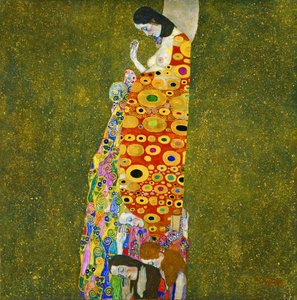 Hope II - Gustav Klimt
In the quiet embrace of Hope II , Gustav Klimt captures a moment where the earthly and the divine seem to intertwine in a soft, golden glow. This masterpiece stands as a cornerstone among the top 25 artworks of Gustav Klimt because it transcends mere portraiture, offering instead a profound meditation on vulnerability and the cyclical nature of life. The vertical composition draws the eye upward through a cascade of flowing robes, where vibrant reds, deep blues, and sun-drenched yellows dance amidst intricate, swirling patterns.
The texture of the piece feels alive; one can almost sense the meticulous layering of glazes that creates a jewel-like luminosity, as if the canvas itself is breathing. The interplay between the delicate female figures and the organic, speckled gold-green background evokes a sense of spiritual transcendence. For the modern collector, bringing such a work into a home introduces an atmosphere of sophisticated serenity and symbolic depth, turning a living space into a sanctuary of reflective beauty and timeless Art Nouveau elegance.
Compositional Sketch for - Gustav Klimt
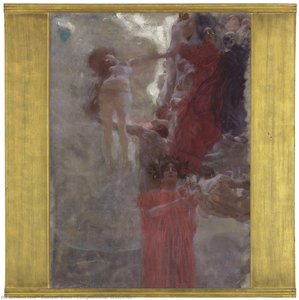 Compositional Sketch for - Gustav Klimt
What if I told you that Compositional Sketch for by Gustav Klimt was born from a moment of profound rebellion—a stroke of defiance against the rigid academic shadows of Vienna? This is not merely a preparatory study; it is a visceral manifesto of the human condition. In this hauntingly beautiful work, we witness the raw intersection of life, sickness, and mortality, captured through swirling, atmospheric brushstrokes and a dramatic, almost theatrical use of light.
Its inclusion in our collection of the top 25 artworks of Gustav Klimt is essential because it captures the artist at a pivotal metamorphosis, bridging the gap between classical tradition and the emotive depth of Symbolism. The thick, tactile impasto and the somber, evocative palette invite you to feel the very pulse of his creative struggle. At ArtsDot.com, we believe such profound emotions deserve a place in your personal sanctuary. Imagine this masterpiece gracing your walls, transforming a quiet corner into a space of deep contemplation and intellectual elegance. It is more than decor; it is an invitation to witness history's most beautiful rebellions every single day.
Head of a Man in Profile (Illustration for - Gustav Klimt
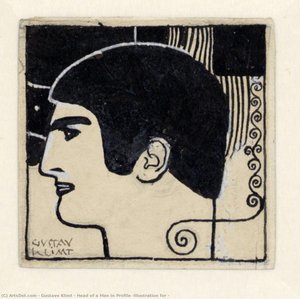 Head of a Man in Profile (Illustration for - Gustav Klimt
To encounter Head of a Man in Profile is to step into the quiet, cerebral heart of Gustav Klimt’s early modernism, far from the gilded opulence of his later works. This striking piece, likely conceived for the avant-garde magazine Ver Sacrum , reveals a master stripping away the excess to find the profound essence of form. It is a rare, monochromatic glimpse into the soul of the Vienna Secession, where Klimt used bold, angular lines and geometric simplicity to challenge the rigid academic traditions of his era.
The artwork’s power lies in its deliberate reduction; the face is distilled into elegant, mask-like planes, reminiscent of the delicate influence of Japanese woodblock prints. There is a captivating, contemplative mystery in the subject's gaze that resonates deeply with the sophisticated, minimalist aesthetics of a modern luxury interior. For the discerning collector, this work represents more than just an illustration; it is a testament to Klimt’s versatility and his enduring legacy as a pioneer of symbolic design, offering a timeless beauty that speaks through shadow and silhouette.
Portrait of Philip Friedrich Christoph, Count of Hohenzollern - Gustav Klimt
 Portrait of Philip Friedrich Christoph, Count of Hohenzollern - Gustav Klimt
To encounter the Portrait of Philip Friedrich Christoph, Count of Hohenzollern is to witness a rare, formative moment in Gustav Klimt’s early journey. Long before the shimmering gold leaf of his iconic Golden Phase, this 1883 work reveals a young master deeply immersed in the dramatic grandeur of the Baroque tradition. It is not merely a portrait; it is an inheritance of classical elegance, capturing a sense of nobility that feels like a handshake across centuries.
The composition breathes with a theatrical chiaroscuro , where light dances across the Count’s commanding three-quarter pose, emerging from deep, velvety shadows. Klimt’s meticulous hand is evident in the tactile rendering of military attire—the heavy folds of fabric, the glint of polished armor, and the authoritative presence of the subject framed by a majestic architectural arch. Through earthy tones accented by flashes of crimson and gold, the painting evokes a lineage of taste that transcends time. Bringing this masterpiece to your walls through our hand-painted oil reproductions allows you to invite this profound sense of history and aristocratic splendor into your own private gallery.
Mother with Two Children (Family) - Gustav Klimt
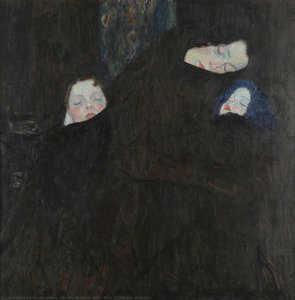 Mother with Two Children (Family) - Gustav Klimt
In Mother with Two Children (Family) , Gustav Klimt achieves a breathtaking structural harmony that transcends the opulent gold of his more famous works. The composition is anchored by a profound geometric stillness; the soft, curved silhouettes of the sleeping figures create a protective, circular enclosure, drawing the eye inward toward the luminous faces of the mother and her children. This delicate balance of form against a vast, dark void creates a sense of timeless perfection, making it an essential inclusion in any collection of the top 25 artworks of Gustav Klimt .
There is a striking parallel to be found between this painting’s internal equilibrium and the principles of modern minimalist design. By stripping away the decorative excess of his Golden Phase, Klimt utilizes a restrained palette of deep, shadowy tones to highlight only what is essential. This focus on negative space and tonal contrast allows the piece to ground a clean, contemporary aesthetic in a modern home, offering a soulful, quiet strength that resonates far beyond the borders of 1910 Vienna.
Lady with Hat and Feather Boa - Gustav Klimt
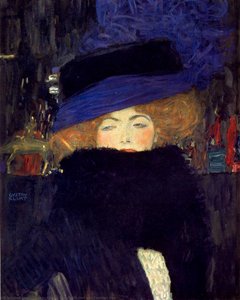 Lady with Hat and Feather Boa - Gustav Klimt
In Lady with Hat and Feather Boa , Gustav Klimt invites us into an intimate encounter with a gaze that is at once profoundly confident and hauntingly melancholic. As you stand before this 1909 masterpiece, the subject’s eyes seem to hold a lifetime of secrets, acting as a universal mirror for our own moments of quiet introspection. The painting is a breathtaking bridge between the soft, light-drenched textures of Impressionism and the bold, expressive soul of early Modernism.
Klimt masterfully employs a palette of deep blues, regal purples, and midnight blacks, using thick, tactile impasto to bring the luxurious fur collar and feathered hat to life. The way the light catches the textured brushstrokes creates a sense of movement, as if the bustling Viennese streets are softly dissolving into a dreamlike haze around her. Bringing this work into your home offers more than mere decoration; it provides a window into a sophisticated era of elegance. Displaying such powerful emotional resonance can transform a personal sanctuary into a space for profound reflection, wrapping your surroundings in a cloak of timeless, artistic calm.
Girl-friends - Gustav Klimt
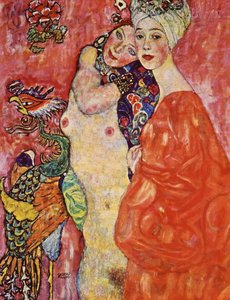 Girl-friends - Gustav Klimt
In the tapestry of Gustav Klimt’s most profound achievements, Girl-friends (1916) emerges as a breathtaking study of intimacy and the delicate balance between the earthly and the divine. As one of the top 25 artworks of Gustav Klimt, this piece captures the very soul of Viennese Modernism, weaving together the lush, organic rhythms of Art Nouveau with the psychological depth of Symbolism. The painting invites us into a private sanctuary where two women are entwined in a tender embrace, their connection mirrored by a vibrant palette of warm reds and deep, soulful blues.
Klimt’s mastery is evident in the way he uses decorative floral motifs and symbolic elements—like the soaring birds representing spiritual aspiration and the coiled dragon signifying primal instinct—to explore the duality of human existence. To possess such a work in a curated collection is to invite a timeless conversation about companionship and vulnerability into your home. Its shimmering textures and emotive power serve as a luminous inspiration, bridging the gap between historical grandeur and the sophisticated elegance of modern interior design.
Spring - Gustav Klimt
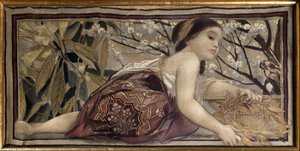 Spring - Gustav Klimt
In the early whispers of Klimt’s genius, we find Spring (1884), a work that feels less like a mere sketch and more like a soft, shared secret. Before the world knew him for the gilded opulence of his later years, Klimt captured this moment of serene reverie, where a young woman reclines amidst a lush, blossoming earth. There is a profound stillness here; the way she rests among the vibrant petals suggests an intimate communion with the cycle of renewal.
As you gaze upon this piece, you might notice how the delicate interplay of light and shadow begins to trace the outlines of his future mastery. The flowers are not just ornaments but symbols of life’s transient beauty, echoing the decorative soul he inherited from his father’s craft. To bring Spring into your home is to invite a sense of quiet contemplation and harmony. It serves as a gentle reminder that even in moments of stillness, we are deeply connected to the breathing, blooming world around us.
Dancer, The - Gustav Klimt
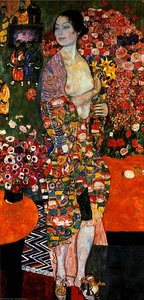 Dancer, The - Gustav Klimt
In The Dancer , the lines of Gustav Klimt’s brush are not merely drawn; they are choreographed . This 1916 masterpiece is far more than a portrait; it is a dance frozen in time, where the rhythmic interplay of vibrant reds, lush greens, and sun-drenched yellows creates a visual melody that resonates long after you look away. As one of the most captivating entries in our collection of the top 25 artworks of Gustav Klimt , this piece captures the very essence of Symbolism and Art Nouveau elegance.
Klimt invites us into a world where femininity and nature entwine, featuring a central figure draped in an elaborate gown, surrounded by the intoxicating vitality of scattered blossoms. The flattened perspective and geometric motifs transform the canvas into a tapestry of light and emotion. Imagine your own sanctuary holding this same exquisite balance—where your walls do not just decorate, but breathe rhythm . To possess such a work is to invite a sense of opulent harmony and timeless grace into the heart of your home.
Ex-libris (bookplate) - Vereinigung Bildender Künstler Österreichs Secession - Gustav Klimt
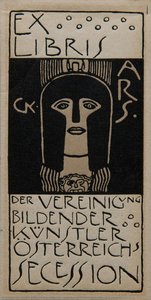 Ex-libris (bookplate) - Vereinigung Bildender Künstler Österreichs Secession - Gustav Klimt
In the delicate, intimate scale of the Ex-libris (bookplate) - Vereinigung Bildender Künstler Österreichs Secession , we find a concentrated essence of Gustav Klimt’s revolutionary spirit. This 1903 masterpiece serves as more than a mere mark of ownership; it is a profound visual manifesto for the Vienna Secession. Within its small frame, Klimt summons the goddess Pallas Athena, her presence radiating a sense of intellectual sovereignty and wisdom that challenged the rigid academicism of his era.
The work breathes with a shimmering, Byzantine-inspired opulence, where swirling, organic borders meet a palette that evokes the sacred glow of gold leaf. As you gaze upon this piece, you feel the pulse of the Art Nouveau movement—a rhythmic dance of pattern and symbolism that continues to captivate modern collectors. In today’s design landscapes, where we increasingly crave soulful, ornamental depth, Klimt’s ability to weave identity into intricate decoration remains a timeless cultural touchstone. It stands as a luminous testament to the power of artistic rebellion, proving that even the smallest canvas can hold the weight of an entire movement's soul.
The Large Poplar Tree II (Coming Storm) - Gustav Klimt
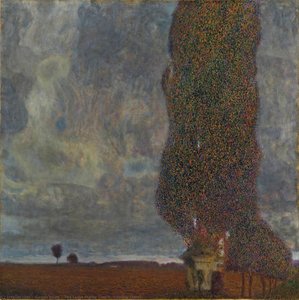 The Large Poplar Tree II (Coming Storm) - Gustav Klimt
To behold The Large Poplar Tree II (Coming Storm) by Gustav Klimt is to witness a breathtaking moment of atmospheric tension captured forever in oil. As we move through this collection of the top 25 artworks of Gustav Klimt, this piece stands as a profound testament to his ability to infuse nature with deep, symbolic emotion. Before the golden opulence of his later works, Klimt mastered the language of the elements, using vibrant reds, yellows, and purples to animate the leaves against a turbulent, swirling sky.
The painting possesses a rhythmic, organic energy characteristic of the Art Nouveau movement, where every brushstroke feels alive with the anticipation of the approaching storm. For the discerning collector, this work offers more than mere decoration; it brings a sense of dramatic narrative and seasonal transformation into a refined interior. Its textured, almost tactile quality—achieved through delicate sponge techniques—creates a sensory experience that resonates with modern luxury, making it an enduring masterpiece of light, movement, and resilience.
Beech Forest, 1902 - Dresden, Morderne Galerie - Gustav Klimt
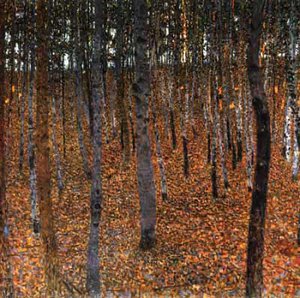 Beech Forest, 1902 - Dresden, Morderne Galerie - Gustav Klimt
Step into a realm where the boundaries between the earth and the ethereal dissolve, leaving only the rhythmic pulse of nature. In Beech Forest, 1902 - Dresden, Moderne Galerie by Gustav Klimt , we encounter a moment of profound stillness captured during the height of the Vienna Secession. This masterpiece earns its place among the top 25 artworks of Gustav Klimt through its breathtaking ability to transform a woodland scene into a tapestry of symbolic light.
Klimt moves away from his famed gold leaf to embrace a palette of fiery oranges and deep, earthy umbers. The brushwork is both structural and fluid; geometric tree trunks rise like pillars of a natural cathedral, while the vibrant, sun-drenched leaves seem to vibrate with life. There is a tactile warmth here, a sensory invitation to find refuge within the dense, protective canopy. This work remains timeless because it does more than depict trees—it captures the very essence of vitality and mystery, offering any modern space a window into the soul of the natural world.
Conclusion
As we draw the curtain on this journey through Klimt’s luminous world, we find that his legacy is far more than a collection of gilded canvases and intricate patterns; it is an enduring dialogue between the soul and the senses. To gaze upon these twenty-five masterpieces is to witness the profound beauty found in the delicate tension between love and loss, between the fragility of life and the eternal shimmer of the divine. His work does not merely sit upon a wall; it breathes within a room, casting a soft, golden light that transforms a simple space into a sanctuary of reflection.
We invite you to do more than simply admire these treasures from a distance. We invite you to bring this brilliance into your own daily life—to let the tactile depth of his brushstrokes and the warmth of his symbolic imagery become a part of your home’s story. Whether it is the quiet elegance of a portrait or the breathtaking opulence of his golden era, these paintings serve as timeless reminders of the grace and creativity that define our human experience. When you surround yourself with such artistry, you are not just decorating an interior; you are curating a life filled with wonder.
If your heart has found a particular resonance in these works, we invite you to explore our full collection , where each hand-painted reproduction is crafted to preserve the very essence of Klimt’s spirit for your own walls.