

The Bohemian Pulse: Montmartre and the Birth of Post-Impressionist Nightlife
To understand the soul of Henri de Toulouse-Lautrec, one must first descend into the labyrinthine streets of late 19th-century Montmartre. This was not merely a district; it was a fever dream of liberation, a bohemian sanctuary where the rigid hierarchies of the Belle Époque dissolved under the amber glow of gaslight. As the shadows lengthened over the Butte Montmartre, a new kind of energy began to pulse through the cafes, cabarets, and dance halls, creating a landscape that was as much psychological as it was physical. Lautrec, with his aristocratic lineage and outsider’s perspective, possessed the unique ability to navigate these nocturnal corridors, capturing the raw, unvarnished vitality of a world that thrived while the rest of Paris slept.
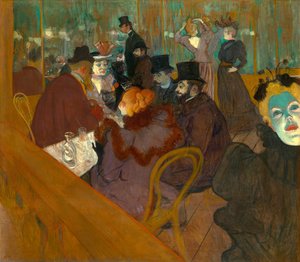
The atmosphere of this era was defined by a delicious tension between decadence and despair. In the smoky air of the Chat Noir or the frenetic rhythm of the Moulin Rouge, Lautrec found his true subjects. He did not seek to idealize the dancers or the patrons; instead, he sought the truth hidden in the tilt of a head, the exhaustion in a performer's eyes, or the fleeting intimacy shared between strangers in a crowded room. This was the birth of a Post-Impressionist vision that moved beyond the mere observation of light to capture the very essence of human movement and social flux, documenting a moment in history where the boundaries of art and life were being irrevocably redrawn.
Chiaroscuro and Color: The Technical Mastery of Toulouse-Lautrec’s Nocturnal Palette
The technical brilliance of Toulouse-Lautrec lies in his sophisticated manipulation of light and shadow, a modern evolution of the classical chiaroscary technique. While the masters of the Renaissance used light to define divine form, Lautrec utilized it to sculpt the atmosphere of the cabaret. His palette was a masterful study in contrasts: the harsh, artificial glare of stage lights clashing against the deep, velvety blacks of the Parisian night. He understood that color in a nightclub is never static; it is refracted through haze, reflected in spilled wine, and absorbed by heavy velvet drapery.
His use of color was both daring and emotive. One might observe the sudden, jarring splash of a crimson dress against a muted, sepia-toned background, or the sickly, beautiful greens and yellows that suggest the artificiality of the era's lighting. By employing bold, often flat areas of color—a technique heavily influenced by Japanese ukiyo-e prints—he achieved a graphic immediacy that felt revolutionary. This interplay of light and pigment does more than just replicate a scene; it creates a sensory experience, allowing the viewer to feel the warmth of the crowded dance floor and the cool, lonely drafts of the alleyways beyond.
Beyond the Moulin Rouge: Capturing the Human Condition in the Belle Époque
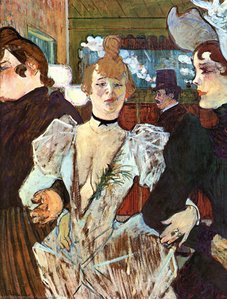
While works such as At the Moulin Rouge, The Dance remain his most recognizable triumphs, the true depth of Lautrec’s oeuvre is found in his profound empathy for the marginalized. He was a chronicler of the human condition, looking past the spectacle of the dance to find the quiet, often melancholic reality of those inhabiting the fringes of society. His portraits are not mere likenesses; they are psychological studies. In his depictions of performers and patrons, there is an unmistakable sense of the transient nature of fame and the heavy toll of the nocturnal lifestyle.
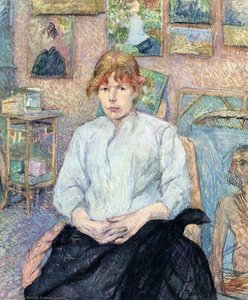
There is a haunting intimacy in his ability to capture moments of profound solitude amidst the chaos. Whether it is the contemplative stillness found in a portrait like Maurice Joyans or the weary grace of a dancer between sets, Lautrec reveals the vulnerability beneath the bravado. He saw the shared humanity in the dancers, the musicians, and the laborers alike, weaving them into a singular tapestry of existence. This emotional resonance is what elevates his work from mere reportage to high art; he does not just show us the nightlife of Paris, he makes us feel the heartbeat of its people.
Graphic Elegance: The Influence of Lautrec’s Lithography on Modern Visual Culture
Beyond the canvas, Toulouse-Lautrec was a pioneer of the graphic arts, transforming the humble advertising poster into a legitimate medium of high expression. His lithographs, characterized by their sweeping lines and bold compositions, redefined the visual language of the streets. These works were not merely announcements for upcoming shows; they were masterpieces of design that utilized negative space and rhythmic typography to command attention. The way he integrated text with image created a seamless flow that anticipated the modern era of graphic design and branding.
The influence of his printmaking cannot be overstated. By bringing the aesthetic of the cabaret into the public sphere, he democratized art, making the avant-garde accessible to the masses. The sharp, decisive strokes of his lithographic crayon allowed for a sense of movement and energy that was impossible in more traditional mediums. This graphic elegance—a marriage of fine art sensibility with commercial utility—laid the groundwork for much of 20th-century visual culture, from Art Nouveau to the bold aesthetics of modern poster art.
The Eternal Glow: Preserving the Spirit of Toulouse-Lautrec for the Modern Collector
To bring a piece of Lautrec’s Paris into a contemporary space is to invite a conversation between history and modernity. For the discerning collector, the allure lies in the ability to possess a fragment of that lost, vibrant world. Whether through a meticulously rendered oil reproduction that captures the tactile impasto of his brushwork or a high-fidelity Giclée print that preserves the sharp edges of his lithography, the goal is to maintain the integrity of his vision.
Preserving this legacy requires an appreciation for the technical nuances that make these works breathe. A true reproduction must honor the depth of the shadows and the vibrancy of the highlights, ensuring that the "living" quality of the original is not lost in translation. As we continue to admire the nocturnal soul of Toulouse-Lautroc, we find that his art remains as vital and provocative today as it was at the turn of the century, offering a timeless window into the enduring beauty of the human spirit amidst the shadows.
Discover the artistry of the masters at ArtsDot.com, where we specialize in bringing historical masterpieces to life through exquisite, hand-painted oil reproductions and museum-quality prints for the modern connoisseur.