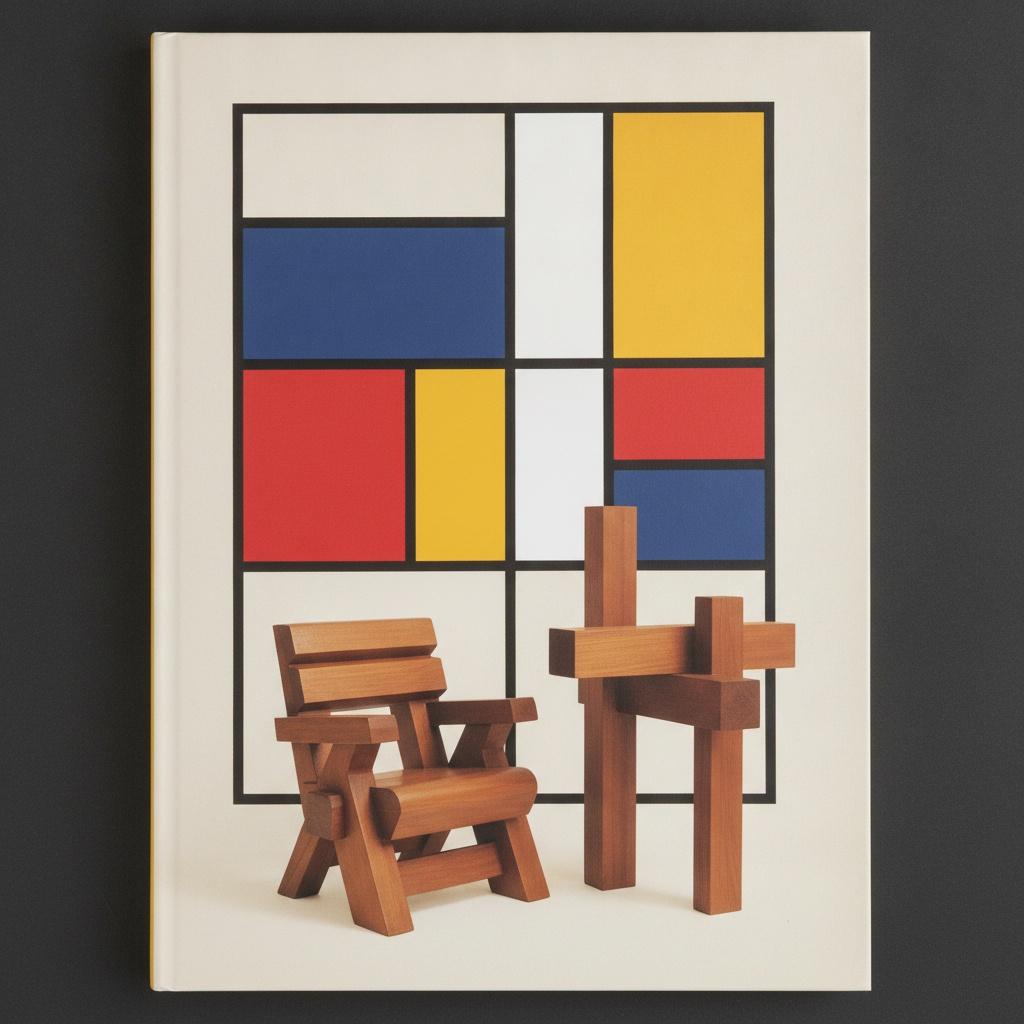
The Genesis of Order: Neoplasticism and the Post-War Quest for Universal Truth
 Neoplasticism Unveiled: The Power of Pure Color and Geometric Form in Modern Abstract Art
The Genesis of Neoplasticism: Piet Mondrian and the Pursuit of Universal Order In the turbulent dawn of the twentieth century, as the world grappled with the fragmentation of old empires and the industrialization of human existence, a profound moveme...
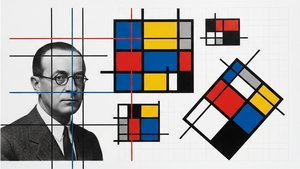
To understand the profound impact of De Stijl, one must first contemplate the fractured landscape of early twentieth-century Europe. As the world grappled with the devastating fragmentation of empires and the relentless industrialization of human existence following World War I, a group of visionary intellectuals sought something more permanent than the shifting sands of political upheaval. From the heart of the Netherlands emerged a radical departure from representational traditions—a movement that did not merely seek to depict reality, but to uncover its underlying mathematical and spiritual equilibrium. This was the birth of Neoplasticism, a philosophy that viewed art as a tool for revealing the cosmic balance that governs our universe.
At the epicenter of this revolution stood Piet Mondrian, a master whose journey began within the lush, descriptive landscapes of Dutch tradition but ultimately transc/ended them to find a deeper, immutable truth. For Mondrian and his contemporaries, the pursuit of universal order required a disciplined stripping away of the superfluous. To reach the essence of reality, the artist had to abandon the curve, the shadow, and the organic irregularity of the natural world. In their place, they sought a visual language of absolute clarity, believing that by reducing art to its most fundamental elements, one could communicate a sense of balance untouched by the chaos of human emotion or the decay of time.
The Grammar of Abstraction: Decoding Primary Colors and Orthogonal Precision
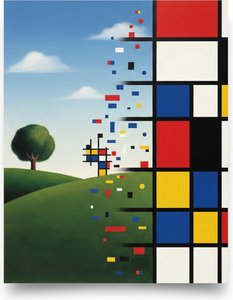
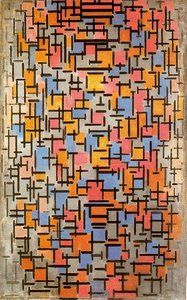
This set of works introduces what is an important distinction for modern art: the difference between near-abstract art and pure-abstract (non-representational) ...
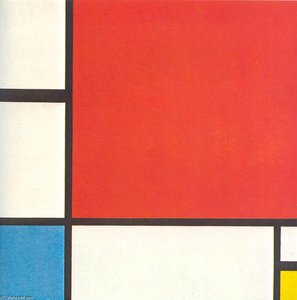
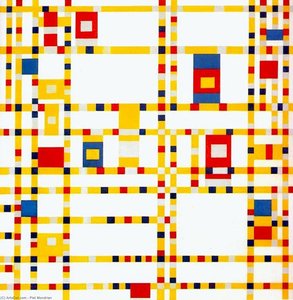
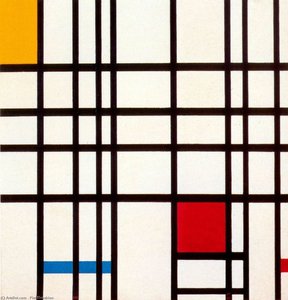
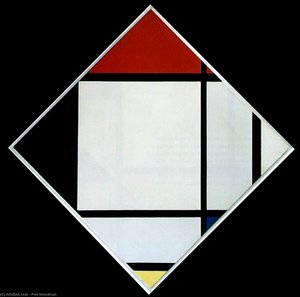
The aesthetic power of De Stijl lies in its highly disciplined, almost mathematical grammar. To the untrained eye, a composition may appear deceptively simple, yet it operates through a sophisticated vocabulary designed to resonate with the very structure of existence. The movement’s palette is famously restricted, utilizing only the three primary colors—red, yellow, and blue—complemented by the non-colors of white, black, and grey. These pigments are never used for descriptive or decorative purposes; rather, they function as pure, energetic forces within a carefully constructed field.
This chromatic precision is anchored by the use of orthogonal lines—the strict intersection of horizontal and vertical planes. By rejecting the diagonal and the curve, artists like Theo van Doesburg and Bart van der Leck created a tension that is both visually arresting and intellectually rigorous. When a vibrant block of red meets a stark field of white, it creates a rhythmic vibration, a controlled energy that avoids the unpredictability of organic forms. This was not merely an aesthetic choice but a philosophical necessity; it was a quest for the immutable, a search for a rhythm that remains constant amidst the temporal flux of human life.
Beyond the Canvas: De Stijl’s Architectural Legacy and the International Style
 De Stijl
De Stijl (, Dutch: [də ˈstɛil]; 'The Style') was a Dutch art movement founded in 1917 by a group of artists and architects based in Leiden (Theo van Doesburg, J. J. P. Oud), Voorburg (Vilmos Huszár, Jan Wils) and Laren (Piet Mondrian, Bart van der Le...
The ambitions of the De Stijl movement were never confined to the boundaries of a wooden frame. The proponents of The Style envisioned an ideal fusion of form and function, believing that the principles of geometric harmony should permeate every facet of the human environment. This vision extended into architecture, typography, and industrial design, profoundly influencing the development of the International Style. Architects such as J.J.P. Oud and Gerrit Rietveld applied the movement's reductive logic to the built environment, creating structures that emphasized clarity, light, and spatial fluidity.
The Rietveld Schröder House stands as a monumental icon of this era, where walls become planes and space becomes an interplay of intersecting volumes. This architectural translation of De Stijl principles sought to create living spaces that were as balanced and orderly as the paintings themselves. By integrating art into the very fabric of habitation, the movement aimed to elevate daily existence, turning the domestic sphere into a sanctuary of modern, structured beauty. This legacy continues to inform contemporary architectural thought, where the minimalist ethos remains a cornerstone of sophisticated, high-end design.
From Mondrian to Saint Laurent: The Enduring Influence of Geometric Minimalism on Modern Luxury
 Mondrian Collection
The Mondrian Collection was designed by French fashion designer Yves Saint Laurent (1936–2008) in 1965. This collection was a homage to the work of several modernistic artists. Part of this collection were six cocktail dresses that were inspired by t...
The echoes of De Stijl can be heard across the decades, reverberating through the halls of haute couture and luxury design. Perhaps no moment captures this cultural resonance more exquisitely than Yves Saint Laurent’s 1965 Mondrian Collection. In a breathtaking homage to the movement, Saint Laurent translated the grid-based compositions of Piet Mondrian into six iconic cocktail dresses. These garments were not merely printed; they were constructed from pre-dyed fabrics, where each color block was an individual piece of silk or wool, meticulously joined to maintain the integrity of the geometric lines.
This intersection of fine art and high fashion exemplifies how the principles of Neoplasticism have become a permanent fixture in the lexicon of luxury. The movement’s emphasis on simplicity, precision, and the power of primary colors continues to inspire designers who seek to evoke a sense of timelessness and sophistication. From the structured silhouettes of modern accessories to the graphic elegance of contemporary branding, the De Stul legacy remains a potent force, proving that true abstraction possesses a durability that transcends the era of its creation.
Curating Harmony: Integrating De Stijl Aesthetics into Sophisticated Interior Design
For the discerning collector and interior designer, integrating De Stijl-inspired elements offers a way to introduce profound order and intellectual depth into a space. The challenge lies in balancing the movement's bold, graphic intensity with the softer textures of a luxurious home. A single, large-scale oil reproduction of a Mondrian composition can serve as a powerful anchor for a room, providing a focal point that commands attention through its sheer clarity and structural strength.
When curating such a space, one might consider the use of multi-panel or group set paintings to span wide architectural features like staircases or expansive gallery walls. This approach allows the geometric rhythm to flow seamlessly across the architecture, creating a cohesive, modern atmosphere. Whether through the inclusion of primary-colored accents in bespoke furniture or the placement of high-quality abstract prints, the goal is to achieve a state of visual equilibrium. By embracing the disciplined beauty of De Stijl, one does not merely decorate a room; one curates an environment of enduring harmony and sophisticated grace.
At ArtsDot.com, we specialize in preserving this legacy of human creativity. Our master artists are dedicated to creating museum-quality, hand-painted oil reproductions that capture the tactile depth and vibrant energy of the De Stijl masters. From bespoke commissions that allow you to "remix" art history to large-format murals for luxury hospitality projects, ArtsDot provides a professional service for collectors who demand authenticity, craftsmanship, and unparalleled excellence.