The Convergence of Subconscious and Sentiment: Defining Surrealist Expressionism
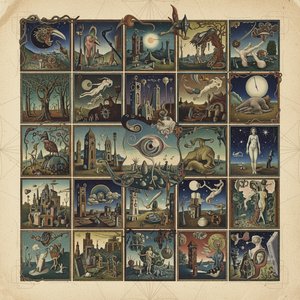
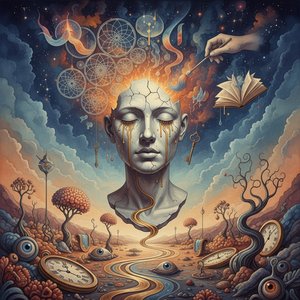
To enter the realm of Surrealist Expressionism is to step into a liminal space where the boundaries between the waking world and the dream state dissolve into a singular, visceral experience. While pure Surrealism often seeks to map the illogical landscapes of the unconscious through psychic automatism, and Expressionism strives to externalize raw, often turbulent human emotion, their convergence creates something far more profound. It is an art movement that does not merely depict a dream, but captures the emotional temperature of that dream.
In this intersection, the imagery is rarely static; it vibrates with a psychological intensity that demands engagement from the viewer. The collector does not simply observe a scene; they encounter a manifestation of the psyche's deepest anxieties and most exquisite desires. This genre transcends mere visual trickery, utilizing the distorted logic of dreams to provide a canvas for the most profound human sentiments—grief, ecstasy, isolation, and wonder. It is a movement defined by its ability to make the intangible felt through the tangible medium of paint.
Architects of the Dreamscape: Tracing the Lineage from Dali to Contemporary Visionaries
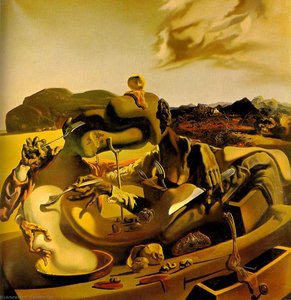
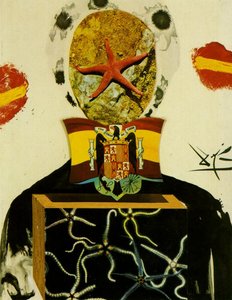
The history of this movement is a rich tapestry woven by masters who dared to look inward. We see the foundational tremors in the works of Salvador Dalí, particularly in his development of the mediumnistic-paranoiac method, which allowed for the crystallization of irrational visions into hyper-realistic, hauntingly precise imagery. His ability to render the impossible with such clarity set a precedent for an entire generation of artists who sought to bridge the gap between the seen and the unseen. <Mediumnistic-Paranoiac Image (1935) serves as a quintessential testament to this era of psychological exploration.
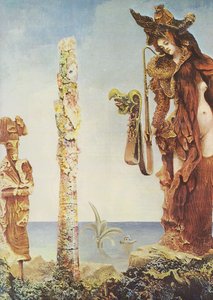
Following this lineage, we find artists like Georges Papazoff, whose early surrealist influences in Paris brought a unique, dreamlike fluidity to the movement, blending the boundaries of form and shadow. The evolution continued through the evocative works of Evelyn Blacklock, where mythology and the subconscious merged to create narratives that feel both ancient and deeply personal. This trajectory does not end with the historical masters; it breathes through contemporary voices such as Hilary Edwards, whose symbolic artwork utilizes dreamlike imagery to tell stories of modern emotion. For the discerning collector, this lineage represents a continuous dialogue across time, proving that the exploration of the inner self remains one of the most vital pursuits in fine art.
The Visual Vocabulary of Emotion: Analyzing Texture, Distortion, and Symbolic Depth
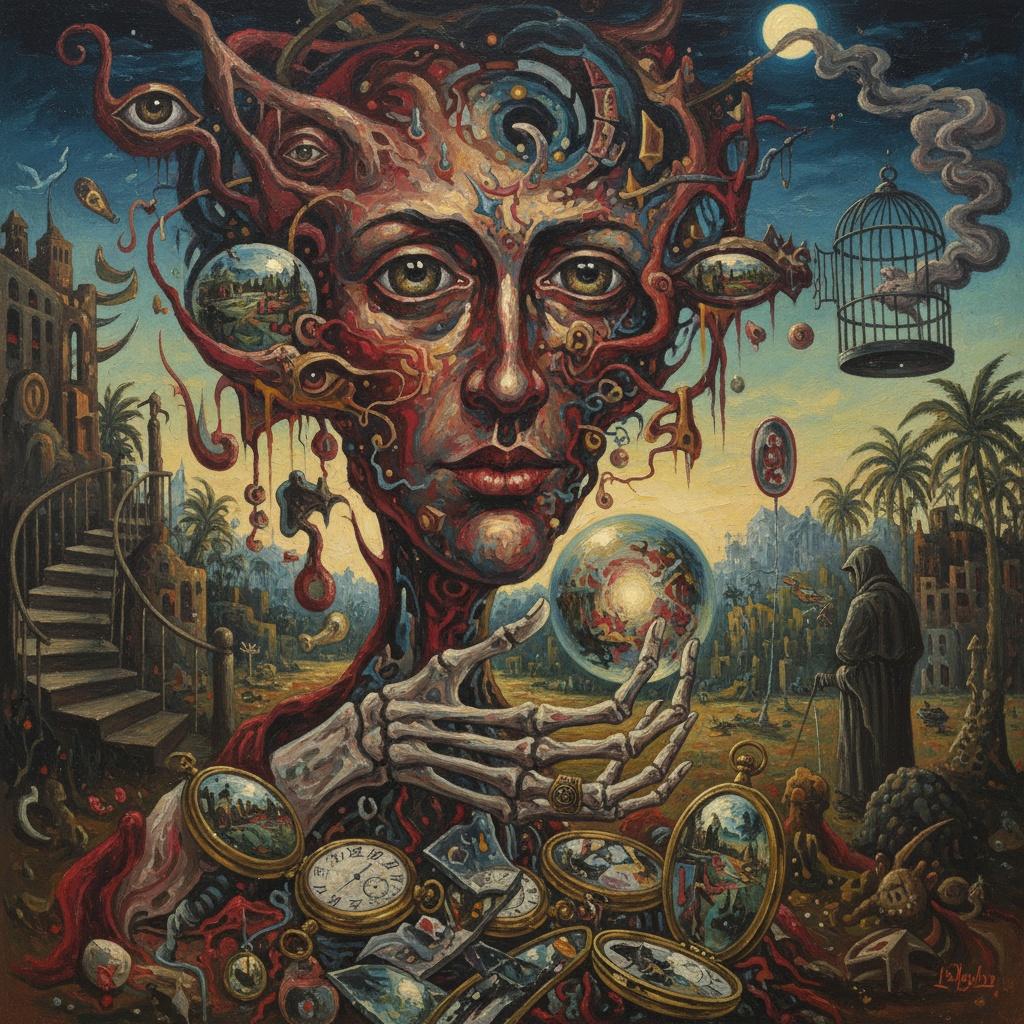
The power of Surrealist Expressionism lies in its unique visual language—a lexicon composed of distortion, symbolic weight, and tactile depth. To understand these works, one must look beyond the subject matter to the very application of the medium. The use of impasto and heavy, layered textures can mirror the psychological density of the themes being explored; a thick, turbulent brushstroke can communicate a sense of unrest that a flat surface simply cannot convey.
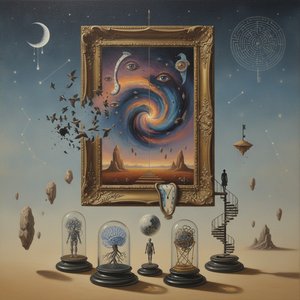
Distortion serves as the primary tool for emotional translation. By warping proportions, melting familiar objects, or stretching landscapes, the artist signals to the viewer that the rules of reality no longer apply, inviting them to interpret the work through an emotional rather than a literal lens. Symbolism acts as the anchor within this chaos. A single, misplaced object—a clock, a withered flower, or a hollowed eye—becomes a vessel for complex meaning, demanding that the collector engage in a process of visual decoding. It is this interplay between the physicality of the paint and the metaphysical weight of the symbols that creates the enduring allure of the genre.
Curating the Uncanny: Strategic Acquisitions for the Discerning Collector
For the collector, acquiring works within the realm of Surrealist Expressionism requires a keen eye for both historical significance and emotional resonance. A successful collection in this genre is not merely an accumulation of images, but a curated journey through the human condition. When evaluating potential acquisitions, one should consider the integrity of the artist's vision and the technical mastery with which they execute their psychological narratives.
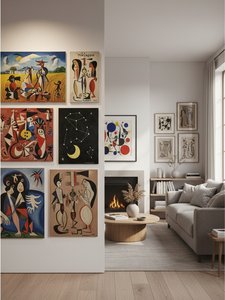
In an era where the accessibility of fine art has been transformed by technology, ArtsDot.com offers a bridge to these profound aesthetic experiences. Whether you are seeking a museum-quality reproduction of a historical masterpiece or wish to commission a bespoke oil painting that captures your own symbolic journey, our platform provides unparalleled expertise. Through our professional digital mockup services and the ability to transform personal imagery into the style of the masters via AI-assisted design, we enable collectors to expand their horizons. From the meticulous layering of 5–10 oil paint layers in our handmade reproductions to the enduring quality of our Giclée prints, ArtsDot.com is dedicated to preserving the soul of art history for the modern connoisseur, ensuring that the intense emotions of the past continue to vibrate within the spaces of the present.