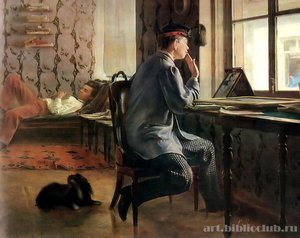

The Dawn of Realism: Shifting Perspectives in 19th Century Russian Painting
To understand the profound emotional resonance of 19th-century Russian art, one must first look toward the shifting tides of a nation in transition. This era was marked by a departure from the rigid, idealized academicism of the early century, moving instead toward a raw, unvarnished truth. The movement known as the Peredvizhniki, or the Wanderers, emerged not merely as a stylistic choice, but as a revolutionary social statement. These artists sought to break free from the gilded confines of the Imperial Academy, carrying their canvases out of the sterile studio and into the very heart of the Russian landscape.
This period witnessed a fundamental change in how the subject was perceived. No longer were paintings solely reserved for mythological allegories or portraits of the aristocracy; instead, the gaze turned toward the palpable reality of the common man and the vast, untamed expanses of the Eurasian steppe. This shift demanded a new vocabulary of color and form—a way to capture the heavy atmosphere of a summer storm or the weary dignity of a laborer. It was an era where art became a mirror, reflecting both the grandeur of the natural world and the complex social strata of a changing empire.
Echoes of the Earth: Capturing Rural Serenity and Pastoral Life
There is a certain quietude found in the Russian pastoral tradition that transcends mere landscape painting. Artists like Alexei Venetsianov mastered the art of the serene, finding divinity in the mundane rhythms of rural existence. In works such as Meeting at the Well, we see more than just a depiction of village life; we encounter a poetic meditation on harmony and simplicity. The light in these paintings often possesses a soft, enveloping quality, casting a nostalgic glow over scenes of communal labor and quiet repose.
These compositions serve as a window into a world where the connection between humanity and the earth remained unbroken. Through delicate brushwork and an intimate understanding of light, the masters of this era captured the subtle textures of linen, the warmth of sun-drenched soil, and the tranquil stillness of the countryside. To gaze upon these works is to experience a sense of timelessness, a momentary escape into a landscape where the soul can find rest amidst the gentle movements of nature.
The Weight of History: Social Realism and the Human Condition
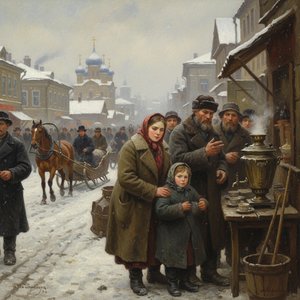
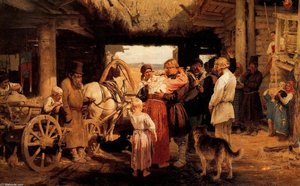
However, the Russian art of this period was not solely composed of tranquil vistas; it also bore the heavy burden of social critique. As the century progressed, the brush became a tool for documenting the struggles of the disenfranchised. The emergence of Social Realism brought a starker, more visceral energy to the canvas. Artists began to confront the viewer with the grit and toil of the peasantry, refusing to look away from the hardships that defined much of the era's social fabric.
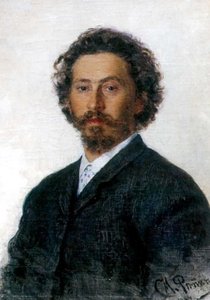
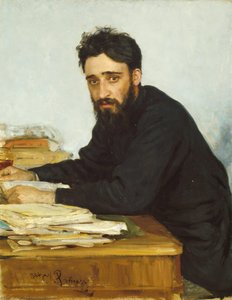
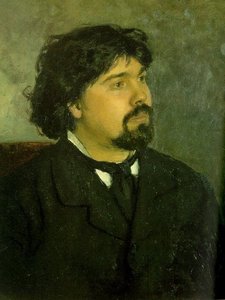
The legendary Ilya Repin stands as the titan of this movement, possessing an unparalleled ability to imbue his subjects with profound psychological depth. His works do not merely depict people; they narrate their internal struggles and their resilience against systemic adversity. Similarly, the earthy tones and rugged textures found in the works of Vasily Vereshchagin remind us of the physical toll of labor and the harsh realities of existence. In these paintings, every furrowed brow and calloused hand tells a story of endurance, turning the canvas into a powerful medium for historical and social testimony.
Mastering Light and Texture: The Technical Brilliance of the Peredvizhniki
The emotional impact of these masterpieces is inseparable from the technical mastery of the artists involved. The brilliance of 19th-century Russian art lies in its tactile quality—the ability to make the viewer feel the weight of the air and the roughness of the terrain. This was achieved through a sophisticated use of impasto and layered oil techniques, where the physical presence of the paint adds a three-dimensional dimension to the narrative.
The mastery of light—capturing the fleeting moment of a sunset or the murky gloom of a riverbank—required an advanced understanding of color theory and pigment application. By building up multiple layers of oil, these artists created a depth that allows light to seemingly emanate from within the canvas itself. This technical prowess ensures that even centuries later, the works retain a "living" quality, where the interplay of shadow and highlight continues to stir the viewer's imagination and evoke a visceral response.
A Lasting Legacy: Preserving the Grandeur of Russian Art in Modern Interiors
Today, the legacy of these 19th-century masters continues to inspire collectors and enthusiasts worldwide. The profound themes of realism, humanity, and nature remain as relevant now as they were during the era of the Wanderers. Integrating such powerful imagery into a modern space allows for a dialogue between history and contemporary life, bringing a sense of cultural depth and intellectual weight to any architectural setting.
Whether through the acquisition of museum-grade prints or the commissioning of bespoke oil reproductions, the spirit of the Russian steppes can be preserved within the home. At ArtsDot.com, we are dedicated to this preservation. Our artisans utilize traditional academic techniques—applying meticulous layers of pigment on heavy-duty cotton canvas—to ensure that every reproduction captures the authentic texture and soul of the original masterpiece. We believe that art is not merely decoration, but a bridge to our collective human history, allowing the majesty of the past to illuminate the spaces of the present.