


The Poetry of Ink: An Introduction to Calligraphic Artistry
To behold a piece of calligraphy is to witness a silent conversation between the soul of the artist and the receptive surface of the paper. Unlike the figurative traditions that seek to replicate the physical world through shadow and light, calligraphy finds its essence in the rhythmic movement of ink. It is an art form where the medium is not merely a tool for communication, but a vessel for emotion. In the realm of classical East Asian traditions, every stroke carries a weight of intention, a breath of life that transcends the literal meaning of the characters. This is an art of presence, where the viewer is invited to trace the invisible path of the brush, feeling the tension, the release, and the profound stillness that resides within the black ink against the pale silk or paper.
The beauty of this discipline lies in its ability to evoke complex landscapes and deep philosophical truths through a single, decisive movement. It is an intimate experience, demanding a contemplative mindset from the observer. As one gazes upon these works, the boundaries between language and visual art dissolve, leaving only the pure, unadulated expression of grace. This poetic resonance makes calligraphy more than mere writing; it is a meditative practice captured in time, offering a sanctuary of tranquility for the modern collector seeking depth in an era of fleeting digital imagery.
The Dance of the Brush: Exploring Running Script and Fluidity
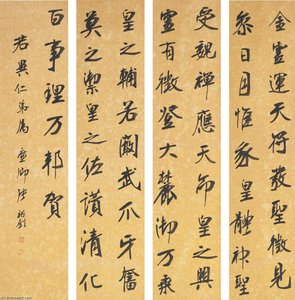
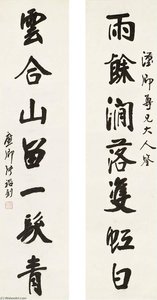
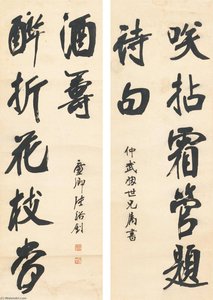
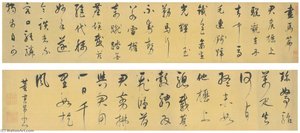
Within the diverse lexicon of calligraphic styles, few possess the mesmerizing allure of the running script. If the regular script represents the disciplined architecture of thought, then the running script is its liberated, dancing counterpart. It is characterized by a breathtaking fluidity, where characters are no longer isolated islands of meaning but are connected by ethereal threads of ink. This style, often referred to as Xing Shu, allows the artist to maintain a continuous flow of energy, or Qi, across the composition. The brush moves with a rhythmic cadence, occasionally pressing firmly to create bold, dark reservoirs of pigment, and then lifting lightly to leave behind delicate, hair-thin traces that seem to float upon the surface.
This fluidity creates a sense of temporal motion; one can almost perceive the speed at which the artist’s hand traveled. The grace of the running script lies in its controlled spontaneity. It is a delicate balance between the structured heritage of tradition and the wild, unpredictable nature of the ink's spread. When observing such works, the eye follows a serpentine path, experiencing the ebb and flow of momentum. This kinetic energy transforms the artwork into a living entity, one that breathes with the vitality of its creation, offering a sense of organic movement that is rare in more static forms of fine art.
Masters of the Stroke: Historical Legacies of Chinese Calligraphy
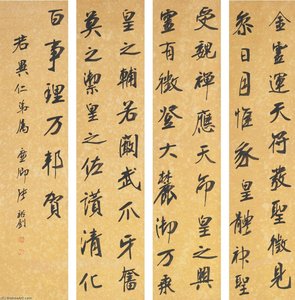
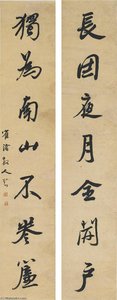
The history of calligraphy is a lineage of masters whose individual styles have become the very foundation of the art form. To study these works is to walk through the corridors of time, encountering the distinct personalities of scholars and poets who shaped the aesthetic consciousness of dynasties. For instance, the exquisite works of Zeng Guofan serve as a profound testament to the elegance of the running script, where his calligraphy couplets showcase a masterful command of grace and structural harmony. His ability to infuse traditional forms with a sense of personal dignity provides a window into the scholarly ideals of his era.
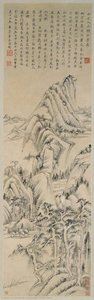
Similarly, the legacy of the Ming Dynasty continues to inspire through the serene masterpieces of artists like Wu Xizai. His calligraphy in running script embodies a quiet, meditative strength, offering a sense of peace that has endured for centuries. We also find inspiration in the works of Qian Feng, whose ink paintings and flowing scripts demonstrate the seamless integration of brushwork and natural imagery. Even the poetic contributions of artists such as Zeng Xi remind us that calligraphy is inextricably linked to literature; his impactful poems and couplets are not merely read but are visually experienced through the rhythmic precision of his regular and running styles. These masters did not merely write; they sculpted air and ink into enduring monuments of human intellect.
Beyond the Written Word: The Aesthetic Harmony of Line and Space
A fundamental element that distinguishes calligraphy from other visual arts is its sophisticated use of Ma, or negative space. In a calligraphic composition, the unpainted areas of the paper are just as vital as the inked strokes themselves. This relationship between presence and absence creates a profound aesthetic harmony. The white space acts as a silent stage, allowing the black ink to resonate with greater intensity. It provides the necessary "breath" for the characters, preventing the composition from feeling crowded and instead imbuing it with an atmosphere of openness and infinite possibility.
This interplay creates a structural tension that guides the viewer's gaze. The way a stroke terminates into empty space, or how a splash of ink is surrounded by a void, dictates the rhythm of the entire piece. This mastery of composition ensures that the artwork achieves a sense of equilibrium, where every element—no matter how small—contributes to a unified whole. For the connoisseur, this balance represents the pinnacle of artistic achievement: the ability to command both the visible and the invisible, creating a landscape of thought that is as much about what is left unsaid as what is boldly declared.
Curating Elegance: Integrating Calligraphy into the Modern Interior
In the contemporary home, calligraphy serves as a sophisticated anchor, bringing a sense of historical weight and scholarly calm to modern architectural spaces. Unlike large-scale figurative paintings that may dominate a room, calligraphic works possess a unique ability to complement diverse interiors through their minimalist elegance. A single, large-format scroll can act as a focal point in a minimalist study, while a series of smaller, framed running script pieces can add rhythmic texture to a long hallway or staircase.
Integrating these works requires an appreciation for the balance of textures and tones. The stark contrast of black ink on light paper pairs exquisitely with the organic materials found in modern design, such as light woods, stone, and linen. For those looking to create a truly bespoke atmosphere, the concept of multi-panel layouts allows for a more architectural approach, where the flow of the script is expanded across several canvases to mirror the scale of a grand wall. Whether through a cherished antique or a meticulously crafted reproduction, calligraphy offers a way to infuse a modern living space with the timeless, quiet dignity of the masters, creating an environment that celebrates both heritage and contemporary refinement.