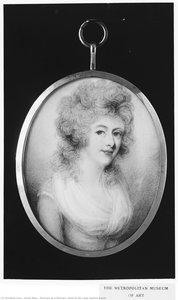
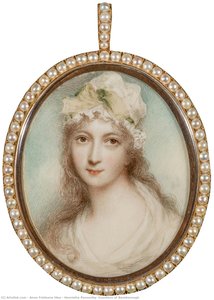
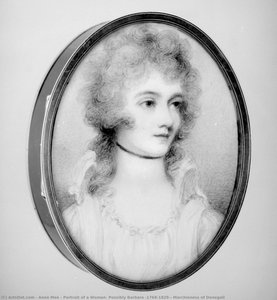
Portrait of a Woman, Possibly Barbara (1768–1829), Marchioness of Donegall
Anne Foldsone Mee: A Life in Miniature
Early Life and Education
Born: 1765, London, United Kingdom.
Family Background: Anne Foldsone Mee was the eldest child of John Foldsone. She received her early education at Madame Pomier's school in Queen Square, Bloomsbury, London.
Early Artistic Inclination: Demonstrating a talent for art from a young age, she began painting at just twelve years old.
Influential Tutor: Her artistic development was significantly shaped by tuition from the renowned painter George Romney.
Career and Artistic Development
Financial Necessity: Following her father’s death in 1784, Anne turned to painting as a means of supporting her family. This necessity fueled her dedication and productivity.
Prolific Output: She became known for her prolific output, creating numerous miniature portraits throughout her career.
Exhibition History: Anne Mee exhibited occasionally at the Royal Academy between 1815 and 1837, gaining recognition within artistic circles.
Artistic Style: Her work is characterized by delicate, detailed renderings, often executed in watercolor. She specialized in miniature portraits, capturing the likenesses of members of the aristocracy and royalty.
Notable Works and Subjects
Portraiture Focus: Anne Mee’s paintings primarily focused on portraiture, showcasing her skill in capturing individual character and social status.
Prominent Sitters: Her subjects included members of the British upper class, reflecting the demand for miniature portraits among the elite.
Examples of Work: Notable examples include portraits of Henrietta Ponsonby, Countess of Bessborough; Barbara, Marchioness of Donegall; and Lady Sophia Boyle. These works demonstrate her mastery of detail and refined technique.
Influences and Artistic Context
George Romney’s Impact: The influence of George Romney is evident in Anne Mee's early work, particularly in her approach to composition and rendering of form.
Miniature Painting Tradition: She worked within the established tradition of English miniature painting, a popular art form during the 18th and 19th centuries.
Historical Context: Her career coincided with a period of significant social and political change in Britain, reflected in the portraits she created of its leading figures.
Legacy and Historical Significance
A Skilled Practitioner: Anne Mee is remembered as a skilled and prolific miniature painter who contributed to the rich tradition of English portraiture.
Preservation of Likenesses: Her portraits provide valuable insights into the appearance and social world of the British aristocracy during her lifetime.
Continued Appreciation: Today, her works are held in various collections and continue to be admired for their beauty, detail, and historical significance. They can also be viewed on platforms like ArtsDot.com, ensuring her legacy endures.
Death: Anne Mee passed away on May 28, 1851, in Hammersmith, leaving behind a lasting contribution to the world of art.
ArtsDot.com 編集部
アート・クイズ
各質問の正解は1つだけです。
問題 1:
Anne Mee began her artistic training at a young age under the tutelage of which established artist?
問題 2:
What was Anne Mee's primary subject matter as a painter?
問題 3:
Between which years did Anne Mee occasionally exhibit her work at the Royal Academy?
問題 4:
What motivated Anne Mee to begin painting professionally?
Explore the world of 18th-century portraiture with ArtsDot. Discover symbolism, artistic innovation & societal values reflected in masterpieces by Reynolds, Hogarth & more. Expert insights for collectors.
Explore the art of stately bearing in Western portraiture with expert analysis of Renaissance & Baroque masterpieces. Discover symbolism, techniques, and the legacy of iconic portraits – a guide for discerning collectors.
Explore the social commentary & artistic representation of 18th-century society. Discover Rococo masterpieces, portraiture's power, and shifting historical perspectives. Expert insights for art lovers.