The Architectural Soul of Shanghai: The Visionary World of atelier deshaus
In the rapidly evolving skyline of Shanghai, where steel and glass often mask the city's deeper history, atelier deshaus stands as a profound bridge between what was and what is yet to be. Founded in 2001 through the collaborative brilliance of Liu Yichun and Chen Yifeng, this architectural practice has become much more than a design firm; it is a custodian of cultural memory. The studio emerged from a desire to move beyond mere construction, seeking instead to craft immersive experiences that resonate with the rhythmic pulse of Chinese heritage while embracing the technological frontiers of the modern era. Their work does not simply occupy space; it breathes life into the urban fabric, transforming the industrial remnants of Shanghai into sanctuaries of contemporary thought.
The philosophical foundation of the firm is deeply rooted in the individual journeys of its founders. Liu Yichun, whose architectural education at Tsinghua University instilled a reverence for the principles of harmony, balance, and materiality, brings a poetic sensibility to every structure. His approach seeks to keep ancient Chinese design philosophies alive, weaving them into the complex tapestry of modern urbanism. Complementing this is the pragmatic expertise of Chen Yifeng, whose mastery of structural engineering and commitment to sustainable, responsible building practices ensures that these visionary concepts are grounded in physical reality. Together, they have cultivated a signature style characterized by elegant forms that feel both timeless and strikingly avant-garde.
A Dialogue with History and Materiality
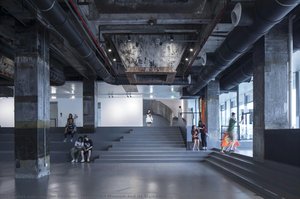
The true magic of atelier deshaus lies in their ability to engage in a continuous dialogue with the site and its history. This is perhaps most breathtakingly realized in the Long Museum West Bund, an architectural masterpiece that serves as a monument to memory. In this project, the firm achieved a feat of adaptive reuse that borders on the sculptural, reclaiming massive, abandoned coal hoppers and reimagining them through a dramatic "umbrella-vaulted" structure. By hollowing out these weathered concrete monoliths, they created soaring, cavernous exhibition spaces that evoke the monumental scale of Shanghai’s industrial past. The interplay between the raw, rugged exterior and the pristine, stark white interiors creates a rhythmic tension, inviting visitors to contemplate the metamorphosis of the urban landscape.
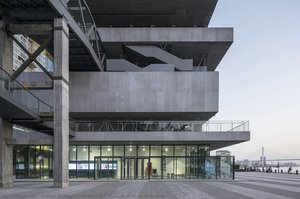
Beyond the heavy textures of concrete and steel, the firm's work often explores the delicate balance of light and topography. Their designs frequently mimic the natural contours of the land, such as the undulating façades that nod to Shanghai’s unique geography. Through the strategic use of expansive glass walls, they allow natural light to flood interior spaces, blurring the boundaries between the built environment and the external world. This sensitivity to context ensures that their buildings are never isolated objects, but rather integral components of a larger ecological and cultural ecosystem.
Legacy and the Future of Urban Expression
The significance of atelier deshaus extends far beyond the borders of China, earning them international acclaim and prestigious accolades, such as being recognized as a design vanguard by Architectural Record. Their work has redefined the role of the architect in the twenty-first century—not merely as a builder of shelters, but as a storyteller who uses stone, light, and space to narrate the evolution of a civilization. By integrating the calligraphic grace of traditional aesthetics with the bold requirements of modern functionality, they have created a new architectural language that is uniquely contemporary yet deeply rooted.
As Shanghai continues to grow into a global epicenter of culture, the influence of atelier deshaus will undoubtedly endure. Their projects, such as the revitalized Modern Art Museum Shanghai, serve as catalysts for cultural engagement, proving that architecture can be a powerful tool for social and historical revitalization. In every curve of a vaulted ceiling and every carefully placed window, one finds a commitment to the idea that the future of architecture lies in our ability to honor the ghosts of the past while building the foundations of tomorrow.