The Soul of the Grasslands: The Artistry of the Bamileke Tribe
In the verdant, mist-shrouded Western Highlands of Cameroon, a profound artistic legacy unfolds through the hands of the Bamileke people. Often referred to as the "People of the Grasslands," this community has cultivated an aesthetic language that transcends mere decoration, creating objects that serve as vital bridges between the physical world and the ancestral realm. To encounter Bamileke art is to step into a complex cosmology where every bead, fiber, and pigment tells a story of migration, power, and spiritual devotion. Their history is one of movement and resilience, with oral traditions tracing their lineage back toward the Nile River region, a journey that eventually settled them in the fertile highlands, where they established a sophisticated network of chiefdoms known as fondoms.
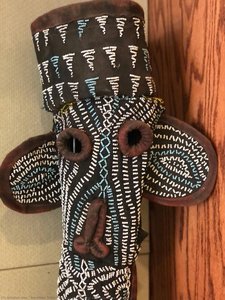
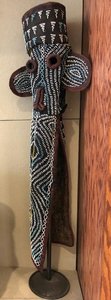
The heartbeat of Bamileke creative expression is found within the ceremonial life of their various kingdoms. Central to this is the Kuosi Society, an elite group of masked dancers who embody the prestige and authority of the ruling class. The most iconic manifestation of this artistry is the Elephant Mask, a breathtaking masterpiece of textile and beadwork. These masks are not merely costumes but sacred vessels; they represent the elephant—a symbol of immense wisdom and unshakeable power—and are used in rituals to maintain cosmic harmony. Through these performances, the community honors their rulers, or fons, whose authority is deeply intertwined with the divine and the ancestral.
Mastery of Material and Symbolism
The technical brilliance of Bamileke artisans lies in their ability to transform raw, natural elements into intricate geometric narratives. The craftsmanship is characterized by a meticulous attention to detail, particularly in the application of thousands of tiny, vibrant beads that cover much of their most significant ceremonial objects. This beadwork is often paired with carefully arranged patterns that reflect the structured order of the universe. Artisans draw from a rich palette of materials, including:
- Wood: The foundational medium for many sculptural elements and mask bases.
- Raffia Fibers: Used to create texture and movement within ceremonial attire.
- Beads and Pigments: Employed to craft complex diamond and geometric motifs that carry specific cosmological meanings.
- Feathers and Tassels: Added to enhance the kinetic energy of masks during ritual dances.
Every design choice is deliberate. The dominance of geometric patterns serves as a visual shorthand for the laws governing the natural and spiritual worlds. As these pieces move through the air during a dance, the interplay of light on the beads and the rhythmic swaying of raffia create a hypnotic experience, intended to draw the observer into a state of spiritual connection. This technical mastery is passed down through generations, ensuring that even as the world changes, the fundamental visual vocabulary of the Bamileke remains intact.
Legacy and Contemporary Resonance
While the modern era has brought the challenges of globalization and shifting social structures to the Western Highlands, the artistic spirit of the Bamileke continues to endure. The fondoms of Bafoussam, Bandjoun, and Dschang remain centers of cultural gravity, where traditional techniques are preserved even as they encounter new influences. Today, the work of these artisans is recognized by international museums and collectors not just as ethnographic artifacts, but as profound works of fine art that command respect for their complexity and historical depth.
The significance of Bamileke art extends far beyond the borders of Cameroon. It stands as a testament to the enduring power of cultural identity and the ability of art to act as a repository for a people's history, faith, and social hierarchy. By studying these intricate masks and sculptures, we gain insight into a way of life where the boundaries between the human, the animal, and the divine are beautifully and intentionally blurred.