The Alchemy of Emotion: The Artistic Journey of David Burton-Richardson
To encounter the work of David Burton-Richardson is to step into a visceral landscape where the boundaries between the internal psyche and the external world dissolve. Born in Wales in 1961, Richardson’s path as an artist was forged not through formal academic training, but through a profound, almost mystical inheritance. At the tender age of eleven, the passing of his grandfather gifted him a collection of art materials—a discovery he famously likened to a child finding a box of sweets. This early encounter with oils and brushes ignited a lifelong fascination, setting the stage for a career defined by the pursuit of translating the intangible weight of human experience into the tangible language of color and texture.
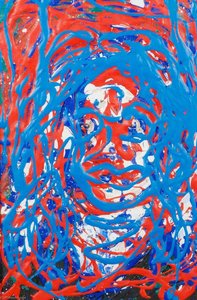
His early creative output reflected the rhythmic pulse of urbanity, with landscapes that captured the dynamism of city life. During this formative period, his works were often signed simply as “d.b.” or “burton,” reflecting a burgeoning identity still finding its voice amidst the concrete and movement of the streets. However, the trajectory of his art underwent a seismic shift when he began to confront the shadows of his own mind. Encouraged by a psychologist to externalize his struggles with anxiety and depression, Richardson transitioned into what he famously termed "the psychiatric works." This era marked his evolution from an observer of the world to an explorer of the abyss, using the canvas as a vessel to capture the turbulent, often dark, landscapes of mental health and isolation.
Symbolism and the Infinite Void
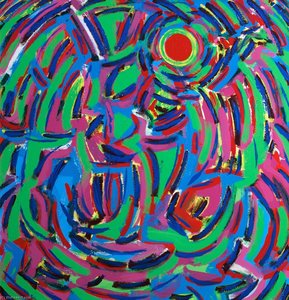
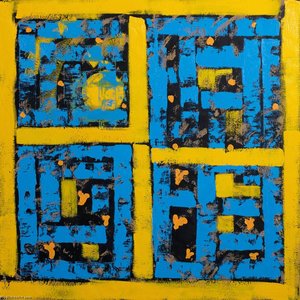
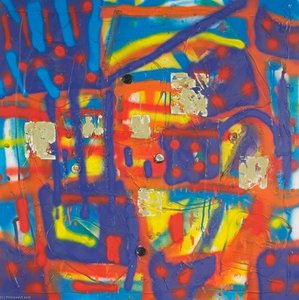
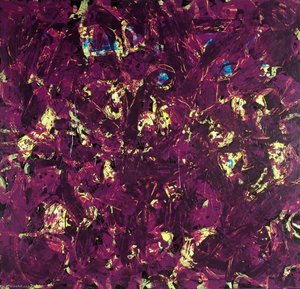
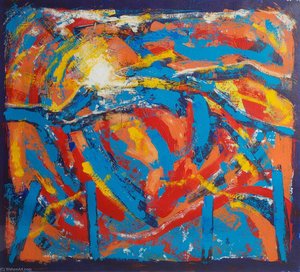
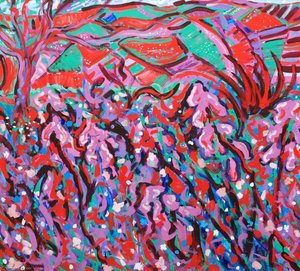
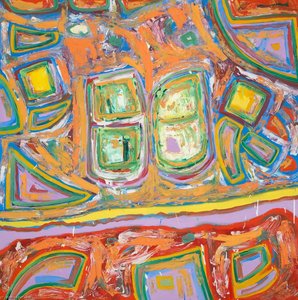
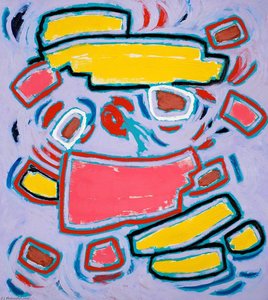
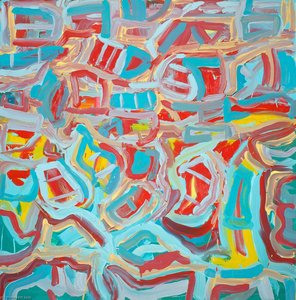
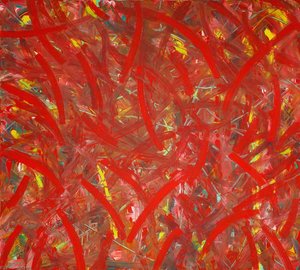
Richardson’s mature style is characterized by an intense, almost overwhelming use of impasto techniques and a bold, emotive palette. His paintings are far more than mere aesthetic objects; they serve as conduits for complex emotional states, often oscillating between vibrant energy and profound melancholy. There is a recurring preoccupation with the concepts of infinity, time, and space within his oeuvre. For Richardson, these are not merely abstract philosophical notions but existential realities. He views death through a lens of absolute stillness, famously noting that "everything is black" and that "death is black," using darkness as a symbol for the infinite expanse that exists beyond the boundaries of life.
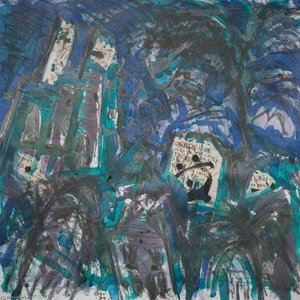
This fascination with the darker side of existence finds its most poignant expression in his recent works, which have grown increasingly somber. While his earlier pieces might dance with light, his later compositions often lean into the shadows, reflecting a deep engagement with themes of existential contemplation and the weight of mortality. Yet, even within this darkness, there is a profound beauty found in the texture of the paint—the thick, layered strokes that create a physical topography of grief, resilience, and the search for meaning in an endless universe.
Legacy and the Preservation of a Vision
The significance of David Burton-Richardson’s contribution to contemporary Welsh art lies in his courage to make the private struggle public. His commitment to his community is perhaps most evident in his decision to donate his "psychiatric works" to Pembrokeshire Mind for permanent display. By placing these pieces within an environment conducive to the mental health struggles they depict, he ensured that his art would continue to serve its original purpose: as a tool for empathy and externalization.
Today, the artist’s legacy is anchored in prestigious institutions and collections across the globe:
- The David Burton-Richardson Collection and Archive: Housed at the historic Scolton Manor Museum near Haverfordwest, providing a sanctuary for his life's work.
- Global Literary Presence: His publication, 'From Now to Zero', is preserved within the esteemed libraries of the Tate Gallery, the National Library of Wales, and the Kohler Art Library in Wisconsin, USA.
- Professional Recognition: As a full member of the National Acrylic Painters Association (NAPA) since 2004, his technical mastery is recognized by his peers.
Through his dual identity as a poet and an artist, Burton-Richardson continues to bridge the gap between the seen and the unseen, leaving behind a body of work that challenges us to look directly into the shadows and find the profound truth hidden within the color.